


PCIe 5.0 vs PCIe 4.0 for Video editing in 4k in SA
PCIe 5.0 vs PCIe 4.0 for video editing in 4k is mainly about fit, features, compatibility, cost, and upgrade path, not one automatic winner. SA buyers should match the choice to the setup.
Read moreA boom mic places the pickup near your mouth; a built-in mic trades that positioning for a cleaner headset profile. The R599 Marvo Pulz 90W includes both, letting focused team chat, casual calls and mobile listening use different physical microphone arrangements.
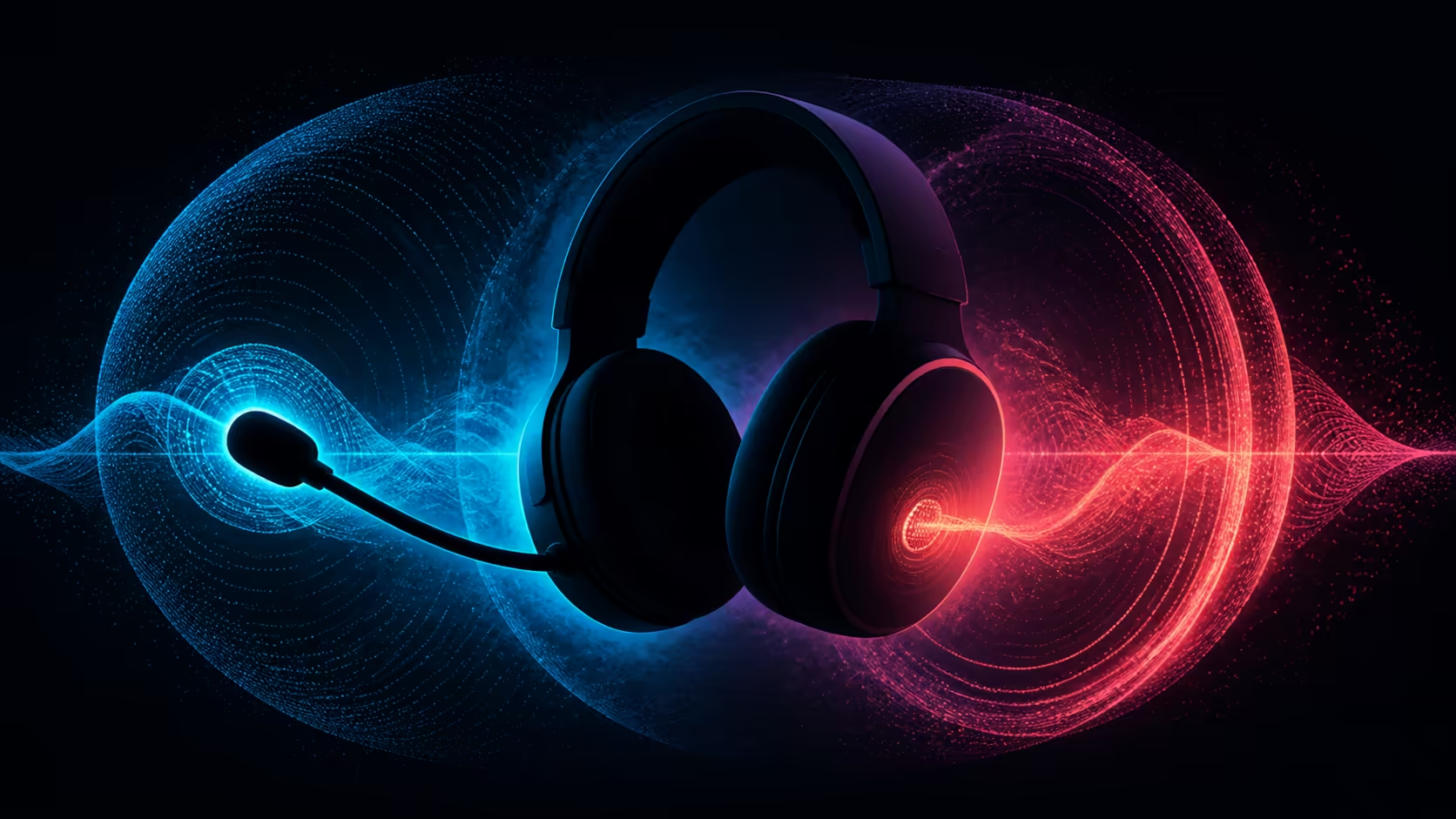
A microphone can be physically close to the mouth or almost disappear into the earcup. Understanding detachable boom and built-in gaming headset microphones means weighing voice placement against a clean everyday profile, then controlling gain and software routing. The R599 Marvo Pulz 90W includes both designs, so one headset can demonstrate the trade directly.
Use the detachable boom for consistent team chat and the built-in microphone for convenient calls or listening without a stalk. The Pulz 90W costs R599 and supports both inputs across a triple-mode setup, although the active source must be checked after connection changes.
Moving a microphone near the mouth increases the voice level relative to many room sounds. Position the boom near one corner of the lips and angle it away from direct breath. This placement can support lower input gain than a distant microphone and create a steadier level as you turn your head.
Distance still needs experimentation. Too close can exaggerate breath and plosive sounds; too far may require gain that captures keyboards and room reflections. Make a recording containing quiet speech, ordinary conversation and one deliberately loud phrase.
The detachable design also has a storage requirement. Remove it for music if preferred, then place it in a small marked container rather than leaving it loose in a bag. Physical flexibility only helps if the attachment remains available when team chat starts.
Evetech's gaming headset selection lets buyers compare boom construction with connection, fit and driver features.
The built-in microphone remains on the headset when the boom is removed. It suits a quick call, mobile listening or a shared room where an attachment in front of the face would be inconvenient. Its fixed position changes the balance between voice and surroundings.
Create a separate gain setting rather than copying the boom profile. If speech sounds distant, verify that the built-in Pulz input is active before increasing level. A laptop array selected by mistake can sound similar to a poorly configured earcup mic.
Bluetooth 6.0 can make this arrangement convenient on compatible portable sources. The headset also provides 2.4GHz for gaming and wired operation for a direct connection.
Input gain determines how strongly the system amplifies the microphone signal. Raise it until normal speech is clear, but stop before loud words clip. Then add only the processing needed for a named issue, such as persistent background noise.
Aggressive noise control can remove parts of speech and make a voice pulse unnaturally. Better placement should come before stronger filtering. Repeat the same reference sentence after each change and compare recordings instead of relying on the moving input meter.
Chat software may apply automatic gain or select its own device. Inspect application settings after establishing the system baseline. Ask another person to describe clarity, noise and level separately because a single verdict such as good is hard to act on.
Evetech's wireless headset category provides a focused comparison for users who need voice communication away from a cable.
Playback and microphone paths can separate after switching connection. Before an important session, change mode, play a sound, speak into the intended mic and inspect both endpoints. This twenty-second check prevents a game from using the earcups while voice comes from another room microphone.
The Pulz 90W uses 50mm drivers and is rated for up to 50 hours of wireless battery life. Dynamic RGB is also included. These listening and visual features do not replace microphone setup, but they explain why the headset may serve gaming, calls and music in one routine.
At R599, the model sits within Evetech's headsets under R1,000 page, adding dual-mic flexibility to a restrained price point.
Name one profile Boom Chat and another Built-In Casual where the platform supports presets. Record input level, essential filter state and normal connection. Clear names reduce mistakes when the physical arrangement changes.
A boom moves with the head, preserving its distance from the mouth as the player turns towards another screen. A built-in mic also follows the earcup, but its greater distance makes desk position and speaking level more influential. Test both while sitting naturally rather than holding a rigid recording pose.
Ask a teammate to rate intelligibility during quiet planning and excited action. A microphone profile that sounds polished during calm speech may clip when the room becomes loud. Keep enough gain margin for those peaks and use the same short call sequence after software updates.
Practise the hardware or software mute control with each microphone and watch the application's indicator. A removable boom should not be the only privacy action because the built-in input may remain selected. Confirm silence with a recording, then restore the intended mic. Clear mute behaviour matters when the headset moves between work calls and game chat.
Speak while looking at both the primary and secondary display. The boom should maintain its useful position as the head turns, while the built-in profile should tolerate ordinary movement without sudden level swings.
Open the same recording application, disable temporary processing changes and capture a fixed passage through the detachable boom. Without moving the chair or changing gain, remove the boom and repeat it through the built-in microphone. Listen on another device for consonant clarity, steady level, keyboard noise and room echo. Matching the conditions makes the two microphone roles easier to hear.
Then repeat only the winning setup inside the real voice-chat application. Check its input selector because communications software can retain an older device even after the physical microphone changes. Ask a teammate for an untold A/B judgement during an energetic game as well as a calm conversation.
Store the boom where its connector stays protected and give the built-in mic a clear casual-use role. The benefit of having both is not that they must sound identical. It is the ability to choose a focused, adjustable chat position or a simpler headset profile without changing the entire audio device.
It places the capsule near the mouth, increasing speech relative to many distant sounds and allowing a more repeatable position.
It keeps voice input available without attaching a boom, which suits casual calls and uncluttered mobile listening.
Start near the mouth corner, slightly outside direct breath. Adjust using recordings until speech is clear without plosive bursts.
Too little makes speech weak, while too much amplifies room noise and may clip loud words. Position first, then set gain.
Yes. Confirm the input inside both system controls and the chat application whenever the source or mode changes.
It can handle voice, but the boom's close placement is usually easier to control for deliberate team communication.
Record the same words at matched perceived level, then judge clarity, room noise, breath sounds and convenience separately.
The Marvo Pulz 90W includes detachable and built-in microphones plus three connection routes at R599.
Ready to hear what microphone placement changes before filters intervene? Compare Evetech's gaming chat headsets, record both physical mic positions, and choose the arrangement that fits each conversation rather than one universal preset.
It places the capsule near the mouth, increasing speech relative to many distant sounds and allowing a more repeatable position.
It keeps voice input available without attaching a boom, which suits casual calls and uncluttered mobile listening.
Start near the mouth corner, slightly outside direct breath. Adjust using recordings until speech is clear without plosive bursts.
Too little makes speech weak, while too much amplifies room noise and may clip loud words. Position first, then set gain.
Yes. Confirm the input inside both system controls and the chat application whenever the source or mode changes.
It can handle voice, but the boom's close placement is usually easier to control for deliberate team communication.
Record the same words at matched perceived level, then judge clarity, room noise, breath sounds and convenience separately.
The Marvo Pulz 90W includes detachable and built-in microphones plus three connection routes at R599.
PCIe 5.0 vs PCIe 4.0 for video editing in 4k is mainly about fit, features, compatibility, cost, and upgrade path, not one automatic winner. SA buyers should match the choice to the setup.
Read more
Wi-Fi 7 vs Wi-Fi 6e for competitive esports comes down to router support, latency goals, device compatibility, and coverage. SA buyers should match the choice to the real network setup.
Read more
ATX 3.1 vs ATX 3.0 for mMO and live-service games buyers - what changes is mostly about compatibility, budget, upgrade path, and setup fit. SA buyers should check device support and real needs before expecting a clear win from either option.
Read more
LGA 1851 vs LGA 1700 can affect Twitch and YouTube streaming when gaming and encoding share CPU resources. For SA creators, the real-world difference depends on encoder choice, memory support, motherboard cost, thermals, and upgrade plans.
Read more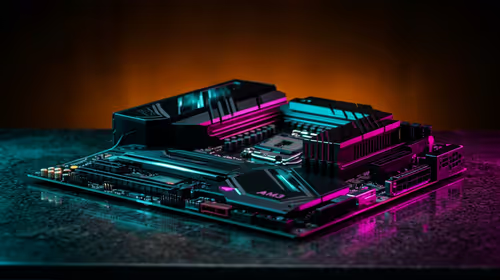
X870E vs X670E for aaa single-player gaming is mainly about fit, features, compatibility, cost, and upgrade path, not one automatic winner. SA buyers should match the choice to the setup.
Read more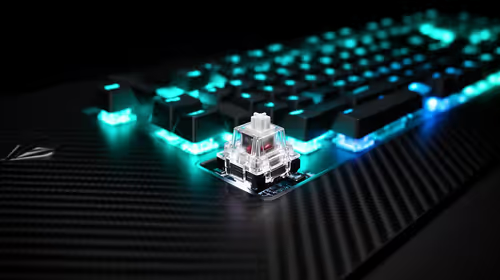
Hall Effect switches vs Mechanical switches for mMO and live-service games is mostly about compatibility, budget, upgrade path, and setup fit. SA buyers should check device support and real needs before expecting a clear win from either option.
Read more
A fake 113GB GTA VI ISO reportedly used empty padding around a small malware payload. SA gamers should delete unofficial builds, keep Windows security active and wait for official channels.

Wi-Fi 6E vs Wi-Fi 6 matters for 4K video editing when files move across a network. The real-world difference between Wi-Fi 6E and Wi-Fi 6 for video editing in 4K depends on NAS access, cloud uploads, router range, and SA creator workflows.

The difference between PCIe 5.0 and PCIe 4.0 for SA gamers is mostly bandwidth headroom. Compare GPU slot needs, NVMe speed, motherboard support, and upgrade timing before paying extra for a newer platform.

Gaming PC stuck pixel checks in South Africa should confirm the monitor fault first. Use colour tests, screenshot comparison, cable swaps, display menu checks, and clear photos before deciding on support.

Shokz OpenFit Air 2 earbuds weigh 7.2g each and use a redesigned dual-driver open-ear layout. SA buyers should choose them for comfort and awareness, not maximum isolation.

AMD's current driver now lists a Radeon RX 9050 4GB, while product coverage details a narrowed memory system. SA buyers should weigh the low VRAM ceiling against current local Radeon options.

Samsung Display has demonstrated a 16-inch 2.5K OLED laptop panel running at 300Hz. SA buyers should wait for a named notebook, full panel specifications and a local price before planning an upgrade.

Microsoft says some Windows 11 game crashes after recent updates are linked to RGB-related drivers. Affected SA gamers should confirm the update and driver before using the published registry workaround.
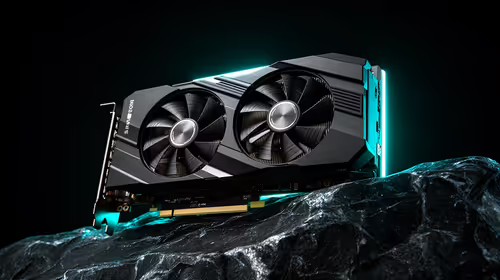
RTX 5090 on a 650W PSU is a tight pairing with very limited headroom. For SA gaming PCs, focus on total system draw, PSU quality, connector support, CPU choice, and avoid OC plans unless the full build is carefully power-limited.
PCIe 5.0 vs PCIe 4.0 for video editing in 4k is mainly about fit, features, compatibility, cost, and upgrade path, not one automatic winner. SA buyers should match the choice to the setup.
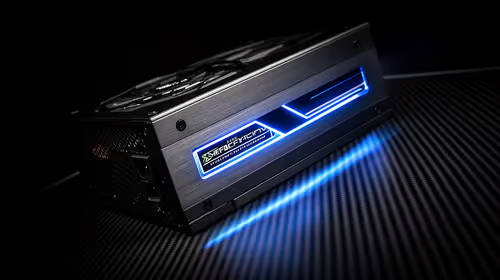
850W PSU safety for RTX 5090 is plausible with a quality unit and balanced parts. In SA, confirm connector support, CPU power draw, case airflow, PSU age, and spare capacity before building around 850W.
Wi-Fi 7 vs Wi-Fi 6e for competitive esports comes down to router support, latency goals, device compatibility, and coverage. SA buyers should match the choice to the real network setup.