Quick Answer
Single-colour LEDs use a fixed-wavelength chip that emits one specific hue with no ability to change colour. Dynamic multi-colour LEDs combine red, green, and blue chips (RGB) on a single circuit, allowing software to mix any colour in the visible spectrum by independently adjusting each channel's brightness from 0 to 255, giving 16.7 million possible combinations.
How Single-Colour LED Technology Works 🔬
A single-colour LED is a semiconductor diode tuned to emit photons at a specific wavelength determined by its material composition. Blue LEDs use indium gallium nitride, red LEDs use aluminium gallium indium phosphide. Once manufactured, the emitted colour is fixed. Only brightness changes: dimming a red LED makes it a dimmer red, never orange or pink. Single-colour LEDs appear in indicator lights, task lighting, and low-cost strip lights where a fixed warm white scene is sufficient. In a PC context, older case cooling fans used single-colour LEDs, which is why all fans in a case had to match colour.
How RGB and RGBIC Dynamic Multi-Colour Systems Work 🌈
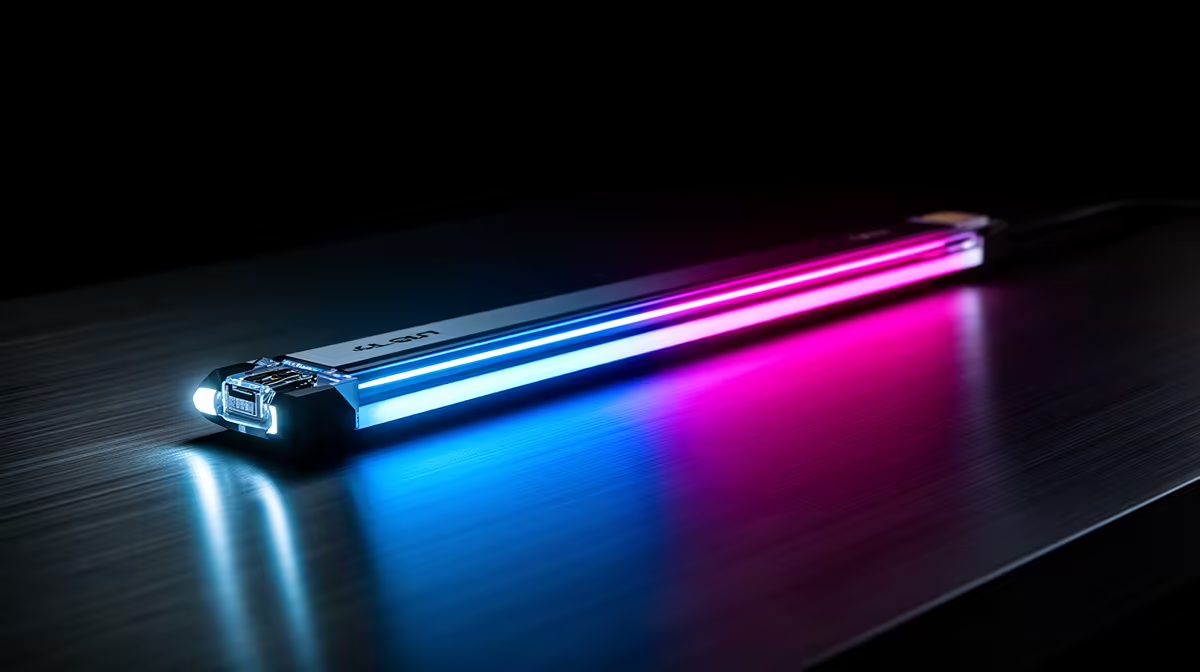
An RGB LED package contains three separate LED chips (red, green, blue) in one housing. A controller sends three independent PWM signals to each channel, varying brightness from 0 to 255. Mixing all three at full power produces white. Red and green at full power with blue at zero produces yellow. This 256-cubed colour space gives 16.7 million possible colour combinations per LED. RGBIC strips extend this by placing a separate data wire alongside each LED group, allowing different zones of the same strip to display different colours simultaneously. This is the technology behind gradient desk strips and multi-zone ambient lighting, starting at around R400 at Evetech for a 2-metre RGBIC run.
Practical Differences for Gaming Room Lighting in SA 🎮
For gaming ambience, the distinction matters practically. A single-colour warm white strip creates a fixed cosy atmosphere but cannot shift to blue for late-night gaming or red for an FPS atmosphere. A dynamic RGB strip or modular panel adapts to every mood and game. The price gap has narrowed: a quality 2-metre RGBIC strip starts at around R400 at Evetech, versus R150 for a basic single-colour strip. For a gaming setup where versatility matters, the R250 premium for full RGB is worthwhile. For a study desk needing only consistent warm task lighting, a single-colour strip remains practical.
Check Chip Count Per Metre Before Buying ⚡
LED strips are rated by chip density in LEDs per metre. A 60 LED-per-metre strip produces smooth glow with no visible dot pattern. A 30 LED-per-metre strip shows individual dots when mounted close to a wall. For installations viewed from within 1 metre, choose strips rated at 60 or more LEDs per metre for a professional finish.
FAQ
Can single-colour LED strips be used alongside RGB panels in the same setup?
Yes. A warm white single-colour strip under a desk combined with dynamic RGB wall panels creates a layered look where the strip provides functional task illumination and the panels provide ambient colour.
Why do RGB products claim millions of colours but look similar at some settings?
At low brightness, the human eye cannot distinguish closely spaced colours reliably. The 16.7 million colour claim is mathematically true but the range of distinct moods RGB creates remains far wider than any fixed-colour alternative.
Are RGBW strips worth the extra cost over standard RGB?
For setups that also need to serve as task or reading light, yes. The dedicated white chip in RGBW panels produces a cleaner, more natural white than mixing red, green, and blue channels, which gives a slightly greenish tint at close inspection.
Upgrading from basic LEDs to full RGB?
Evetech stocks RGBIC strips and modular smart panels with full dynamic colour control, available for local delivery across South Africa with manufacturer warranty.