


PCIe 5.0 vs PCIe 4.0 for Video editing in 4k in SA
PCIe 5.0 vs PCIe 4.0 for video editing in 4k is mainly about fit, features, compatibility, cost, and upgrade path, not one automatic winner. SA buyers should match the choice to the setup.
Read moreA USB 2.0 Type-A microphone needs a suitable Type-A route to the computer. Physical fit is only the first step because the operating system and each app must select the input. Test recording and gaming software separately before relying on the setup.
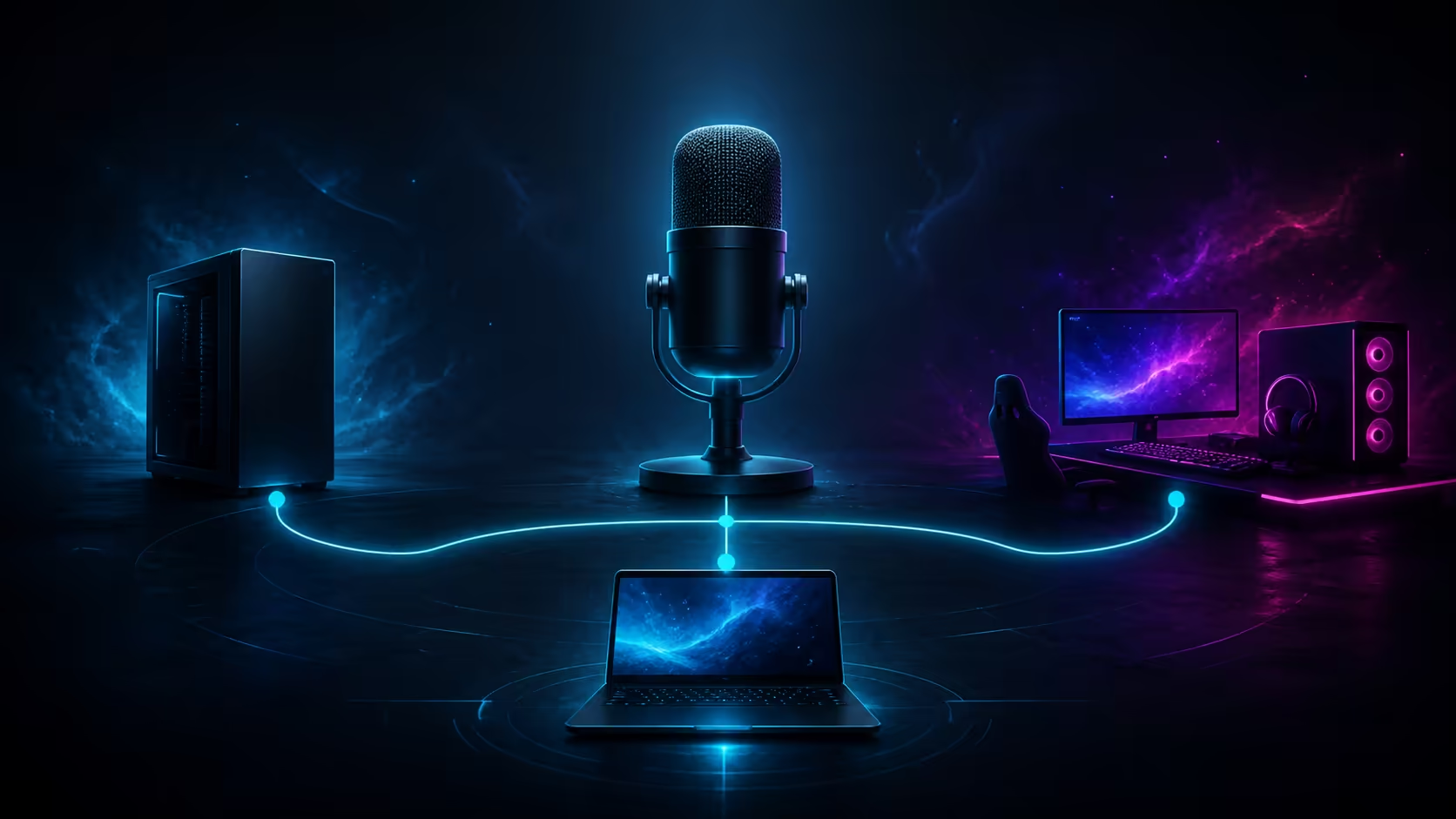
A connector that fits is only the first compatibility check. USB 2.0 Type-A microphone compatibility also depends on a stable physical route, operating-system recognition and explicit input selection inside every application. The R299 MARVO Blast 50 uses wired Type-A for PCs, laptops and gaming setups, then adds a separate 3.5mm jack for headphone monitoring.
The Blast 50 needs an available USB Type-A connection to carry microphone audio to the computer, followed by device selection in the system and target program. At R299, it suits a compatible PC or laptop without a separate interface; the 3.5mm socket is for real-time headphone monitoring, not an alternative capture connection.
Type-A describes the familiar rectangular computer-side USB connector. Inspect the machine rather than relying on memory, especially on a thin laptop or compact gaming system where available ports may differ from a desktop tower.
Choose a socket that allows the cable to reach without tension. A lead stretched across mouse space, bent sharply at the plug or trapped beneath a laptop can create an unreliable desk even when audio works initially. Leave enough slack for ordinary screen and chair movement.
If a suitable direct port is available, begin there during diagnosis. Extra intermediate devices make it harder to identify where a problem begins. Seat the connector fully, keep the microphone stable and note which socket you used.
The Blast 50 is a wired USB model, so cable placement is part of compatibility in practice. Evetech's microphone category provides other forms to consider when port position and desk depth influence the choice.
After connection, open the operating system's sound-input controls and locate the microphone by name. Speak at ordinary volume and observe the meter. Recognition without meter response may mean the wrong device is selected, the microphone is muted or the working face is aimed incorrectly.
Set a reasonable input level rather than maximum sensitivity. Bring the cardioid front close to the mouth and let physical distance strengthen speech. An extreme level can expose more room sound and make energetic commentary distort.
Create a short recording with a simple system tool. Include the phrase "Blast 50 system test" so the source is easy to identify during playback. This file establishes that the computer path works before a game, meeting or production program adds its own settings.
If the connection appears intermittently, reseat the cable and repeat the same test without moving other hardware. Diagnose stability before noise processing or monitoring, because feature adjustments cannot repair a broken computer route.
Games, streaming tools, recording programs and meeting apps can retain independent input choices. Open each one, choose the Blast 50 and make a native test. A working system recording does not guarantee a game has stopped using an older headset or webcam microphone.
Use realistic voice energy. A calm call test may not leave enough headroom for gaming reactions, while a loud sample alone can hide weak ordinary speech. Compare both through the same application and adjust its input carefully.
Check mute behaviour in the intended software. The Blast 50 includes one-touch physical mute, which should silence subsequent microphone input, but application icons may represent their own separate state. Understand both controls before a live session.
For gaming, keep loudspeaker output away from the microphone. A suitable choice from Evetech's gaming headset range supports private playback and reduces the chance of game sound returning through the room.
The microphone's 3.5mm jack connects headphones for real-time monitoring. It does not replace the USB Type-A path to the computer. Remembering this division prevents wasted troubleshooting when a headphone cable is mistaken for a recording connection.
Monitoring provides immediate feedback on position, breath and desk noise. Set a comfortable volume, then follow the live check with playback from the application. The saved file confirms that software received and processed the signal as intended.
Laptop users should test the setup in the exact physical mode they plan to use. A raised stand, external screen or moved power cable can change port access and pull on the microphone lead. Compatibility includes a usable daily arrangement, not just successful detection during one bare-desk test.
Write down the Type-A socket, selected input in each main app, working level and mute-state cue. This short map makes future diagnosis faster after a software update or desk move.
A device name appearing in sound settings proves only that the computer sees a route. Speak into the working face, watch the selected meter and save a file. Then open every important game, meeting or recording tool and repeat the selection inside that program.
If one app stays silent, do not dismantle a route that works elsewhere. Check its chosen device, permissions and level first. If every app loses the input, reseat the Type-A connection and try another practical computer port.
When a laptop lacks an accessible Type-A socket, any intermediate hardware becomes another point to test. Begin directly where possible, then add the required hub or adapter after a clean baseline. Keep the microphone cable relaxed and avoid a heavy connector hanging from the computer.
Record while other USB devices operate. A crowded mobile desk can expose cable movement or power and connection issues that a bare setup hides.
Set up at the second location, select the Blast 50 and compare a reference phrase. Laptop posture, external displays and port placement can change microphone reach. Restore comfortable geometry before copying old input settings blindly.
Test mute and headphone monitoring after the move as well. Successful capture does not prove the 3.5mm listening route is comfortable or that the physical control can be reached without disturbing the stand. Save both desk arrangements in the recovery note.
It needs a suitable USB Type-A route to the computer. The connector must fit securely without an unsafe or obstructive cable path.
No. The operating system and each application must recognise and select the device as the active input.
Applications can remember different microphones, input levels and processing even when the system default is correct.
Watch the named device meter and record a phrase identifying the source, then replay it in the target program.
They should check port availability, cable tension and whether the planned stand or external display blocks the chosen socket.
No. It is the Blast 50's headphone-monitoring connection. The wired Type-A lead sends its captured signal into the computer.
At R299, the MARVO Blast 50 combines cardioid pickup, noise reduction, RGB, monitoring and one-touch mute.
Ready to prove compatibility from the physical port all the way into your game or recording app? Compare Evetech's USB microphones and gaming headsets, then save a connection map that can survive the next desk change.
It needs a suitable USB Type-A route to the computer. The connector must fit securely without an unsafe or obstructive cable path.
No. The operating system and each application must recognise and select the device as the active input.
Applications can remember different microphones, input levels and processing even when the system default is correct.
Watch the named device meter and record a phrase identifying the source, then replay it in the target program.
They should check port availability, cable tension and whether the planned stand or external display blocks the chosen socket.
No. It is the Blast 50's headphone-monitoring connection. The wired Type-A lead sends its captured signal into the computer.
At R299, the MARVO Blast 50 combines cardioid pickup, noise reduction, RGB, monitoring and one-touch mute.
PCIe 5.0 vs PCIe 4.0 for video editing in 4k is mainly about fit, features, compatibility, cost, and upgrade path, not one automatic winner. SA buyers should match the choice to the setup.
Read more
Wi-Fi 7 vs Wi-Fi 6e for competitive esports comes down to router support, latency goals, device compatibility, and coverage. SA buyers should match the choice to the real network setup.
Read more
ATX 3.1 vs ATX 3.0 for mMO and live-service games buyers - what changes is mostly about compatibility, budget, upgrade path, and setup fit. SA buyers should check device support and real needs before expecting a clear win from either option.
Read more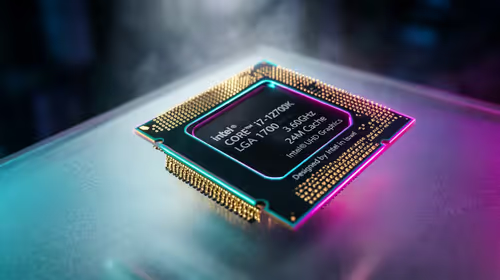
LGA 1851 vs LGA 1700 can affect Twitch and YouTube streaming when gaming and encoding share CPU resources. For SA creators, the real-world difference depends on encoder choice, memory support, motherboard cost, thermals, and upgrade plans.
Read more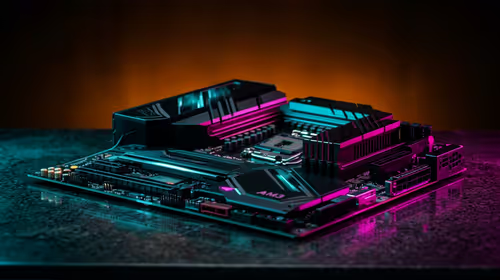
X870E vs X670E for aaa single-player gaming is mainly about fit, features, compatibility, cost, and upgrade path, not one automatic winner. SA buyers should match the choice to the setup.
Read more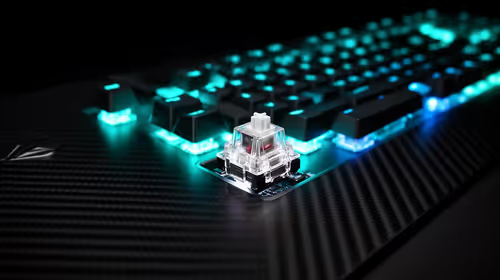
Hall Effect switches vs Mechanical switches for mMO and live-service games is mostly about compatibility, budget, upgrade path, and setup fit. SA buyers should check device support and real needs before expecting a clear win from either option.
Read more
A fake 113GB GTA VI ISO reportedly used empty padding around a small malware payload. SA gamers should delete unofficial builds, keep Windows security active and wait for official channels.

Wi-Fi 6E vs Wi-Fi 6 matters for 4K video editing when files move across a network. The real-world difference between Wi-Fi 6E and Wi-Fi 6 for video editing in 4K depends on NAS access, cloud uploads, router range, and SA creator workflows.

The difference between PCIe 5.0 and PCIe 4.0 for SA gamers is mostly bandwidth headroom. Compare GPU slot needs, NVMe speed, motherboard support, and upgrade timing before paying extra for a newer platform.

Gaming PC stuck pixel checks in South Africa should confirm the monitor fault first. Use colour tests, screenshot comparison, cable swaps, display menu checks, and clear photos before deciding on support.

Shokz OpenFit Air 2 earbuds weigh 7.2g each and use a redesigned dual-driver open-ear layout. SA buyers should choose them for comfort and awareness, not maximum isolation.

AMD's current driver now lists a Radeon RX 9050 4GB, while product coverage details a narrowed memory system. SA buyers should weigh the low VRAM ceiling against current local Radeon options.

Samsung Display has demonstrated a 16-inch 2.5K OLED laptop panel running at 300Hz. SA buyers should wait for a named notebook, full panel specifications and a local price before planning an upgrade.

Microsoft says some Windows 11 game crashes after recent updates are linked to RGB-related drivers. Affected SA gamers should confirm the update and driver before using the published registry workaround.
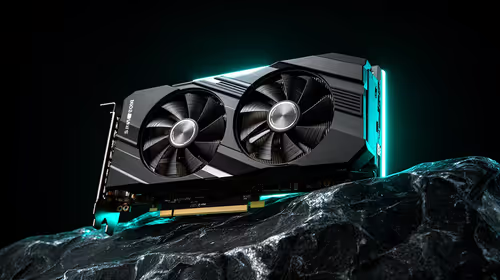
RTX 5090 on a 650W PSU is a tight pairing with very limited headroom. For SA gaming PCs, focus on total system draw, PSU quality, connector support, CPU choice, and avoid OC plans unless the full build is carefully power-limited.
PCIe 5.0 vs PCIe 4.0 for video editing in 4k is mainly about fit, features, compatibility, cost, and upgrade path, not one automatic winner. SA buyers should match the choice to the setup.
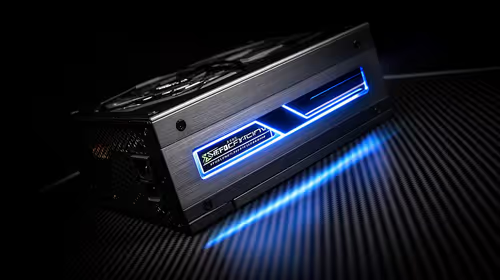
850W PSU safety for RTX 5090 is plausible with a quality unit and balanced parts. In SA, confirm connector support, CPU power draw, case airflow, PSU age, and spare capacity before building around 850W.
Wi-Fi 7 vs Wi-Fi 6e for competitive esports comes down to router support, latency goals, device compatibility, and coverage. SA buyers should match the choice to the real network setup.