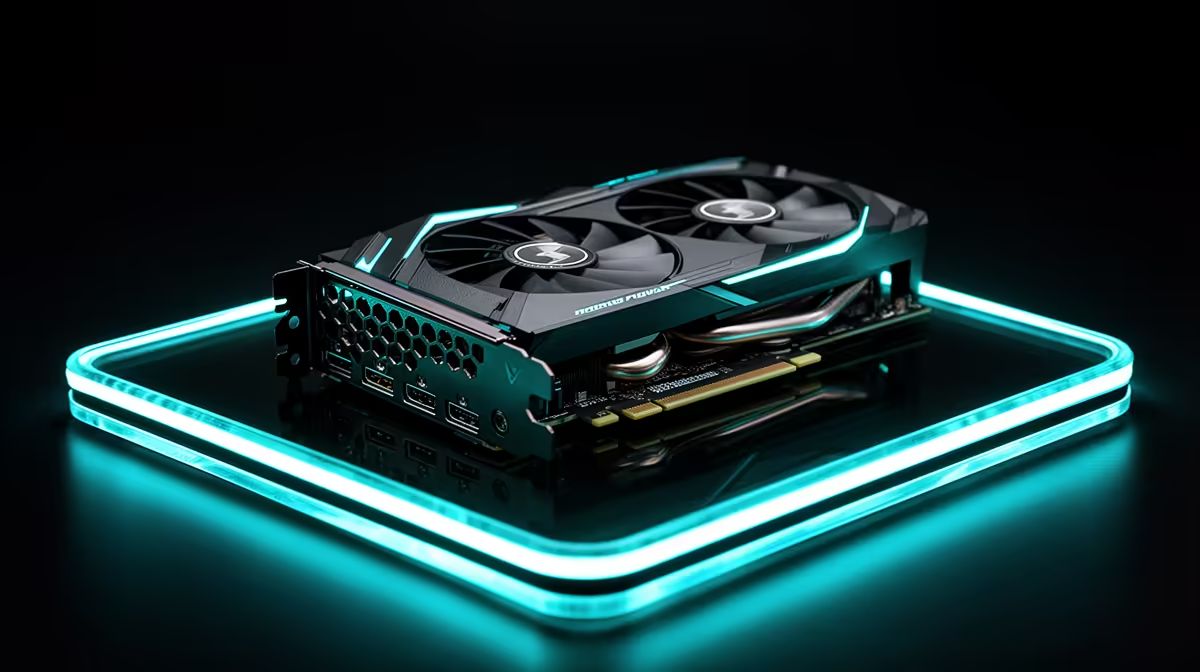
The RX 7800 XT to RX 9070 XT upgrade produces a real performance and ray-tracing gain, yet a single-generation move deserves a strict test. Both cards carry 16GB and the older model remains a strong 1440p performer. Upgrade for a missed frame-rate target or a 4K plan, not because the product number changed.
Quick Answer
Upgrade to the RX 9070 XT when your RX 7800 XT cannot hold a high-refresh 1440p target, you want stronger ray tracing or you are moving to 4K. Keep the 7800 XT if it already meets your games, because VRAM remains 16GB on both. Evetech's July 2026 graphics-card data recorded a R13,299 median as of July 2026, so the exact 9070 XT premium needs a visible job.
🎯 Set a higher bar for one generation
Run the RX 7800 XT in the two titles where you want more performance. Use your normal resolution and settings, then capture averages, low-frame results, board power and GPU use. Write down the frame rate you would consider enough.
If the card sits below full load, the processor or game engine may limit performance. Lower resolution as a quick check. Little improvement points away from the GPU; a large jump makes the 9070 XT more likely to help.
Evetech's graphics card category provides the wider market view. Check the GPU best-seller selection for another local reference. The linked RX 9060 XT range also shows the lower RDNA 4 tier, which is useful when your target can be met without paying for the 9070 XT.
🧠 Memory capacity does not change
Both cards have 16GB, so the upgrade cannot be justified by a larger buffer. The RX 9070 XT uses that capacity beside a faster architecture, which can raise frame rates and improve demanding effects.
If your RX 7800 XT already handles high-resolution textures without stutter, expect the same comfortable memory space with more processing headroom. Modded games and creation workloads still benefit from 16GB, but they need measured application gains to support the swap.
This is useful clarity. You can ignore vague future-proofing claims and focus on speed, ray tracing, upscaling and efficiency. Those are the areas where the newer card must prove itself.
✨ RDNA 4 features create the stronger case
Ray tracing is one of the more persuasive gains. Compare the exact effects you use, because a light shadow option and heavy global illumination stress the cards differently. The 9070 XT can make richer settings practical without demanding the same compromise elsewhere.
FSR 4 support adds a newer machine-learning upscaling path on RDNA 4 hardware in supported games. Inspect image stability in motion and begin with Quality mode. Your library must support the feature for it to count today.
Once the base rate feels healthy, generated frames can make motion look smoother on the display. Input response still follows the real rendering work, so competitive players should focus on native and upscaled results.
🌡️ Include power, size and noise
Partner-card dimensions vary. Measure length, thickness and connector clearance with the case fully assembled. A large cooler can run quietly, but only if it receives clean intake air.
Check the existing PSU against the exact RX 9070 XT recommendation. Capacity, connector layout, age and platform quality all matter. A required supply replacement increases the upgrade cost and may tip the decision back towards keeping the RX 7800 XT.
Compare noise after both cards reach a stable temperature. A new model that gives more frames while keeping a similar acoustic level can improve the experience. A louder card may need fan tuning or better case airflow.
💰 Price the frames you can see
Take the exact 9070 XT price and subtract any amount you can recover from the old card only after the new one is tested. Add a PSU or case change. Then compare that net cost with the frame-rate gain in your two chosen games.
A planned 4K monitor strengthens the case because the new card has more rendering work to do. At 1440p 60Hz, the RX 7800 XT may already exceed the panel's useful range. At 1440p 240Hz, extra headroom has a clearer purpose.
The best reason to skip is simple: your existing experience is already good. Waiting another generation can turn a measured but modest gain into a larger leap. The best reason to buy is equally concrete: the 9070 XT reaches a setting or display target the older card misses every week.
After fitting it, repeat the old tests with the same game versions and settings. Confirm the monitor refresh rate, adaptive sync and driver profile. Keep the RX 7800 XT until the new card passes several long sessions.
Avoid mixing benchmark results from different driver versions if the comparison is close. Update the 7800 XT first, capture its final baseline, then install the 9070 XT with the same game builds. This removes one easy source of misleading gains.
If you use the PC for video editing or 3D work, test that application separately. A new architecture may change export or render behaviour in ways gaming charts cannot predict. One weekly production task can justify the move even when a favourite game shows a modest uplift.
Record acoustics from the same chair with the case in the same position. A phone recording is imperfect, yet it can reveal whether the new cooler has a harsher tone at equal room conditions.
Frequently Asked Questions
Is the RX 9070 XT a big enough jump from the RX 7800 XT to justify upgrading?
It can be for high-refresh 1440p, stronger ray tracing or 4K. It is less convincing when the 7800 XT already meets your target.
How much does VRAM change between the RX 7800 XT and RX 9070 XT?
It does not change. Both cards have 16GB.
Does the RX 9070 XT improve ray tracing meaningfully over the RX 7800 XT?
Yes, RDNA 4 offers stronger ray-tracing capability. The visible gain depends on the game and chosen effects.
Is the RX 7800 XT still a good 1440p card in 2026?
Yes. It remains a strong 1440p card, which is why this single-generation upgrade needs careful scrutiny.
Who should skip this particular upgrade?
Skip it if the RX 7800 XT already holds your settings and display target or if another generation of waiting suits you.
Ready to put a one-generation jump on trial?
Compare RX 9070 XT-class options in Evetech's graphics range, then demand a visible gain in your hardest games before replacing the RX 7800 XT.