Upgrade the part consuming frame time. Buyers often make the GPU or CPU upgrade decision from age, brand tier or benchmark envy instead of evidence from their games. A four-year-old processor can still be balanced at 4K, while a newer one can hold back a 240Hz esports setup.
Quick Answer
Upgrade the graphics card first when games are GPU-bound, which is the more common case at 1440p and 4K; upgrade the CPU first when frame rates stop rising as graphics settings fall, especially at high refresh rates. Evetech listed the Palit RTX 5060 Infinity 2 OC at R6,999 and the six-core Ryzen 5 9600X at R4,499 as of July 2026. Those prices are not interchangeable upgrades, so diagnose the bottleneck before spending the R2,500 difference or rebuilding a platform.
🔎 Read the bottleneck instead of guessing it
A GPU bottleneck usually reveals itself through sustained high graphics-card use, lower performance at higher settings, and a clear frame-rate response when resolution or visual quality is reduced. The processor may still be busy, but the GPU is setting the pace.
A CPU limit behaves differently. Lowering texture quality or resolution may barely change the frame rate because the processor cannot prepare more frames. One or two heavily used cores can matter even when the overall CPU percentage looks modest, so a single total-utilisation number is not enough.
Frame-time graphs are more useful than a snapshot percentage. Look for the component associated with repeated slow frames during actual play. Test a representative scene, not an empty menu or a built-in benchmark that does not reflect your multiplayer match, city simulation or modded save.
Thermal and power limits can imitate a weak component. Confirm that clock speeds remain healthy, temperatures are controlled, memory is configured correctly and the game is not capped before declaring hardware obsolete.
🎯 Resolution changes the upgrade order
At 4K, the graphics card processes far more pixels per frame, making a GPU upgrade the likely winner. At 1080p with a high-refresh monitor, the GPU can finish its work quickly enough to expose CPU limits. This is why two buyers with the same processor can need opposite upgrades.
The monitor is part of the diagnosis. A machine delivering 130 FPS to a 60Hz panel has no urgent CPU problem merely because a review shows another chip reaching 200 FPS. The unseen frames have little value unless latency, competitive play or a planned display upgrade creates a use for them.
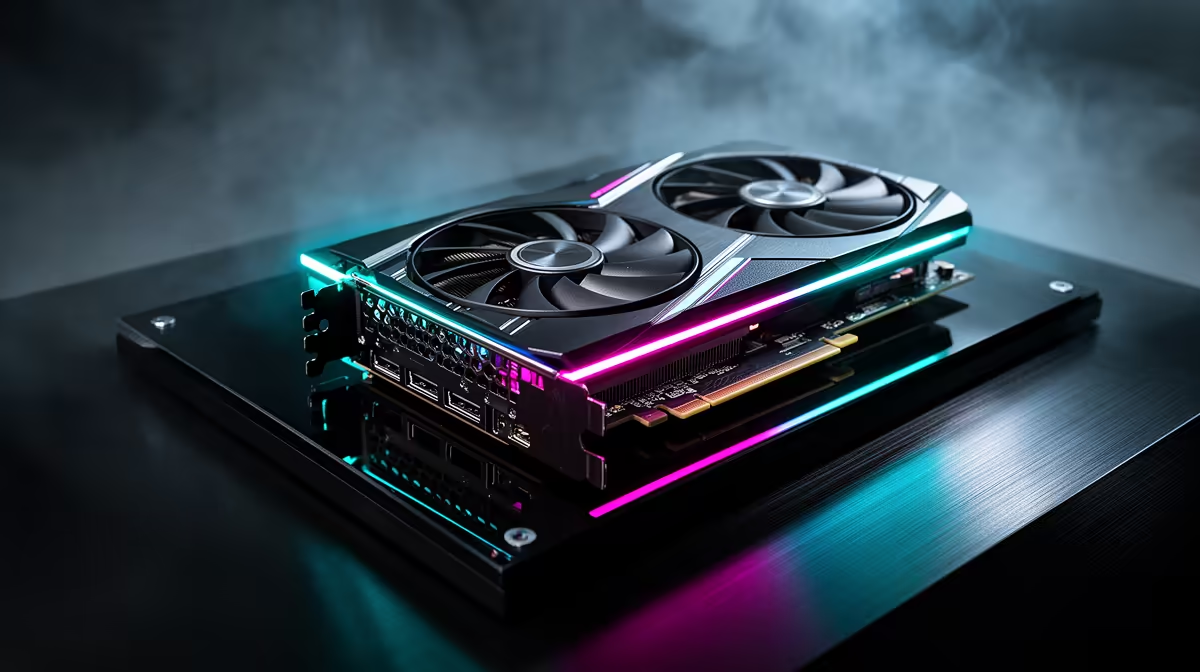
Before browsing Evetech's NVIDIA graphics card range, write down the display resolution, refresh rate and games that matter. A graphics card should be selected for that target, not for an abstract performance tier.
🧮 Price the hidden parts of a CPU upgrade
A graphics-card change can be close to a one-part job, although power-supply capacity, connectors and case clearance still need checking. A processor change can trigger a motherboard, memory and cooler purchase, turning an apparently cheaper chip into the more expensive project.
Socket compatibility alone is not sufficient. The motherboard may need a BIOS update, its power delivery must suit the processor, and its memory support can restrict the platform. If a new CPU requires a board and DDR5 memory, compare that total against the next graphics tier.
The reverse is also true. A large GPU can demand a stronger power supply or a roomier case. Measure physical clearance, inspect available power connectors and check the unit's quality and capacity. The correct upgrade cost is every part required to make the new component work safely.
Resale value can reduce either bill, but it should not rescue a weak decision. Used-part prices are uncertain until the item sells, and downtime has a cost when the PC is needed for work or study. Make the upgrade worthwhile at its full purchase cost; treat recovered value as a later benefit.
For a useful South African comparison, Evetech's graphics-card category had a median of R13,299 in the July 2026 price snapshot. That does not mean every worthwhile GPU costs that amount; it shows why a mistaken graphics upgrade can consume enough money to solve several smaller constraints instead.
🧭 Use a decision ladder, not a universal rule
Start with the symptom. Low average frame rates that improve when graphics settings fall point toward the GPU. Strong averages with poor consistency, simulation slowdowns or no benefit from lower settings make the CPU and memory subsystem more suspicious.
Next, define the desired result. Moving from 60 FPS to a stable 100 FPS is a different project from feeding a 240Hz monitor. A buyer satisfied with image quality but frustrated by competitive responsiveness may need a CPU. A buyer satisfied with responsiveness but unable to raise visual settings probably needs the GPU.
Then test the cheapest correction. Close background software, enable the proper memory profile, update stable drivers, check temperatures and remove accidental frame caps. These steps do not replace inadequate hardware, but they prevent spending thousands of Rand on a configuration fault.
Repeat the test after any correction and record the result. A ten-minute before-and-after log is more valuable than an hour of comparing unrelated benchmark charts because it isolates the behaviour of your own machine.
Finally, compare full upgrade paths. Evetech's GPU best sellers can establish local product context, but the shopping list should follow the measured limit. Upgrade both only when both are materially short of the target or when a platform rebuild makes staged changes uneconomical.
Frequently Asked Questions
How do I know whether the CPU or GPU is the bottleneck?
Monitor frame times, GPU utilisation, per-core CPU behaviour and the effect of lowering resolution. If lower graphics load raises frame rates substantially, the GPU was probably limiting performance.
Should most gaming PCs receive a GPU upgrade first?
Usually, particularly at 1440p or 4K. The graphics card has the largest direct effect on visual settings and frame rate in GPU-bound games.
When does the CPU matter more?
Prioritise it for high-refresh competitive gaming, simulation-heavy titles, severe frame-time inconsistency or cases where lower graphics settings do not improve performance.
Can a weak CPU limit a new graphics card?
Yes. The card may wait for the processor, producing low utilisation and less performance than the GPU can deliver.
Should I check the motherboard before a CPU upgrade?
Always. Confirm socket, chipset, BIOS version, power delivery, memory type and cooler compatibility before buying the processor.
Ready to spend on the slow frame, not the oldest box?
Measure your target games, price every supporting part, and use Evetech's graphics-card selection only after the bottleneck and display goal agree.