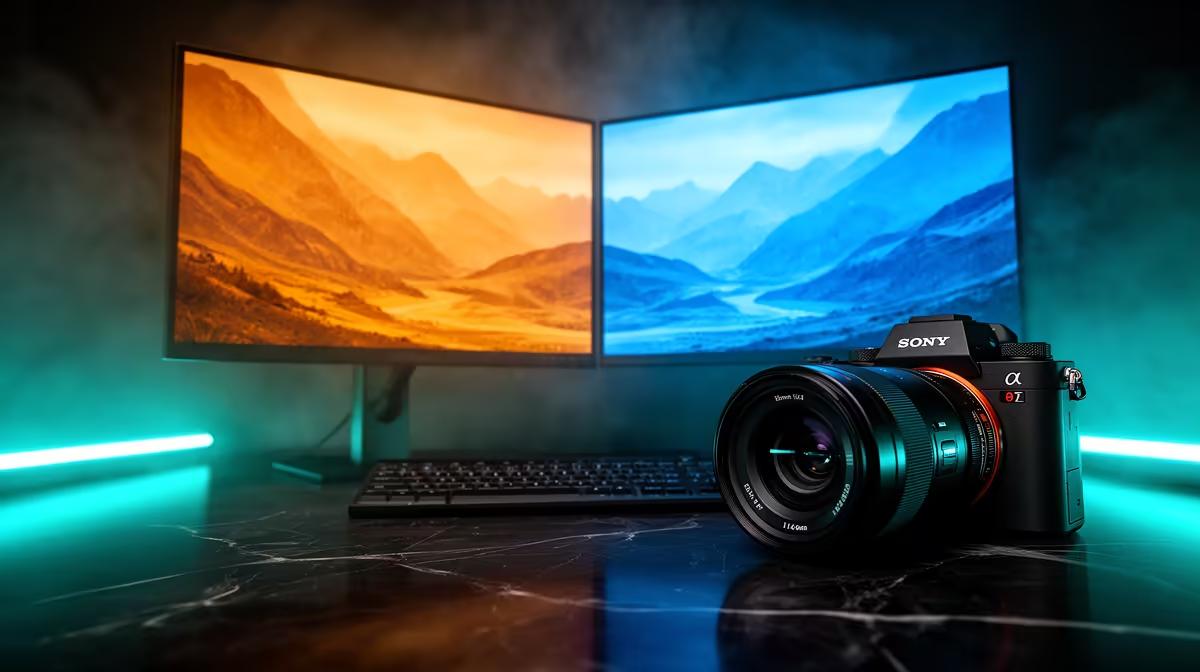
Colour temperature is one of those settings most creators adjust once and forget, yet it shapes how your entire stream looks. Get it wrong and your face reads sickly orange under a cosy lamp or pale and clinical under bright daylight. Choosing between warm 700K and cool 6500K tones is less about personal taste and more about the relationship between your light, your room, and what the camera actually sees.
Quick Answer
Warm light near 3000K flatters skin in evening setups; cool 6500K keeps daytime footage crisp under natural window light. Most creators land near 4500K to 5000K as a neutral daily default that blends with mixed SA indoor lighting without heavy white balance corrections.
🌗 Understanding the Kelvin Scale Before Picking a Side
Colour temperature is measured in Kelvin, and the scale runs from deep amber at the low end to stark blue-white at the top. A candle burns around 1800K. The afternoon sky near Cape Town on a clear day sits above 6000K. Most indoor artificial lighting falls somewhere between those extremes.
What the number tells you is simple: lower Kelvin means the light leans warm and orange, higher Kelvin means it leans cool and blue. Your camera has a white balance setting that tries to compensate for whichever direction the light leans, but it works best when the gap between the light's Kelvin and the camera's white balance setting is narrow.
When that gap widens past roughly 1000K, the correction becomes visible as either a warm orange cast on skin or a cold, slightly lifeless blue tint. This is why matching your light to your environment matters as much as choosing a flattering tone.
Why the Room's Existing Light Complicates Everything
South African homes vary wildly in their ambient light mix. A north-facing room in Joburg catching afternoon sun pulls very blue and bright. A south-facing Cape Town flat in the evening runs warm from tungsten downlights or warm-white LED strips. A koshuis room might rely entirely on a single cool overhead fluorescent.
When your video light Kelvin and the room's ambient Kelvin clash by more than about 800K, the camera cannot neutralise both at once. It picks one and the other becomes a visible colour cast. This is the core problem that knowing your Kelvin range solves.
🔆 The Case for Warm Light at the Low End
Warm tones between 2800K and 3500K do something useful in low-ambient evening setups: they add a soft golden quality to skin that reads as relaxed and natural. A cosy bedroom or lounge stream, a casual talking-head vlog filmed after dark, or a gaming setup lit mostly by warm desk lamps all benefit from a video light that matches rather than fights the room tone.
The practical rule is to stay at or above 2800K even when going warm. Pushing below 2700K creates a heavy orange cast that reads nostalgic or unintentional rather than flattering, especially at lower streaming resolutions where the camera's auto white balance tends to overcorrect in unpleasant ways.
At 3000K to 3200K, the effect is controlled: slightly golden, softer on contrast, easy on the eyes for a viewer watching a relaxed stream. Pair it with a manual white balance setting locked to match, and skin tones look warm without looking cooked.
Where Warm Light Falls Short
In a room flooded with natural daylight through large windows, a 3000K light is fighting the sky. Daylight sits around 5500K to 6500K depending on time and weather. The camera will try to split the difference, leaving you with a face that is orange on the side lit by your warm panel and blue on the side catching the window. No amount of post-processing cleans that elegantly.
⚡ The Case for Cool Light at the High End
Cool light at 5600K to 6500K is the workhorse setting for product photography, daytime streams where windows are open, and any situation where you want fine detail to read sharply. At these temperatures, whites look neutral, fine textures are distinct, and backgrounds hold their true colour rather than shifting toward amber.
The 6500K end of the scale is technically called daylight balanced because it mirrors the spectral output of a clear midday sky. Cameras and webcams are generally calibrated with daylight in mind, so shooting at 6500K often means almost no white balance correction is needed, keeping the raw image accurate from the start.
The risk at the cool extreme is that skin can look flat or slightly pale if the light is powerful and direct. The fix is straightforward: either dial back toward 5500K or add a thin warm gel. A setting of 5600K is usually as cool as you want to go for talking-head content without addressing the pallor in post.
🎯 Why 4500K to 5000K Is the Safe Middle Ground
Most South African creators running mixed setups, meaning a combination of ceiling lights, monitor glow, and one or two dedicated video panels, find that a neutral setting near 4500K works across the widest range of conditions.
At 4500K the light is neither perceptibly warm nor cool. It reads as natural to the eye and close enough to neutral that a camera's auto white balance handles it cleanly, even when it is not set precisely. This is the setting you can drop into any room without auditing the ambient light first.
Pro Tip ⚡
Before locking your Kelvin setting, take a short test recording and check the histogram, not just the live preview. Screens in editing software are often warmer than a broadcast viewer's phone, so let the numbers guide the balance rather than the look of your monitor alone.
The 4500K to 5000K band also pairs well with the kind of warm-white LED downlights common in most SA homes. The gap between the room light and the video panel is small enough that the camera resolves it without any obvious cast. For creators who move their setup, stream at different times of day, or want one reliable setting they do not have to think about, neutral daylight is consistently the most forgiving choice.
Frequently Asked Questions
Which colour temperature flatters skin tone in an evening stream?
Warm light in the 2800K to 3200K range is the most flattering for evening setups. It adds a gentle golden quality that suits relaxed content and pairs naturally with the warm indoor lighting most SA homes use after dark. Staying above 2800K keeps the warmth controlled rather than overwhelming on camera.
When does 6500K daylight actually work well?
It works best in daytime shoots where windows are open and natural light is the dominant source. Cool 6500K matches the sky, keeps whites accurate, and lets the camera run without large white balance corrections. For product close-ups or bright studio setups, it is the sharpest option. Avoid it in warm evening rooms where it will fight the ambient light.
What Kelvin setting is a reliable daily default?
Around 4500K to 5000K. This neutral range blends with most SA indoor lighting without requiring precise white balance adjustments. A camera set to auto or daylight will handle it cleanly, making it the setting most forgiving of changing room conditions throughout the day.
Can warm light make footage feel dated or amateurish?
It can, if pushed too low. Below 2700K, the orange cast becomes heavy enough to read as unintentional, especially under the compression used in streaming. Keeping warm shots at 3000K or above maintains the flattering quality while staying within a range that looks deliberate rather than accidental.
Should my monitor and video light share the same colour temperature?
Broadly, yes. If your monitor is calibrated near 6500K and your video light is running at 3000K, the camera will see two competing white points in the same frame. Setting both your panel and your monitor to a similar temperature, around 5000K to 6500K, keeps the light spilling from your screen consistent with your key light so the camera resolves one clean white balance.
Ready to dial in a colour temperature that actually flatters your setup?
Browse the bi-colour video lighting range and find a panel with full Kelvin adjustment so you can match any room, from a warm Cape Town evening stream to a crisp daylight product shoot.