Quick Answer
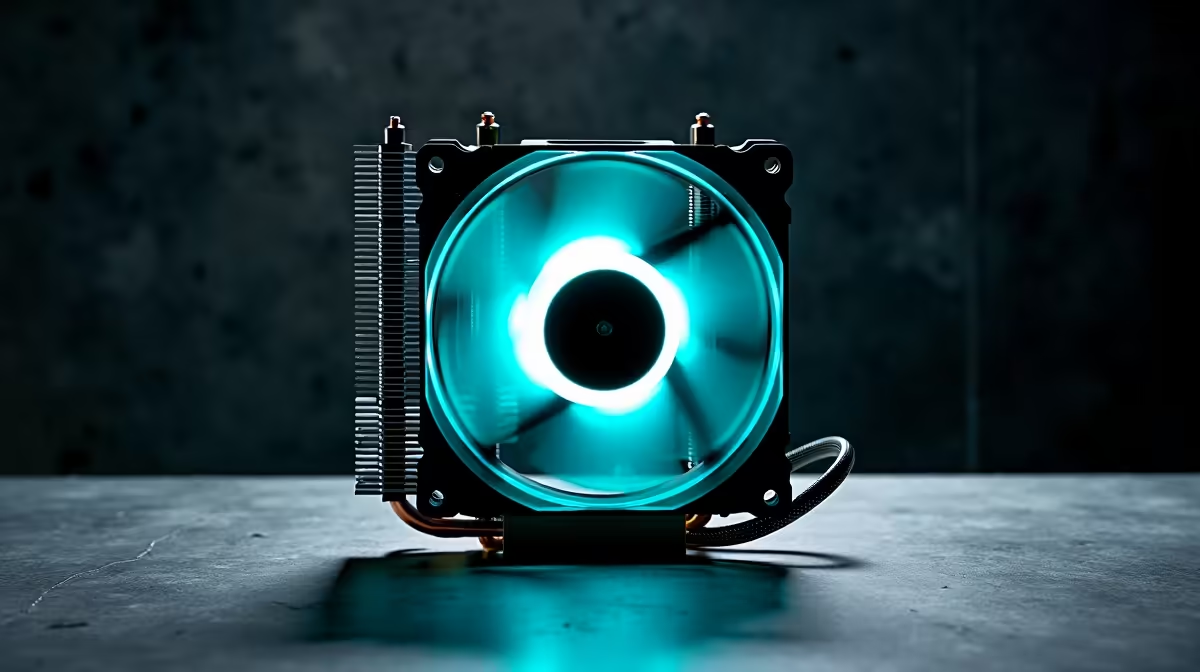
The easiest case fan upgrade for data science coursework is adding a high-airflow front intake fan, because training models and running notebooks load the CPU and GPU for long stretches that build heat. A quality 120mm or 140mm PWM fan at Evetech costs about R150 to R450, with a three-fan kit around R1,200. Long compute jobs throttle on poor airflow, so a fresh intake keeps clocks steady. Start with the front intake; it is the simplest fix with the biggest effect.
Why Cooling Matters For Long Compute Jobs
Data science workloads, training a model, running a large notebook, or processing a dataset, hold the CPU and often the GPU near full load for minutes or hours. That sustained heat is exactly what throttling targets, slowing your job. The easiest improvement is a strong front intake fan feeding cool air into the case, helping the components hold their clocks. Keeping the CPU under about 80C and the GPU under 80C lets a long training run finish without thermal slowdowns.
A PWM fan lets you set a quiet curve for light coding and a higher ramp for heavy compute.
science compute, fit a high-airflow front intake fan and set a PWM curve that ramps during training to keep the CPU and GPU under 80C.
When To Add More Airflow
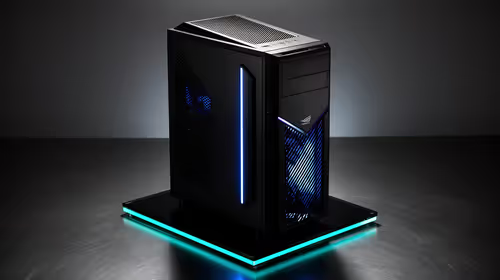
If a single intake is not enough during heavy GPU training, add a second front fan and ensure a clear rear exhaust. A two-in, one-out layout keeps a steady stream of cool air over the components through long jobs. Larger 140mm fans move more air quietly, which helps if you work late in a shared res or study space. The aim is consistent airflow that prevents throttling, since a slowed training run wastes both time and electricity.
FAQ
What fan upgrade helps data science most?
A high-airflow front intake fan. It feeds cool air to the CPU and GPU that long training jobs heat up, keeping clocks steady.
Why does cooling matter for model training?
Sustained compute heats parts until they throttle, slowing the job. Holding the CPU and GPU under about 80C lets the run finish at full speed.
Should I also cool the GPU?
The GPU has its own fans, but good case airflow feeds them cool air. A strong front intake helps the GPU stay below 80C during long training.
Add a high-airflow front intake fan at Evetech and tune a PWM curve, then add a second intake if heavy training still pushes parts past 80C.