Tired of that tangled mess of cables breeding behind your desk? What if you could just drop your phone on a pad and... it just charges? ✨ It’s not magic, it’s wireless charging. But how does this tech actually work, and is it the right move for your setup in South Africa? Let's untangle the mystery and find out if it's time for you to finally cut the cord for good.
How Does Wireless Charging Actually Work?
At its core, wireless charging is a clever application of a physics principle called electromagnetic induction. It sounds complicated, but the idea is simple. Think of it like two tuning forks... when you strike one, the other vibrates without touching it.
Here’s the breakdown of how it works:
- The Transmitter: Inside the charging pad or stand, there's a coil of wire. When you plug it into the wall, electricity flows through this coil, creating a small, oscillating magnetic field around the pad.
- The Receiver: Your phone, earbuds, or other compatible device has a similar coil built into it.
- The Magic Moment: When you place your device onto the pad, its receiver coil enters the magnetic field. This field "excites" the electrons in your device's coil, inducing an electrical current.
- Power Up! This newly created current is then converted into DC power that charges your device's battery.
The most common standard for this technology is called Qi (pronounced "chee"). It's a universal standard that ensures a Qi-certified charger from one brand will work with a Qi-certified device from another. All the magic happens when a quality wireless charger does the rest.
Is All Wireless Charging the Same?
Not quite. While Qi provides the universal language, the speed can vary. You’ll see chargers rated for 5W (the slow, old standard), 7.5W (for iPhones), and 10W or 15W for many modern Android devices. A higher wattage generally means a faster charge, but your device must also support that speed.
You might also hear about Apple's MagSafe. This is essentially Qi charging with a clever addition: a ring of magnets. These magnets ensure your iPhone snaps into the perfect alignment every time, guaranteeing an efficient connection and faster speeds. It's a great example of refining a universal technology for a better user experience.
The Pros and Cons: Is It Right for You?
So, you understand what wireless charging is, but is it a practical choice? Let's weigh it up.
The Upside 👍
- Sheer Convenience: This is the biggest win. No more fumbling for cables in the dark or wearing out your phone's charging port. Just place your device down and pick it up when you need it.
- Aesthetics: A wireless charging pad creates a clean, minimalist, and modern look for your desk or nightstand. Because of this, they've become some of the most sought-after gaming accessories for a clean setup.
- Reduced Wear and Tear: Constantly plugging and unplugging a cable puts stress on your device's port. Wireless charging eliminates this completely, potentially extending the life of your expensive tech.
The Downside 👎
- Slower Speeds: Even the fastest wireless chargers are typically slower than a high-speed wired charger. If you need to juice up from 0 to 50% in 15 minutes, a cable is still your best bet.
- Positioning is Key: You can’t just toss your phone anywhere on the pad. The coils need to be aligned properly to work, although this is becoming less of an issue with newer multi-coil pads and MagSafe.
- Less Efficient: Some energy is lost as heat during the transfer. It's not a massive amount, but it is slightly less energy-efficient than direct wired charging.
Speed Tip ⚡
To get the fastest possible wireless charge, remove your phone case if it's thick or has metal parts. Also, ensure you're using a high-quality power brick with sufficient wattage. A weak power adapter from an old phone will bottleneck your charging speed, no matter how good the pad is.
Choosing the Right Wireless Charger
Ready to make the jump? Picking the right one is easy if you know what to look for.
First, check the wattage. Make sure the charger’s maximum output matches (or exceeds) what your device can handle. Buying a 15W charger for a phone that only accepts 7.5W won't make it charge faster, but it does future-proof your purchase.
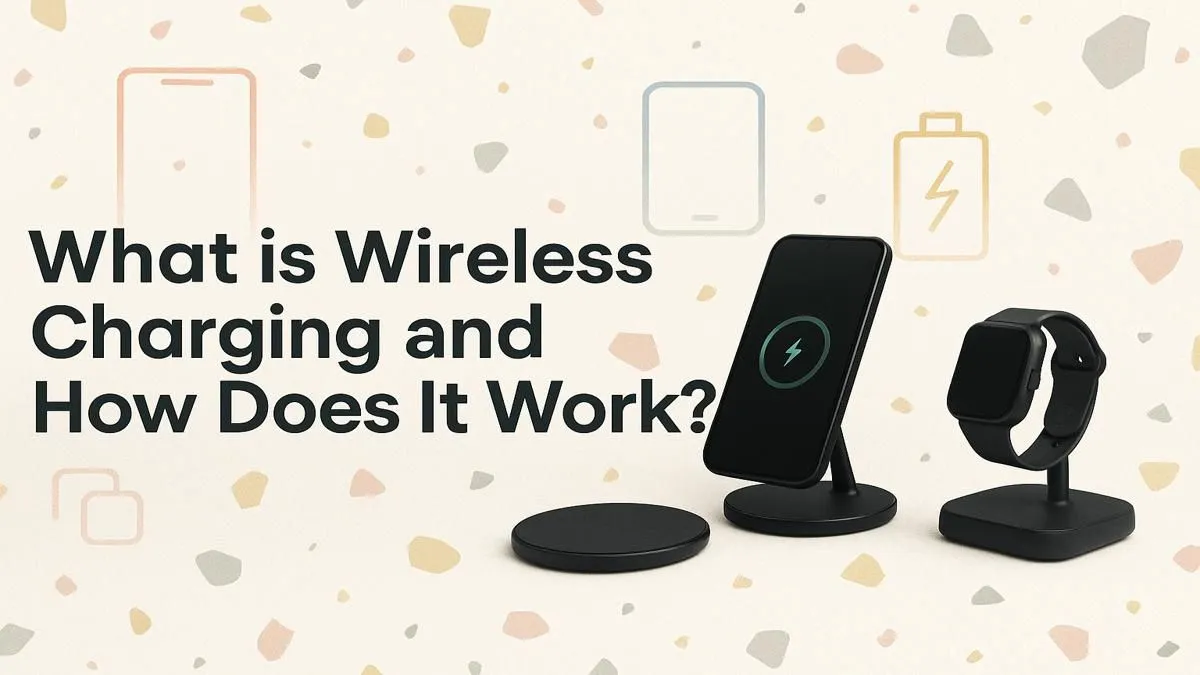
Next, consider the form factor. A flat pad is great for nightstands, while an upright stand is perfect for a desk. A stand keeps your phone angled towards you, so you can easily check notifications or use Face ID without picking it up. When you're ready to buy, you'll find great options from brands like Promate that offer certified performance and safety features.
Finally, always choose reputable brands. A cheap, uncertified charger can be inefficient or, in worst-case scenarios, a safety hazard. For a look at what's available from a trusted name, check out Promate's range of reliable chargers right here on Evetech.
Ready to Ditch the Cables for Good?
Wireless charging isn't the future... it's the now. From sleek desk pads to powerful multi-device stations, a clutter-free life is just a click away. Explore our huge range of chargers and find the perfect power solution for your gear.