


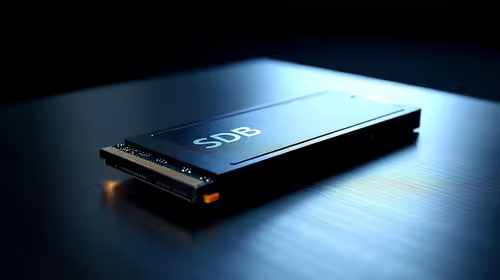
PCIe 5.0 vs PCIe 4.0 for Video editing in 4k in SA
PCIe 5.0 vs PCIe 4.0 for video editing in 4k is mainly about fit, features, compatibility, cost, and upgrade path, not one automatic winner. SA buyers should match the choice to the setup.
Read moreWits Film and Television students need a laptop matched to coursework, software, battery life, screen comfort, and campus mobility. Use this as a cautious SA shortlist, then confirm any faculty-specific rules.
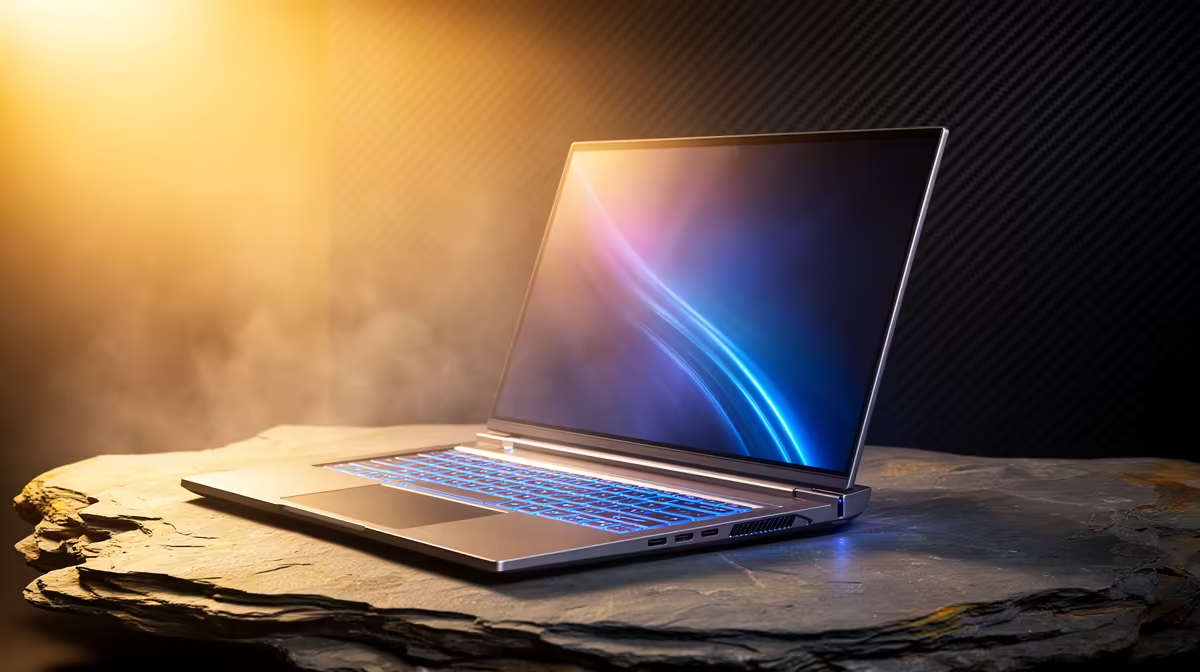
For Film and Television at Wits, the safe minimum is Core i7 or Ryzen 7, 16GB RAM minimum, 32GB preferred, 1TB SSD and RTX 4060 graphics. A realistic SA shortlist sits around R20,000-R36,000; lower prices suit lighter work, while heavier Film and Television projects need more headroom. For Braamfontein campus use, buy for daily carry, battery life and local warranty support.
Start with Core i7 or Ryzen 7, 16GB RAM minimum, 32GB preferred, 1TB SSD and RTX 4060 graphics. That is enough for video editing, scripts, colour previews, media storage and exports without forcing every lecture, lab or group project through a slow machine. If the department gives a software list, use it as the final check before buying.
Compare model families such as ASUS TUF A15, Lenovo LOQ 15, MSI Katana 15 or ASUS Vivobook Pro. Do not rely on the model name alone; confirm the exact RAM, SSD, display and processor on the Evetech listing. Fast SSD storage is essential because media projects punish slow drives.
The practical South African band is R20,000-R36,000. The cheaper end works for notes, documents and browser-heavy study, while design, CAD, coding, data or media work should move higher before accessories are added. A 24 inch monitor, mouse and sleeve can also affect the real student setup cost.
For Johannesburg students, support is part of the purchase. A laptop that is easy to carry, quiet in class and simple to warranty locally is usually a better study tool than a hotter model bought only for one headline spec.
Check battery life, keyboard comfort, webcam quality, USB-C, HDMI and Wi-Fi 6. If the laptop will connect to a second screen at home, protect the 16GB RAM and 512GB SSD baseline first because those specs affect every assignment session.
8GB can handle basic notes and browsing, but 16GB is the safer minimum for a new purchase. It keeps multitasking smoother across more semesters.
Only buy one if the workload needs GPU power, 3D work or a high-refresh screen. Otherwise, a quieter thin-and-light laptop with 16GB RAM is usually smarter.
RAM and SSD capacity matter first. After that, check screen comfort, battery life, ports and whether support is easy to handle from South Africa.
Before ordering, match the laptop against the latest Film and Television software list, then confirm 16GB RAM, 512GB SSD, charger type and local warranty support.
PCIe 5.0 vs PCIe 4.0 for video editing in 4k is mainly about fit, features, compatibility, cost, and upgrade path, not one automatic winner. SA buyers should match the choice to the setup.
Read more
Wi-Fi 7 vs Wi-Fi 6e for competitive esports comes down to router support, latency goals, device compatibility, and coverage. SA buyers should match the choice to the real network setup.
Read more
ATX 3.1 vs ATX 3.0 for mMO and live-service games buyers - what changes is mostly about compatibility, budget, upgrade path, and setup fit. SA buyers should check device support and real needs before expecting a clear win from either option.
Read more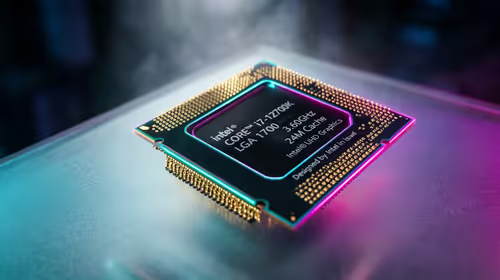
LGA 1851 vs LGA 1700 can affect Twitch and YouTube streaming when gaming and encoding share CPU resources. For SA creators, the real-world difference depends on encoder choice, memory support, motherboard cost, thermals, and upgrade plans.
Read more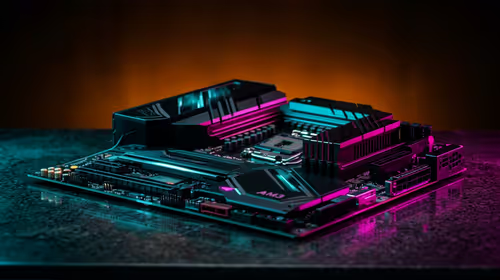
X870E vs X670E for aaa single-player gaming is mainly about fit, features, compatibility, cost, and upgrade path, not one automatic winner. SA buyers should match the choice to the setup.
Read more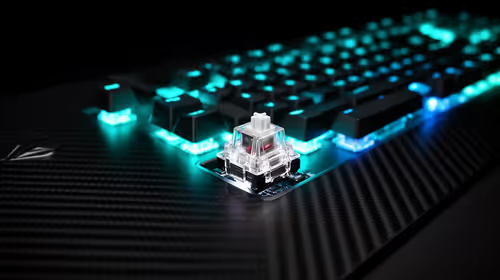
Hall Effect switches vs Mechanical switches for mMO and live-service games is mostly about compatibility, budget, upgrade path, and setup fit. SA buyers should check device support and real needs before expecting a clear win from either option.
Read more
A fake 113GB GTA VI ISO reportedly used empty padding around a small malware payload. SA gamers should delete unofficial builds, keep Windows security active and wait for official channels.

Wi-Fi 6E vs Wi-Fi 6 matters for 4K video editing when files move across a network. The real-world difference between Wi-Fi 6E and Wi-Fi 6 for video editing in 4K depends on NAS access, cloud uploads, router range, and SA creator workflows.

The difference between PCIe 5.0 and PCIe 4.0 for SA gamers is mostly bandwidth headroom. Compare GPU slot needs, NVMe speed, motherboard support, and upgrade timing before paying extra for a newer platform.

Gaming PC stuck pixel checks in South Africa should confirm the monitor fault first. Use colour tests, screenshot comparison, cable swaps, display menu checks, and clear photos before deciding on support.

Shokz OpenFit Air 2 earbuds weigh 7.2g each and use a redesigned dual-driver open-ear layout. SA buyers should choose them for comfort and awareness, not maximum isolation.

AMD's current driver now lists a Radeon RX 9050 4GB, while product coverage details a narrowed memory system. SA buyers should weigh the low VRAM ceiling against current local Radeon options.

Samsung Display has demonstrated a 16-inch 2.5K OLED laptop panel running at 300Hz. SA buyers should wait for a named notebook, full panel specifications and a local price before planning an upgrade.

Microsoft says some Windows 11 game crashes after recent updates are linked to RGB-related drivers. Affected SA gamers should confirm the update and driver before using the published registry workaround.
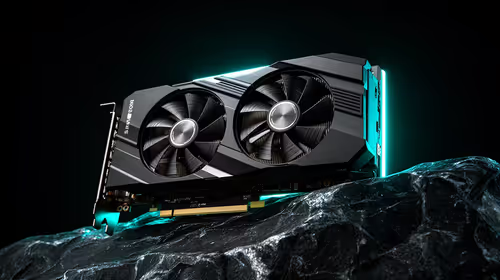
RTX 5090 on a 650W PSU is a tight pairing with very limited headroom. For SA gaming PCs, focus on total system draw, PSU quality, connector support, CPU choice, and avoid OC plans unless the full build is carefully power-limited.
PCIe 5.0 vs PCIe 4.0 for video editing in 4k is mainly about fit, features, compatibility, cost, and upgrade path, not one automatic winner. SA buyers should match the choice to the setup.
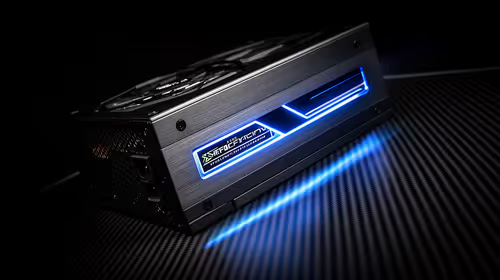
850W PSU safety for RTX 5090 is plausible with a quality unit and balanced parts. In SA, confirm connector support, CPU power draw, case airflow, PSU age, and spare capacity before building around 850W.
Wi-Fi 7 vs Wi-Fi 6e for competitive esports comes down to router support, latency goals, device compatibility, and coverage. SA buyers should match the choice to the real network setup.