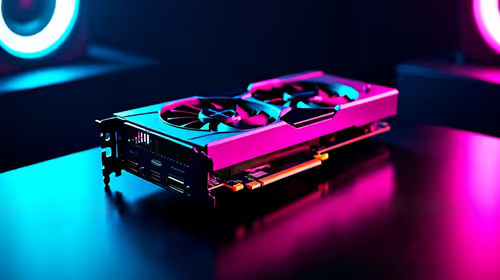
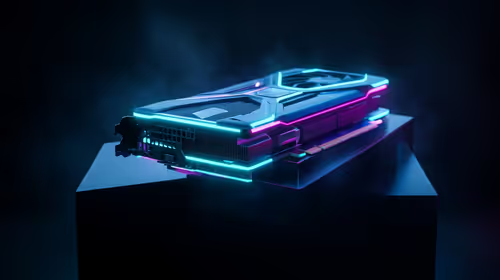
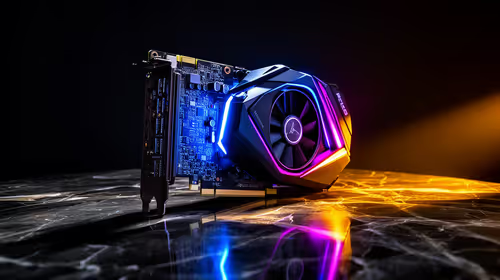
Strap on a headset and the maths changes. A flat-screen game renders one image; VR must push a separate full-resolution frame to each eye at a sustained refresh rate, every single frame, with no margin for stutter before your body notices. That makes the graphics card the single component that decides whether a PC is genuinely VR-ready in South Africa, and it is where most of your budget should go.
Quick Answer
A VR-capable PC in South Africa is defined first by the GPU, with an RTX 4070-class card the practical entry point for running a headset like the Quest 3 smoothly at 90Hz, backed by 16GB to 32GB of RAM and a modern multi-core CPU. A complete VR-ready desktop runs from roughly R18,000 to R25,000 depending on the GPU tier you choose.
The GPU is the whole game
In VR, the GPU does roughly double the work of a flat-screen setup because it renders a separate image for each eye at a high per-eye resolution, then holds a steady frame rate so the world does not judder. Drop below the headset's refresh target and you get the kind of stutter that quickly turns into motion sickness, so headroom matters more here than in regular gaming.
An RTX 4070-class card is the sensible floor for a good experience on a current headset like the Quest 3 at 90Hz. Below that tier you can still run lighter VR titles, but you will be turning settings down and living closer to the stutter threshold. Above it, an RTX 4080 or 4090-class card buys you higher render resolutions, smoother performance in demanding sims, and headroom for future headsets.
CPU: enough cores to feed the headset
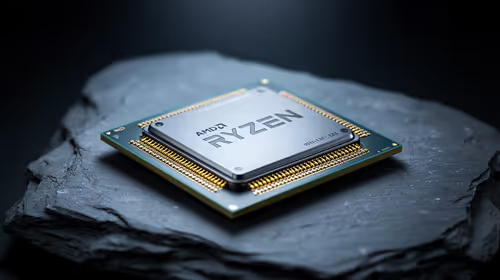
The CPU matters less than the GPU but is not something to skimp on either. VR runtimes, tracking, and physics all lean on the processor, and a weak CPU bottlenecks even a strong graphics card. A modern six-core or eight-core chip from a current Ryzen or Core generation is the comfortable target. You do not need the absolute flagship; you need enough multi-threaded grunt to keep frames flowing without hitching.
Pairing a mid-to-upper GPU with a sensible mid-range CPU is the balanced approach. Spending your whole budget on the processor and starving the graphics card is the classic mistake for a VR build.
Memory and storage
For RAM, 16GB gets you in the door and 32GB is where a VR rig stops feeling pressured when voice chat, a browser, or capture tools are running alongside the headset. VR runtimes consume more memory than a typical game, and having that headroom stops background apps from pushing the system into swapping mid-session.
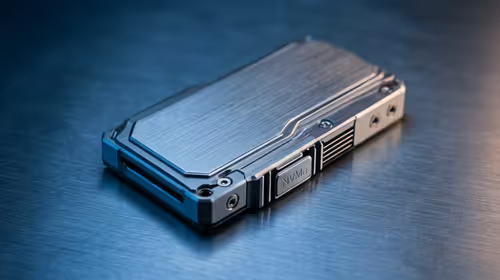
Storage should be an NVMe SSD. VR worlds load large assets, and a fast drive cuts loading times and reduces in-world hitching when new areas stream in. A 1TB NVMe SSD is a sensible starting point, since VR titles run large and most people want several installed at once rather than managing downloads constantly.
What it costs in South Africa
A complete VR-ready desktop in South Africa starts around R18,000 to R25,000, and where you land in that band is mostly down to the GPU tier. The lower end gets you an RTX 4070-class build that handles a Quest 3 at 90Hz; pushing toward the top of the range or beyond buys a stronger card for higher render resolutions and demanding simulators.
Buy or build?
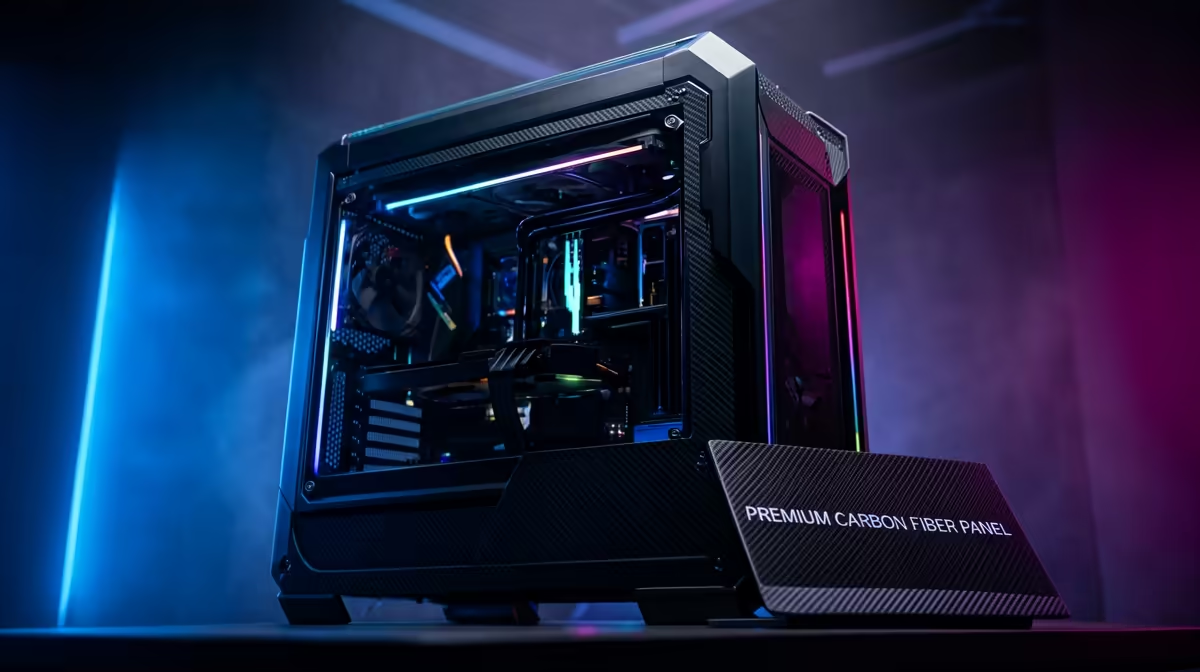
Building lets you put the budget exactly where it counts, namely the GPU, and tune the rest around it. A pre-built VR desktop saves the assembly and the parts-matching headache, which suits buyers who want it working out of the box. Either way, the GPU choice is the decision that defines the rig; everything else supports it.
Three SA build tiers to aim for
To make the budget concrete, it helps to think in tiers rather than a single number:
Entry VR (around R18,000)
Build around an RTX 4070-class GPU, match it with a current-generation mid-range processor, 16GB of RAM, and a 1TB fast SSD. That combination runs a Quest 3 at 90Hz in most titles at sensible settings and represents the genuine entry into comfortable VR rather than a stuttery near-miss. For a buyer new to VR who wants a clean experience without overspending, this configuration is the target.
Comfortable VR (around R22,000 to R25,000)
Stepping up the GPU toward the upper RTX 40-series and moving to 32GB of RAM buys genuine headroom: higher render resolutions for sharper visuals, smoother frames in demanding simulators, and the ability to run VR alongside streaming or chat without strain. Regular VR players who want the experience to hold up across titles will find this tier justifies the extra spend.
Enthusiast VR (beyond R25,000)
Top-tier cards push render resolutions higher still and give you the headroom for the most demanding sims and future headsets with higher refresh rates and resolutions. This tier suits sim racers, flight-sim pilots, and anyone who wants to future-proof against the next generation of headsets rather than rebuild in a year.
Where not to cut
The temptation is to save on the GPU and spend elsewhere. Resist it. In VR the graphics card is the experience, so if the budget is tight, trim the CPU to a sensible mid-range chip, keep RAM at 16GB rather than 32GB, and put the saving into the strongest GPU you can afford. A balanced build with a strong card beats an unbalanced one every time.
Do not forget the headset side
The PC is half the equation. You also need the headset and, depending on the model, the link cable or wireless setup to drive it from the PC. If you are running a Quest-style headset tethered or over a wireless link, factor that into the plan. Evetech's VR and AR glasses section covers the headsets available locally, and the top-selling accessories stock the cables, link adapters, and comfort upgrades buyers typically add alongside the headset.
Frequently Asked Questions
What GPU do I need for VR in South Africa?
An RTX 4070-class card is the practical entry point for smooth VR on a current headset like the Quest 3 at 90Hz. Lower cards can run lighter titles with reduced settings, while a 4080 or 4090-class card buys higher render resolutions and more headroom.
How much RAM do I need for VR?
16GB is the minimum and 32GB is the comfortable target. VR runtimes are memory-hungry, and 32GB stops background apps like voice chat or streaming from forcing your system to swap.
How much does a VR-ready PC cost in South Africa?
A complete VR-ready desktop runs roughly R18,000 to R25,000, mostly depending on the GPU tier. The lower end covers an RTX 4070-class build, while the upper end and beyond buys stronger cards for demanding simulators.
Does the CPU matter for VR?
Yes, but less than the GPU. A modern six-core or eight-core processor keeps frames flowing and avoids bottlenecking the graphics card. You do not need the flagship chip, just enough multi-threaded performance.
Is 90Hz important for VR?
Yes. Hitting the headset's refresh target, such as 90Hz on a Quest 3, keeps motion smooth and reduces the stutter that causes VR sickness. Falling short of that target is what makes VR uncomfortable, which is why GPU headroom matters.