Quick Answer
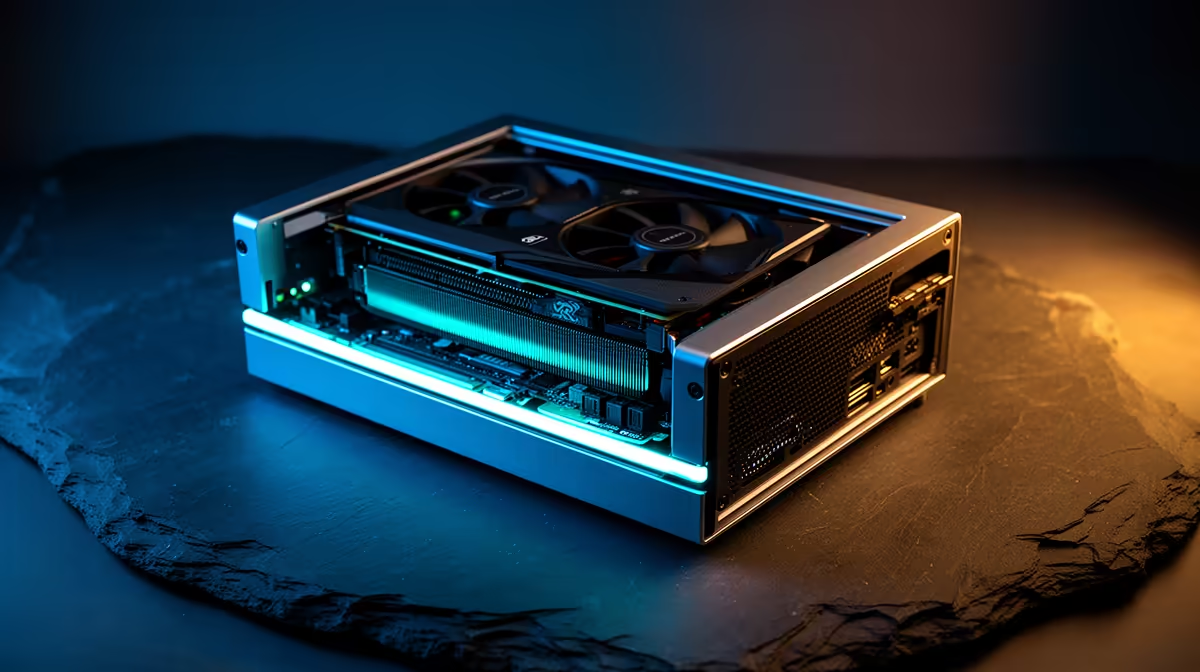
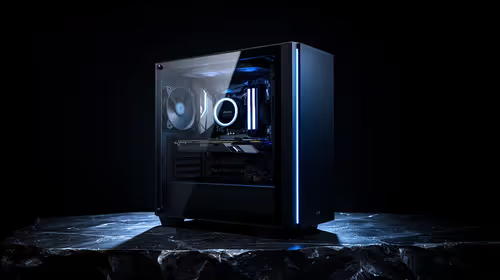
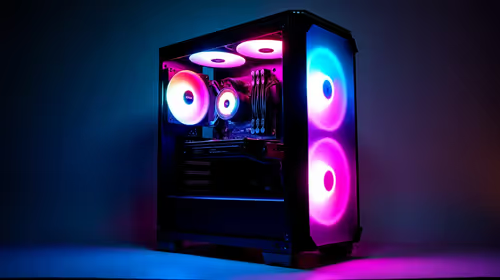
For high-end GPUs like the RTX 5080 or RX 9070 XT in a compact mATX case, prioritise four specs: at least 340mm GPU length clearance, a front or top 360mm radiator mount for cooling, a PSU shroud that clears the GPU power connectors, and a full-mesh front panel for unrestricted intake. Cases hitting all four criteria start at around R1,800 locally.
GPU Length and Clearance Numbers That Matter 📏
High-end GPUs in 2026 range from 320mm to 350mm in length. The RTX 5080 Founders Edition measures 336mm; many third-party RTX 5080 and 5070 Ti cards from ASUS, MSI, and Gigabyte reach 340mm to 355mm with triple-fan coolers. A compact mATX case needs to advertise at least 360mm GPU support to safely fit these cards, accounting for cable connectors at the rear of the card.
Power Delivery and PSU Shroud Geometry 💡
Modern high-end GPUs use 16-pin 12VHPWR connectors rated for 600W. The connector body plus the right-angle cable bend requires roughly 60mm to 80mm of clearance below the PCIe slot. Some compact mATX cases with low-profile PSU shrouds only leave 50mm of space between the top of the shroud and the GPU PCIe slot, which forces the 12VHPWR cable into a sharp bend that strains the connector. Look for cases where the PSU shroud height sits at least 20mm below the bottom edge of the PCIe slot when the GPU is seated in the topmost slot. DeepCool and Fractal Design document this clearance figure in their case brochures. A PSU with a modular cable system also helps, as you can route the 12VHPWR lead cleanly without the excess cable bulk of fixed-cable units.
Thermal Layout for High-TDP Cards 🌬️
High-end GPUs generate 200W to 400W of heat under load. In a compact mATX chassis, this heat must exit efficiently or GPU boost clocks will throttle to protect the chip. Mesh front panels with three 120mm intake fans pressurising the case keep GPU temperatures 8°C to 12°C lower than solid-front or restricted-vent designs. SA ambient temperatures during January and February in Johannesburg and Pretoria can push indoor temps to 30°C, which adds directly to GPU thermal headroom requirements. Investing in a case with genuine mesh front intake rather than a decorative mesh-look panel is one of the highest-value decisions in a high-end compact build.
Check GPU Power Connector Clearance First ⚡
Before assembling any high-end GPU in a compact mATX case, seat the GPU without connecting any cables and measure the distance from the 12VHPWR connector port to the PSU shroud or side wall. You need at least 65mm for a right-angle 12VHPWR cable to seat without stress. If clearance is tight, source a low-profile 12VHPWR adapter before building.
FAQ
Do compact mATX cases support three-fan GPU coolers?
Yes, as long as the GPU length is within spec. Triple-fan coolers add 20mm to 30mm to the card's length but not its height, so they fit in any case with adequate length clearance.
What PSU wattage do I need for an RTX 5080 in an mATX build?
For an RTX 5080 paired with a Ryzen 7 or Ryzen 9 processor, a minimum 850W PSU is recommended, with 1,000W giving comfortable headroom for overclocking. Check the case's PSU length limit; most mATX cases accommodate standard 160mm ATX PSUs, but verify before buying.
Are there mATX cases with vertical GPU mounting for compact builds?
Some premium mATX cases support a vertical GPU riser bracket that rotates the GPU 90 degrees for a display-facing orientation. This requires a PCIe riser cable, adds R400 to R700 to the build cost, and may reduce CPU cooler clearance.
Building around a high-end GPU in a compact chassis?
Browse Evetech's mATX and compact full-tower cases with confirmed GPU clearance specs to find the right enclosure for your RTX 50-series or RX 9000-series card.