Quick Answer
In a portable wireless gaming mouse, prioritise compact dimensions (under 120 mm length), weight under 80g, onboard battery storage or a foldable USB receiver, and dual-mode connectivity (Bluetooth plus 2.4 GHz). These four criteria determine whether the mouse is genuinely travel-ready versus just marketed as portable.
Size and Weight: The Two Non-Negotiables 🎒
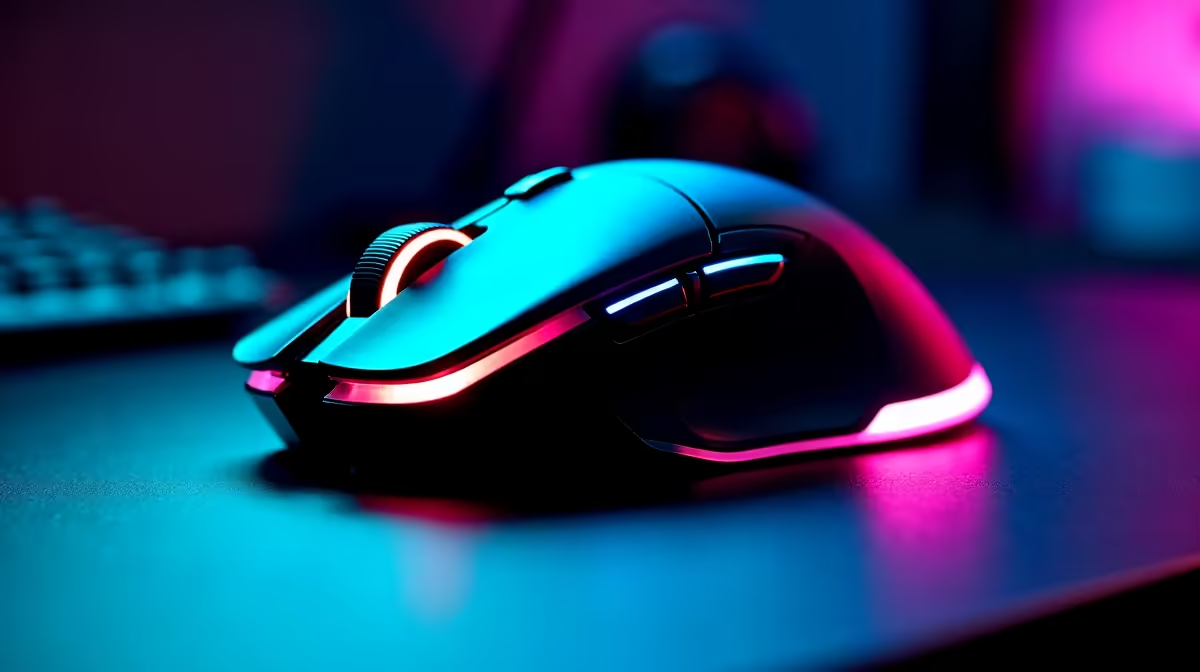
A portable gaming mouse must fit comfortably in a laptop bag side pocket or inside a compact carry case. Mice longer than 120 mm feel bulky against a 14-inch laptop and dig into other items during commuting. Weight under 80g means the mouse does not add meaningful heft to a bag that already carries textbooks, a charger, and a water bottle, which is a real consideration for SA students commuting by taxi or Gautrain between home and campus. The Razer Orochi V2 weighs 67g with a single AA battery and measures 108 mm in length, making it one of the clearest examples of a mouse designed with portability as the primary engineering constraint rather than an afterthought.
Wireless Flexibility for Multi-Device Setups 📡
Portable use scenarios almost always involve multiple devices: a personal laptop at home, a shared lab computer at university, and potentially a work machine or tablet. Dual-mode wireless with both Bluetooth and a 2.4 GHz receiver covers all three scenarios without carrying extra hardware. Bluetooth connects to any device without needing the USB receiver, which is critical when using computers that do not permit USB peripherals, such as library machines or locked-down university lab PCs. The 2.4 GHz mode engages on personal machines where you plug in the receiver once and leave it. Look for a mouse that stores the USB receiver inside the battery compartment to prevent it from getting lost in transit.
Battery Life and Charging Convenience on the Move 🔋
Replaceable AA batteries are often more practical for portable use than built-in rechargeable cells: you can swap a fresh AA from any SA petrol station or Clicks rather than finding a USB-C cable and a power outlet during a long study session. For mice with built-in batteries, confirm the charging port is USB-C (not older micro-USB), since USB-C chargers are now the standard and you likely already carry one for your laptop or phone. A minimum of 70 hours per charge at active gaming rates is practical for portable use; below that, you will need to charge during the working week, which creates additional hassle.
Store the USB Receiver Inside the Mouse ⚡
Losing the 2.4 GHz USB receiver is the most common portable mouse frustration. Always return it to the onboard storage slot inside the battery compartment or the dedicated receiver dock on the bottom of the mouse after every use. Replacing a proprietary USB receiver typically costs as much as a budget replacement mouse and is often difficult to source locally in South Africa.
FAQ
Is a portable gaming mouse good enough for serious gaming at home?
Yes, provided it uses a quality sensor and a low-latency 2.4 GHz wireless mode. Portable mice like the Razer Orochi V2 are used by competitive players precisely because they offer full-performance sensor capability in a compact body. The portability does not limit the gaming performance.
What size mouse is considered compact for travel?
Generally, under 120 mm length and under 65 mm width qualifies as compact. These dimensions fit comfortably in most laptop bag side pockets and within padded peripheral pouches without requiring a dedicated carry compartment.
Should I bring a mousepad when travelling with a portable gaming mouse?
For casual use on hotel desks or lecture hall tables, a high-end sensor like the Focus Pro 30K tracks reliably on most surfaces without a pad. For competitive gaming sessions away from home, a thin travel mousepad rolled into the bag costs under R150 and removes any surface inconsistency concern entirely.
Building a travel-ready gaming kit?
Browse compact wireless gaming mice stocked at Evetech that pair portability with competitive-grade performance for on-the-go setups.