Quick Answer
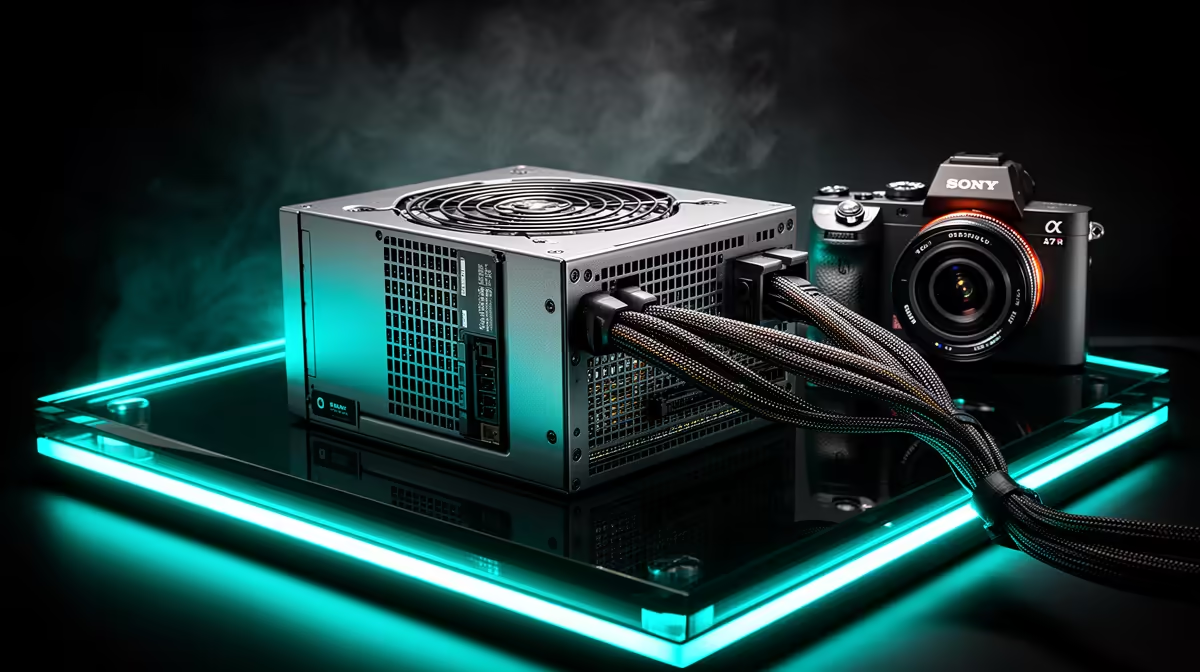
A premium gaming PSU needs ATX 3.1 compliance, full modular cabling, 80 Plus Gold or Platinum efficiency, tight 12V rail regulation, a native 12V-2x6 connector for current-gen GPUs, and at least a seven-year warranty. Wattage should sit 20% above your system's projected peak draw.
The Electrical Specs That Actually Matter 🔌
Voltage regulation is the spec most buyers skip. A quality 12V rail should hold within 1% of nominal under load; budget units allow 3% to 5% variation, which can cause GPU crashes and CPU instability under sustained stress. Transient response matters equally: ATX 3.1 certification confirms the unit can absorb GPU power spikes of 200% rated capacity without tripping over-power protection. The RTX 5090 regularly draws 700W-plus during brief compute spikes despite its 575W TDP. Capacitor quality is the third factor; Japanese-brand capacitors from names like Nippon Chemi-Con or Nichicon tolerate heat and age better than generic alternatives. All three factors combined separate a premium PSU from a badge-dressed budget unit.
Connectivity and Modularity for Modern Builds 🔧
Current-gen gaming builds need a native 12V-2x6 connector for RTX 50 and RX 9000 cards. Confirm the PSU includes this cable natively, not via an adapter. Full modularity is standard at the premium tier: it enables clean cable routing, supports aftermarket sleeved cables, and makes GPU swaps straightforward. For a high-end SA build at R35,000 or more, also look for USB Type-C power delivery support on the PSU if the case routes front USB-C through the PSU rather than the motherboard.
Warranty and Brand Reliability in SA 🛡️
Premium PSU brands offer seven to twelve year warranties. In South Africa, warranty service matters because shipping a failed unit overseas is not practical. Verify the brand has a local distributor before purchasing; units stocked at Evetech carry local warranty support. A ten-year warranty on a R4,000 to R6,000 PSU works out to R400 to R600 per year of covered operation, one of the stronger value arguments in PC building. The PSU is the component that can take down every other part if it fails hard; buy once from a reputable brand.
Match OEM Platform to Value, Not Brand Name ⚡
Many premium PSU brands outsource manufacturing to a small number of OEM factories. Units sharing an OEM platform often perform identically despite different badges. If two units share the same OEM, pick the one with the better local warranty or current price at Evetech rather than brand loyalty.
FAQ
How much should a premium gaming PSU cost in South Africa?
Expect R3,500 to R7,000 for a genuinely premium 850W to 1200W fully modular 80 Plus Gold or Platinum ATX 3.1 unit from a reputable brand. Units priced below R2,500 at this wattage are either on sale or cutting corners on internal components.
Should the PSU have a zero RPM fan mode?
For a gaming system, zero RPM mode at low load is a useful feature that eliminates fan noise during desktop use. The fan spins only above a defined load threshold, typically 40% to 50% of rated wattage. Confirm the PSU can run fanless at your expected idle load before relying on this feature.
Is a 10-year warranty realistic?
Leading PSU manufacturers back their warranties with genuine replacement processes, but the full term typically requires product registration, and overclocking-induced failure or physical damage voids coverage. Confirm the local warranty path before purchasing in South Africa.
Ready to spec the right PSU for a premium gaming build?
Browse Evetech's curated selection of premium power supplies with ATX 3.1 compliance, full modular cabling, and local warranty coverage to match any high-end system.