Quick Answer
For 420mm GPUs, South African builders should prioritise verified GPU clearance of at least 420mm with cages removed, front intake airflow capable of handling 400 to 575W GPU TDP, PCIe Gen 5 riser cable compatibility for vertical mounting, and structural rigidity to handle GPU weights of 1.8 to 2.4 kg without sag.
Understanding the 420mm Barrier in Case Design 🖥️
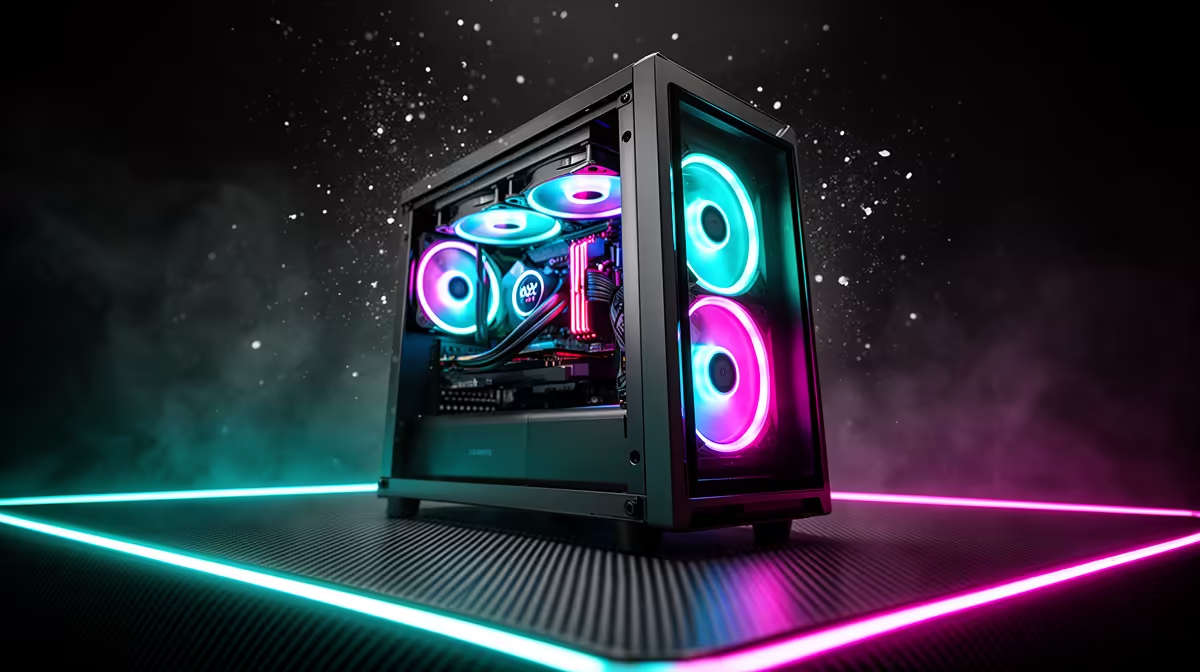
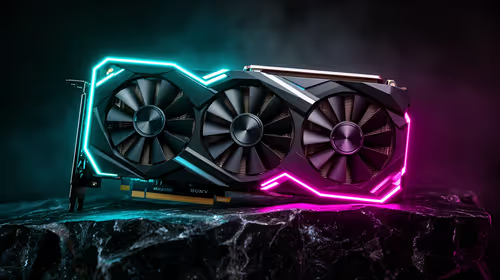
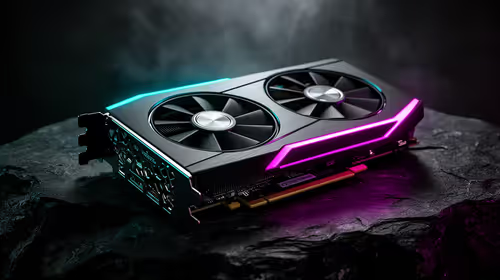
A 420mm graphics card sits at the longest extreme of consumer GPU dimensions. Several AIB variants of the RTX 5090 and RTX 5080 with extreme triple-fan coolers reach this length, and some push past it. Most ATX mid-towers max out at 380 to 400mm, meaning a 420mm card either fails to fit or presses against the front frame.
Always verify two figures from the spec sheet: maximum GPU length with drive cage installed and with cage removed. For flagship GPU builds, the cage-removed figure is the practical number since modern builders run entirely on M.2 NVMe storage. A case that reaches 420mm only without the cage is still workable; plan storage around M.2 slots only.
Airflow for Cards Producing 400 to 575W of Heat 🔥
The RTX 5090 has a rated TDP around 575W. Even with its own triple-fan cooler, the card heats the case interior significantly. For cases housing 420mm GPUs, front intake fans must be unobstructed to push fresh air across the card's heatsink. Any front 360mm radiator needs co-location verification: a 360mm radiator with fans occupies 100 to 120mm of depth, and less than 30mm of clearance between the radiator and GPU cooler severely restricts airflow.
A practical solution is top-mounting the 360mm AIO, leaving the front intake fully open for case fans feeding the GPU directly.
Structural Features for Heavy 420mm GPU Installations 🔩
A 420mm GPU weighs 1.8 to 2.4 kg depending on the AIB cooler. Without support, this creates a lever arm on the PCIe slot causing visible GPU sag and long-term mechanical stress. Prioritise cases with a built-in GPU support bracket or a bottom bracket position. Aftermarket GPU sag brackets are available locally for R200 to R400.
Case steel thickness matters with heavy GPUs. Panels at 0.5mm flex visibly during moves; 0.8 to 1.0mm steel panels are noticeably more rigid. This is a quality marker worth checking when comparing similarly priced options in the South African market.
Vertical Mounting 420mm GPUs in SA ⚡
Before buying a vertical mount riser bracket, measure the distance from the PCIe slot to the side glass panel in your specific case. Many riser brackets only create 20 to 25mm of clearance, which is tight for triple-fan cards extending 55mm from the PCB. A 40mm standoff riser gives you full airflow between glass and cooler.
FAQ
Which cases officially support 420mm GPU clearance in SA?
Several E-ATX and full-tower cases from established brands stocked at Evetech list 420mm or greater clearance in their spec sheets. Always cross-reference the product page rather than relying on case box art, which sometimes rounds from the cage-removed figure.
Does 420mm GPU clearance affect cable management space?
Yes. A card occupying the full chassis length leaves little horizontal room for front-to-GPU cable routing. Plan PSU cable runs through the rear channel and avoid routing any cables along the case floor where they may contact GPU cooler fans.
Is a full tower always better than a mid-tower for 420mm GPUs?
Not necessarily. Well-designed mid-towers with modular drive cages match full-tower GPU clearance numbers. Full towers offer more radiator options, but the extra desk space is a real trade-off for many SA gaming setups.
Got a flagship GPU that needs serious room?
Evetech stocks full-tower and large ATX mid-tower cases designed around 420mm and longer graphics card installations.