Quick Answer
Roodepoort streamers and content creators can order USB studio microphones from Evetech, with entry condensers like the HyperX SoloCast at R900 and broadcast options like the Elgato Wave:3 (R2,400) or Blue Yeti (R2,800) providing professional recording quality. For XLR setups, the Shure SM7B (R4,500) paired with a Focusrite Scarlett Solo (R2,200) is the professional standard. Evetech delivers to Roodepoort via West Rand courier next business day.
USB Microphone Options for Roodepoort Creators
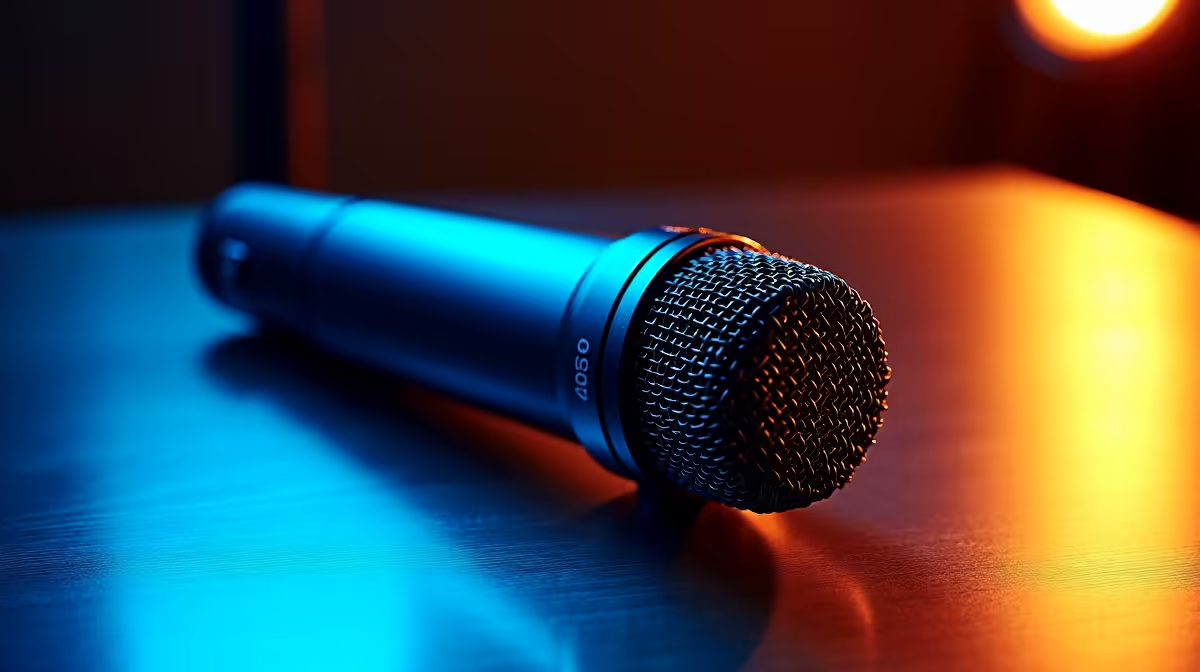
The HyperX SoloCast (R900) is the entry USB cardioid microphone — plug-and-play, USB-C, tap-to-mute, and a reliable cardioid polar pattern for solo voice recording and streaming commentary. The HyperX QuadCast S (R1,800) adds multi-pattern modes (cardioid, bidirectional, omnidirectional, stereo) and RGB status lighting, making it more versatile for podcasting or interviews. The Elgato Wave:3 (R2,400) includes Clipguard — a secondary circuit that prevents digital clipping during sudden audio peaks, valuable for streamers who react loudly. The Blue Yeti (R2,800) remains a popular multi-pattern choice for SA podcasters and YouTubers.
XLR Setup for Serious Roodepoort Creators
XLR microphones require an audio interface. The Focusrite Scarlett Solo (R2,200) is the standard entry interface — two inputs, 24-bit/192kHz recording, and solid preamp quality. Pair it with a Rode NT1-A (R3,500) for low-noise condenser recording or a Shure SM7B (~R4,500) for broadcast-grade dynamic rejection of room noise. The SM7B is particularly useful in Roodepoort homes with ambient background noise from outside.
Acoustic Setup Matters
All condenser microphones pick up room reflections. In a typical Roodepoort bedroom or study, position the mic 15–20cm from your mouth using a boom arm (~R400–R600) and add a foam panel or thick blanket behind the microphone to reduce echo.
FAQ
What is the best studio microphone under R2,000 for a Roodepoort streamer?
The HyperX QuadCast S (R1,800) is the top pick under R2,000 — multi-pattern condenser, built-in pop filter and shock mount, RGB, and solid 48kHz/16-bit audio. The HyperX SoloCast (R900) is the budget alternative if cardioid-only mode is sufficient.
Do I need an audio interface to use a USB microphone?
No — USB microphones (HyperX, Blue Yeti, Elgato Wave:3) connect directly to a PC via USB. An interface is only needed for XLR microphones. If you plan to upgrade to XLR later, the Focusrite Scarlett Solo (~R2,200) is the standard starting interface for SA home studios.
Is a dynamic or condenser microphone better for streaming in Roodepoort?
Condenser microphones capture more detail and sound better in acoustically treated rooms. Dynamic microphones (Shure SM7B, Audio-Technica AT2100x) reject background noise better in untreated rooms — ideal if you have ambient street noise or household activity near your streaming setup. For a dedicated quiet room, condenser wins; for a busy household, dynamic is more forgiving.
streamers, mount your microphone on a boom arm and position it 15–20cm from your mouth slightly off-axis — this single change eliminates most plosive sounds (P and B sounds that cause audio peaks) better than any pop filter alone.