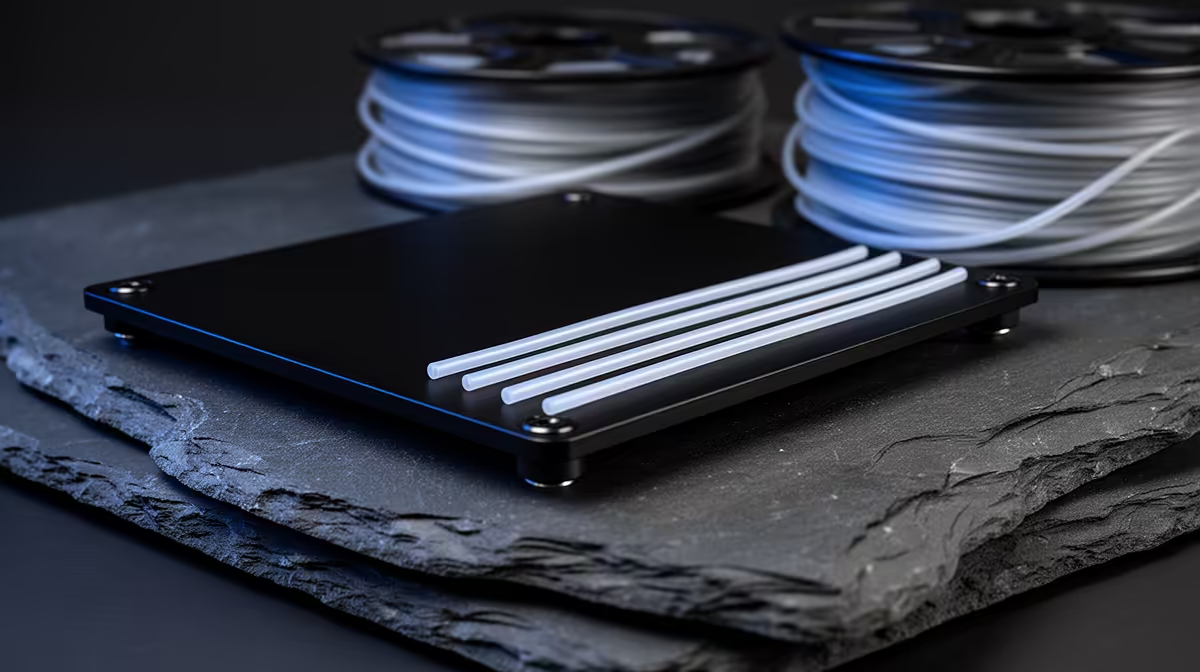
Pull a fresh PETG print off the wrong plate and you can lift the coating clean off with it. Build plate choice is not a one-size decision, it tracks the filament you load. PLA, PETG, ABS, ASA and TPU each want a different surface chemistry and a different bed temperature, and the gap between a plate that releases cleanly and one that fuses to your part is the difference between a five-second pop-off and a scraper, isopropyl and a ruined sheet.
Quick Answer
Match the plate to the material: textured or smooth PEI for PLA, powder-coated (textured) PEI or a glue-stick barrier for PETG, and a high-temp engineering plate run at 90 to 100C for ABS and ASA. TPU wants a textured surface, never bare smooth glass or smooth PEI, or it will bond permanently.
Why the plate matters as much as the filament
Adhesion is a handshake between three things: the plate coating, the first-layer temperature, and how cleanly the part lets go when the bed cools. Get the first two right and a finished print releases on its own as the plate drops below roughly 40C. Get them wrong and you are choosing between a print that pops off mid-job (a warp or a knocked part) or one that grips so hard the coating tears.
Two plate families cover almost everything a home printer touches. PEI sheets, smooth or textured, are the spring-steel flex plates most current machines ship with. Engineering plates are the higher-temperature surfaces meant for materials that need a hot bed to stop them curling. If you are choosing a printer or adding a second plate, the 3D printers and consumables range at Evetech is where to start matching hardware to the filaments you actually run.
PLA: the forgiving one
PLA prints cool, around a 55 to 65C bed, and sticks to almost anything. Smooth PEI gives PLA a glass-like, slightly glossy underside and grips hard, sometimes hard enough that you wait for full cooling before removal. Textured PEI trades that shine for a fine matte base and far easier release, which is why most people leave a textured sheet on the machine for everyday PLA.
The one real PLA trap is over-adhesion on smooth PEI when the bed is too hot. If your first layer is fusing, drop the bed by 5C rather than reaching for a tool.
Glass as an alternative for PLA
Flat borosilicate glass gives PLA a genuinely mirror-smooth underside that no flex plate can match, which matters for display pieces where the base will be visible. The limitation is release: glass does not flex, so parts must wait for the plate to cool fully before they pop free, and you may still need a PVA film on bare glass in humid conditions or with large flat prints prone to warping at the edges.
PETG: the material that bonds with everything
PETG is the surface that catches people out. It bonds aggressively, and on bare smooth PEI it will pull the coating off when it releases. The safe combinations are textured (powder-coated) PEI, where the reduced contact area lets parts lift cleanly, or a smooth surface protected by a thin barrier such as a glue stick. The glue is not there to add grip, it is there to stop a permanent weld.
Run PETG with a slightly larger first-layer gap than PLA. A nozzle squashed too close into PETG is the single most common cause of a part that will not come off.
PEX plates for PETG and engineering materials
A newer surface type, PEX (polyetherimide), has begun appearing on machines targeting mixed-material workflows. It tolerates higher temperatures than standard PEI and can handle PETG, ABS and ASA without the same tearing risk that damages smooth PEI. If your machine supports PEX sheets, they are worth considering if you regularly switch between PETG and engineering-grade filaments.
ABS, ASA and the high-temp plates
ABS and ASA need a hot, stable bed, typically 90 to 100C, and they want to stay put for the whole print or they warp and lift at the corners. This is engineering-plate territory: surfaces designed to hold high-temperature materials and tolerate the heat without degrading. An enclosure helps as much as the plate by keeping ambient temperature even.
ABS also responds well to a Kapton tape surface on glass or aluminium beds, a legacy approach still used on older open-frame printers that do not come with flex plates. The tape provides even adhesion and survives repeated high-temperature cycles, though it eventually lifts at the edges and needs replacing.
TPU and the flexibles
TPU grips well on textured PEI and most magnetic flex plates, and that is exactly where it should live. Never print TPU on bare smooth glass or smooth PEI without a release agent, because a flexible part fused to a smooth surface is extremely difficult to remove without damage. A textured surface gives the slight mechanical key TPU needs while still letting it flex free.
Softer shore-hardness TPU variants (95A and below) can be trickier to release even on textured plates if the bed runs hot. Dropping the bed temperature to 40 to 50C and allowing full cool-down before flexing the plate is the reliable approach.
Buying once instead of twice
The pragmatic answer for a mixed-filament workflow is a double-sided magnetic PEI sheet: textured on one face, smooth on the other. It covers PLA, PETG and TPU off a single plate for very little extra outlay, leaving the dedicated engineering plate as the add-on you buy only when you commit to ABS or ASA. Spare sheets, adhesives and nozzles sit alongside the printers in the accessories best sellers, so you can keep a backup surface on hand before a coating wears through.
Frequently Asked Questions
Can one plate handle every filament?
A double-sided textured-and-smooth PEI flex plate covers PLA, PETG and TPU comfortably. ABS and ASA are the exception: they want a dedicated high-temp engineering plate run hot, so true all-material printing usually means owning two plates.
Why does my PETG tear the coating off the plate?
PETG bonds too strongly to smooth PEI. Switch to a textured plate or apply a thin glue-stick barrier on smooth surfaces, and raise your first-layer height slightly so the nozzle is not crushing the filament into the bed.
Do I need glue stick on textured PEI?
Usually not for PLA. It is worth keeping for PETG even on textured plates as a release barrier, and a thin film can help large ABS prints hold their corners on a high-temp plate.
What bed temperature suits each material?
Roughly 55 to 65C for PLA, 70 to 80C for PETG, and 90 to 100C for ABS and ASA. TPU prints cool, around 40 to 50C. These are starting points, fine-tune by 5C if a first layer lifts or grips too hard.
Is glass still worth using?
Glass heats evenly and gives a smooth base, which suits ABS, but rigid glass will not flex to release a part the way spring-steel PEI does. For mixed-material home use, a flexible PEI plate is the more practical default.
Loading the right plate for the filament saves you wasted spools and torn coatings. Browse printers, spare PEI sheets and high-temp plates in the 3D printers and consumables range at Evetech and set up for every material you print.