Quick Answer
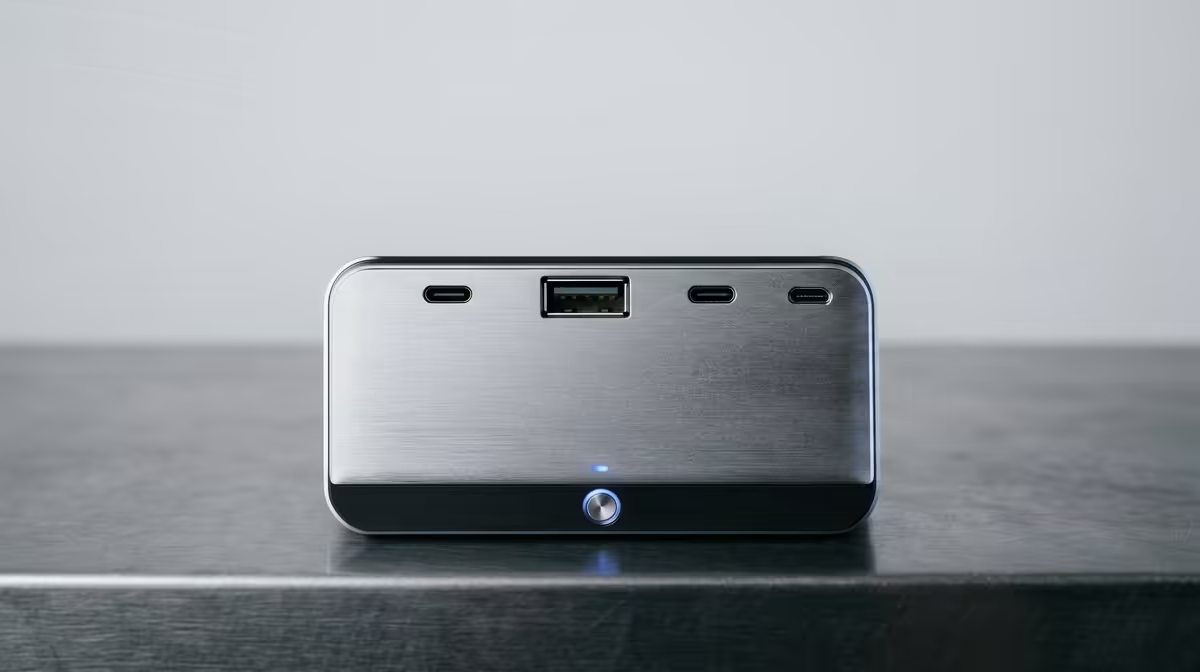
The features that matter most for laptop users are: USB-C Power Delivery rating (65W minimum, 90W or higher preferred), Gigabit Ethernet for stable wired networking, at least two USB-A 3.2 ports for existing peripherals, and one HDMI 2.0 or DisplayPort 1.4 output for an external monitor. Everything else is secondary unless your workflow specifically requires it.
Power Delivery: The Feature Most Buyers Underestimate 💡
Power Delivery wattage is the single most consequential spec on a dock, because it determines whether you can leave your laptop charger at home. A dock delivering only 45W PD will keep a thin-and-light ultrabook ticking over, but will not keep up with a 15-inch laptop under sustained load. Aim for 90W PD at a minimum; 120W PD future-proofs the setup for your next laptop upgrade. The wattage is usually printed clearly on the dock's spec sheet. If it is absent or listed as a combined total rather than a host port-specific figure, that is a red flag worth investigating before buying. A 120W total output dock that delivers only 60W to the host while the rest feeds peripherals may underperform on a power-hungry machine.
Ethernet and Display Outputs: The Daily Drivers 🖥️
Gigabit Ethernet is worth more than its spec suggests. On South African fibre connections through Vumatel, Openserve, or Frogfoot, a wired connection eliminates the packet loss and jitter that Wi-Fi on a congested 2.4GHz band introduces during video calls. One HDMI 2.0 output covers single-monitor setups at 4K 60Hz; one DisplayPort 1.4 output handles 4K at 120Hz for a gaming monitor or 1440p 144Hz for a productivity panel. If you plan to run two external monitors, confirm the dock explicitly states dual display support and verify your laptop supports two simultaneous external displays, as some ultrabooks only support one.
USB Ports, Audio and the Nice-to-Haves 🗂️
Three USB-A 3.2 Gen 1 ports handle a keyboard, a mouse receiver, and a rotating third device without a secondary hub. A USB-C data port adds compatibility for USB-C accessories like high-res webcams or external NVMe enclosures. A 3.5mm audio combo jack is useful if your laptop's port is positioned awkwardly at the back or side. SD card readers are a standout feature for photographers or hybrid workers handling camera footage. A Kensington lock slot is worth noting for shared office environments in South Africa where equipment security is a consideration. Security features are rarely the reason someone buys a dock, but they matter once the equipment is on a permanent desk in a busy office.
Verify Chipset Quality, Not Just Port Count ⚡
A dock with seven listed ports running through a single underpowered controller chip will throttle when multiple ports are active simultaneously. Reputable dock brands publish which controller chip they use. Prioritise docks from manufacturers that list their chipset specs over those that only advertise port counts and total wattage without detail.
FAQ
Is a Thunderbolt 4 dock necessary for single-monitor laptop setups?
No. A standard USB-C dock with DisplayPort Alt Mode and 90W PD handles single-monitor setups at full spec for a fraction of the TB4 price.
How many USB-A ports does the average laptop desk setup actually need?
Most setups use two permanently: one for a wireless keyboard and mouse receiver, one for a USB headset adapter or audio dongle. A third is useful for rotating devices.
What is a realistic budget for a capable docking station in South Africa?
R1,200 to R2,000 covers a solid USB-C dock with Gigabit Ethernet, HDMI 2.0, 90W PD, and three or more USB-A ports. Spending above R2,500 to R4,500 adds Thunderbolt 4 compatibility, dual display outputs, and higher-quality port controllers.
Building a cleaner, more capable laptop desk?
Evetech stocks docking stations to suit single-monitor home setups and multi-display office configurations. Browse the full range at Evetech to match the right dock to your laptop and workflow.