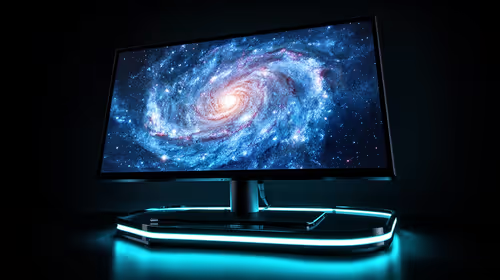
you finally boot up your rig to experience that glorious 4K 144Hz action. But instead of smooth frames, your screen flickers or goes completely black. Sound familiar? When you invest thousands of ZAR into a premium setup, experiencing display issues on high refresh rate monitors using HDMI 2.1 or DP 2.1 connections is incredibly frustrating. Let us unpack exactly why this happens and how to fix it.
The Bandwidth Bottleneck Explained ⚡
The core reason why display issues occur on high refresh rate monitors using HDMI 2.1 or DP 2.1 connections comes down to massive data pipelines. Pushing 4K resolution at 144Hz or even 240Hz requires moving up to 48 Gbps of data per second. Add 10-bit colour depth and HDR into the mix, and you are maxing out the connection's physical limits.
If there is even a slight hiccup in that data stream, your screen drops the signal entirely. This is especially common when pushing the absolute limits of modern 5K and 4K monitors. The sheer volume of pixels and colour data simply overwhelms standard processing limits... leaving you staring at a blank screen.
Cable Quality vs. Specification
Just because a cable says "HDMI 2.1" on the packaging does not mean it actually meets the strict certification standards required for high bandwidth. Cheap, uncertified cables are the leading culprit for flickering screens, visual artifacts, and random signal drops.
When you browse the massive range of monitors in South Africa, you will notice that premium panels almost always include a thick, certified cable right in the box. Always use that specific cable first. If you absolutely need a longer run for your desk setup, you must invest in a formally VESA-certified DisplayPort 2.1 or an Ultra High Speed HDMI cable. Do not compromise on the cable when you have spent big ZAR on the display.
Cable Management Tip 🔧
Never bend your display cables at sharp angles near the ports. High-bandwidth cables like DP 2.1 use delicate internal wiring. Bending them restricts the signal integrity and causes random black screens during intense gaming sessions.
GPU and Driver Handshakes 🚀
Sometimes your cable is perfect... but the graphics card and the monitor still fail to communicate properly. This digital handshake relies heavily on a technology called Display Stream Compression (DSC). DSC visually compresses the image data without losing quality to fit it through the cable.
If your GPU drivers are outdated or buggy, DSC might fail to compress the video signal correctly... resulting in a black screen. Keeping your system drivers constantly updated is absolutely vital. If you are planning on upgrading your entire rig to avoid these annoying bottlenecks, checking out the best gaming PC deals ensures you get a modern graphics card with native, flawless HDMI 2.1 and DP 2.1 support right out of the box.
Firmware and Monitor Settings ✨
Finally, do not ignore the internal software of the monitor itself. Manufacturers frequently release firmware updates specifically to fix compatibility bugs with newer graphics cards.
Navigating your on-screen display settings to manually select the correct DisplayPort version... rather than leaving it on auto-detect... can also instantly resolve random signal dropping. Taking the time to properly configure these settings ensures your high-end display performs exactly as intended. While you are tweaking your setup to absolute perfection, you might want to stretch your hard-earned ZAR even further by browsing our latest hardware specials to complete your ultimate battlestation.
Ready to Upgrade Your Visuals?
Do not let outdated hardware hold back your frame rates. Evetech brings you the finest selection of premium displays to match your powerhouse rig. Explore our massive range of gaming monitors and experience true high-fidelity gaming today.