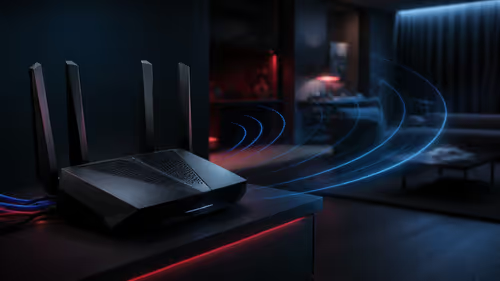
The network connection can become a surprise cost after a first PC is assembled far from the router. Planning Wi-Fi or Ethernet for a first build means pricing the board feature, adapter or safe cable route upfront.
Quick Answer
Decide how the first PC will reach the router before choosing the motherboard. Ethernet is the clean baseline when you can run a safe cable. Built-in Wi-Fi is convenient when a cable route is impossible. An add-in wireless adapter can close the gap, but do not assume a generic R1,000 allowance covers the exact standard, antenna, and Bluetooth support you need.
Check network features on each named machine among the current gaming PC deals. The configurations people choose from best-selling PCs give you a second reference. For a parts build, read the exact motherboard specification. "Gaming" in a product name does not guarantee Wi-Fi.
Map the route before buying hardware
Find the router, fibre network terminal, room entry points, and intended desk. Measure a cable path along safe edges rather than straight across a walkway. Include doors, skirting, and enough slack to move the PC for service.
Ethernet cable should not be crushed under furniture, stapled through, or run where people trip over it. Use a cable category and termination suited to the target link and installation. Permanent concealed cabling belongs with someone qualified to assess the property and applicable requirements.
If you rent, ask before drilling or fixing trunking. A removable surface route may work. Powerline networking depends on the building's electrical layout and can vary by socket; treat it as something to test, not guaranteed Ethernet through a plug.
When no safe wired route exists, inspect Wi-Fi signal at desk height with the door in its normal position. A phone test is useful context but does not prove how the PC adapter and antennas will behave.
Understand what motherboard Wi-Fi includes
Built-in Wi-Fi normally comes with antenna connectors and supplied antennas on a board designed for it. Confirm the wireless standard, supported bands, Bluetooth version, driver support, and included antenna assembly for the exact revision.
Place the antenna in the open rather than hidden behind a metal case under the desk. A cabled antenna base can help it reach above the tower. Keep it away from dense cable bundles and large metal objects where practical.
Bluetooth often shares the wireless module. If you use a controller, headset, keyboard, or phone link, confirm Bluetooth rather than treating Wi-Fi as proof. The two features may share antennas and drivers but remain separate connections.
Built-in wireless saves a PCIe slot and USB port. It also gives you a board-specific support path. The drawback is paying for the feature even if Ethernet will serve the PC for its whole life.
Add-in Wi-Fi can be the better choice
A PCIe wireless card can provide supported Wi-Fi and Bluetooth to a board without them. Check the slot size, physical clearance beneath the graphics card, internal USB-header requirement for Bluetooth, operating-system drivers, and antenna placement.
Large GPUs can cover smaller PCIe slots or block airflow around an adapter. Inspect the motherboard layout with the actual card thickness. A riser is not a default fix because it adds mounting and signal considerations.
A USB Wi-Fi adapter is easier to move and does not need an internal slot. Small units behind a metal tower may have poor antenna position. A supported extension cradle can move the adapter into the open, subject to its instructions.
Avoid buying by maximum link-rate number alone. Router standard, band, channel width, distance, walls, interference, antenna design, and network traffic affect the real connection. Check current drivers for the operating system before ordering.
Ethernet remains the troubleshooting baseline
A wired link removes the radio path between PC and router. It can reduce variability from walls, neighbours, channel congestion, and antenna position. It does not fix delay or packet loss beyond the router.
Confirm the motherboard Ethernet speed and router or switch port. The slowest supported part of the path sets the link. A higher port label does not raise an internet service speed by itself, though it can help local transfers when both ends and storage support it.
Use a known-good cable and inspect the negotiated link speed in the operating system. Test packet loss and latency to the router, then to an external destination. This separates the local link from the wider route.
If the PC drops Ethernet, update the supported network driver, test another cable and router port, and inspect power-management settings. Do not replace the whole motherboard before isolating the path.
Price the complete wireless addition
Identify the named adapter, antenna or base, required slot or USB header, and any supported extension. Use its current July 2026 price. A bare R1,000 category figure may be too high for one path and too low for another.
Compare that total with the price difference between two otherwise suitable motherboards, one with wireless and one without. The integrated board can be better value when it also preserves an expansion slot and provides the required Bluetooth.
Do not pay extra for a wireless generation the router and environment cannot use unless the upgrade path matters. At the same time, avoid an obsolete adapter with weak driver support merely to reduce the starting basket.
Include the Ethernet alternative. A suitable cable may cost less, deliver a steadier local link, and leave the wireless budget for another component. The safe route through the home decides whether that option is realistic.
Test the finished connection
Install current official chipset and network drivers. Attach the antennas before expecting good Wi-Fi. Set the router band and security through its supported configuration without weakening protection for an old adapter.
Run tests at the desk during the time you play. Measure signal, link rate, packet loss, latency, and actual transfers. Then run a game or call while another household device uses the network.
If Wi-Fi struggles, reposition the antenna or router within safe practical limits, compare another band, and retest. A mesh node or access point is a larger network decision and should follow evidence that the client position is the problem.
FAQ
Does every gaming motherboard include Wi-Fi?
No. Confirm Wi-Fi, Bluetooth, antenna inclusion, wireless standard, and drivers on the exact motherboard model and revision.
Is a PCIe Wi-Fi card better than USB?
It can offer stronger antennas and a fixed internal connection, while USB is easier to install and position with a supported extension. Slot clearance, drivers, antenna placement, and the room decide the result.
Should I budget R1,000 for networking?
Use it only as a rough planning ceiling. Price the exact July 2026 Ethernet or wireless path, including cable, adapter, antenna, slot, header, and Bluetooth needs.
Map the router-to-desk route, verify the motherboard's exact network features, and price the complete wired or wireless path before finalising the build.