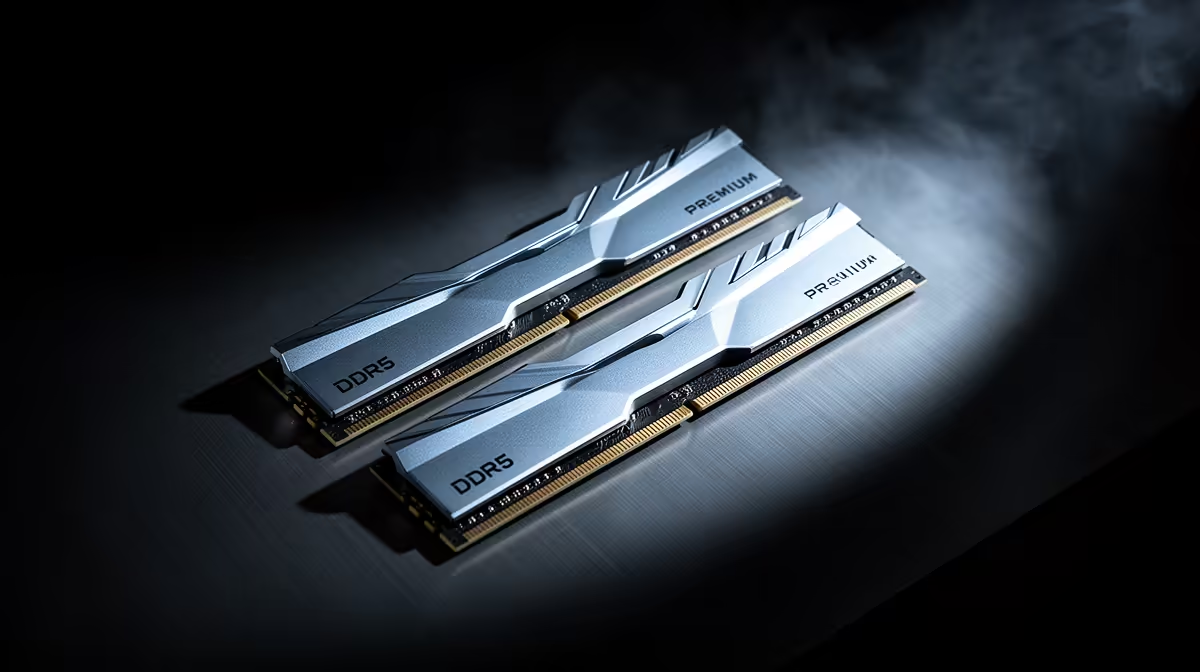
DDR5 may return to a familiar price range one day, but the exact 2025 shelf number is a poor planning target. Supply allocation, AI demand, currency and the mix of kits have changed. Relief can arrive without recreating the old market product for product.
Quick Answer
Do not expect DDR5 to snap back to 2025 prices soon. New supply can ease pressure through 2027 and beyond, while structural demand and South African currency may keep the local result above the old level. Buy when a compatible kit reaches your value target or completes a needed build.
A previous price is not a natural home
Memory prices move in cycles, but each cycle begins with a different industry. Manufacturers change wafer allocation, product priorities and technology. A 2025 kit can leave production or be replaced by a faster bin before supply recovers.
That means a new 32GB product might offer better speed, density or platform support at a higher Rand figure. It has not returned to the old sticker, yet the value can still improve.
Demand also changes. Data-centre and AI systems compete for investment and production resources. Consumer DDR5 relief depends on supply growth outpacing that demand, not on the calendar reaching a certain year.
Track the DDR5 kit catalogue and popular memory options by exact model. A KLEVV Bolt X 8GB DDR4-3200 module cost R1,599 in July 2026. That DDR4 snapshot is no forecast for DDR5 or a 2025 comparison.
New capacity reaches buyers in stages
Fabrication projects take time to build, equip and qualify. Initial output may serve high-value customers before mainstream desktop kits. Better yields and competition then have to pass through distributors.
An announcement can improve long-term confidence without lowering next month's retail price. Treat factory dates as milestones, not shopping appointments.
Product mix matters. Basic DDR5 modules may ease before premium low-latency RGB kits, or older stock can produce the reverse. Follow the capacity and profile you plan to run.
South Africa adds a separate price path
The Rand can amplify or reduce a global memory change. Fresh stock carries the exchange rate and supplier cost from its order window. Older units may sit beside it at another price.
Freight and distribution timing create a lag. Global contract pricing can move before a local retail kit is replaced. This is why an overseas index cannot promise a South African shelf figure.
Save dated local prices. Use the full model code, capacity, module count and speed. This gives you a real trend rather than a memory of a sale.
Decide what would count as relief
Set a Rand target for two compatible kits. It can be above the 2025 figure and still deliver good value for the 2026 build. Add a final date tied to the PC's use.
If 16GB currently has headroom, wait and track. If a paid workload or game session is paging, memory has a present job. Months of smoother use can be worth more than holding out for an old price.
Compare the complete platform. A cheaper DDR5 kit does not rescue an expensive motherboard that lacks needed features, and a premium kit can be acceptable inside a strong CPU-board bundle.
Avoid buying CPU, motherboard and GPU months before the memory. A machine cannot boot without RAM, and untested parts consume their early ownership period.
Watch value, not nostalgia
Calculate cost per usable gigabyte across comparable kits. Check profile support, warranty and module layout. A 2x16GB kit and single 32GB stick make different trade-offs.
Strip styling from the comparison when budget matters. A plain mainstream kit can provide the same capacity as a tall RGB model. Pay for colour when it matters to the build, not because it hides inside a broad average.
The market does not need to recreate 2025 before you can buy well. It needs to offer a stable compatible kit at a price that fits the complete PC.
Use performance per Rand as the relief signal
A return to one old sticker ignores the work a new kit can do. Track capacity, speed, timings and platform stability beside price. If a later 32GB kit costs more than its 2025 predecessor but improves minimum frame rates or a production workload you run, the value picture has changed.
Keep RGB and premium heat spreaders in a separate comparison. They may be worth paying for in a display build, but they hide the movement of basic memory. A plain kit gives you a cleaner view of underlying capacity cost.
Plan without predicting the bottom
Set a build deadline and an acceptable price range. Review exact kits monthly until one reaches that range. If the current machine is paging or the new platform cannot boot, the deadline is now; a forecast should not hold the system hostage.
Buy a matched kit in the capacity you need. Mixing a later module with an earlier one can force lower settings even when the labels look similar. Check the board's supported memory list as a guide, then test the completed configuration.
If prices fall after purchase, the machine has already delivered use. Measure the decision against the work and play it enabled, rather than the lowest number that appeared months later.
Track the same capacity and speed class, then let a current compatible product earn the purchase on value.
Frequently Asked Questions
Capacity can be the better target than speed. Moving from 16GB to 32GB may remove paging, while paying for a faster 32GB bin changes little in a GPU-limited game. Decide the minimum stable speed for the platform, then watch the price of that capacity band instead of the most advertised kit.
Will DDR5 return to 2025 prices?
It might for selected products, but no broad or near-term return is guaranteed.
Why could prices stay higher?
Supply allocation, data-centre demand, product changes and the Rand can all keep local pricing above old levels.
Does new factory capacity help?
Yes, over time. Construction, qualification and distribution delay the retail effect.
Should I wait to build?
Wait when the PC is optional. A needed system should be priced as a complete working basket now.
How do I set a target?
Save two compatible kit prices and choose a Rand figure and final date that suit the workload.
Track exact DDR5 kits and buy when current value meets your build, even if the market never recreates a 2025 sticker.