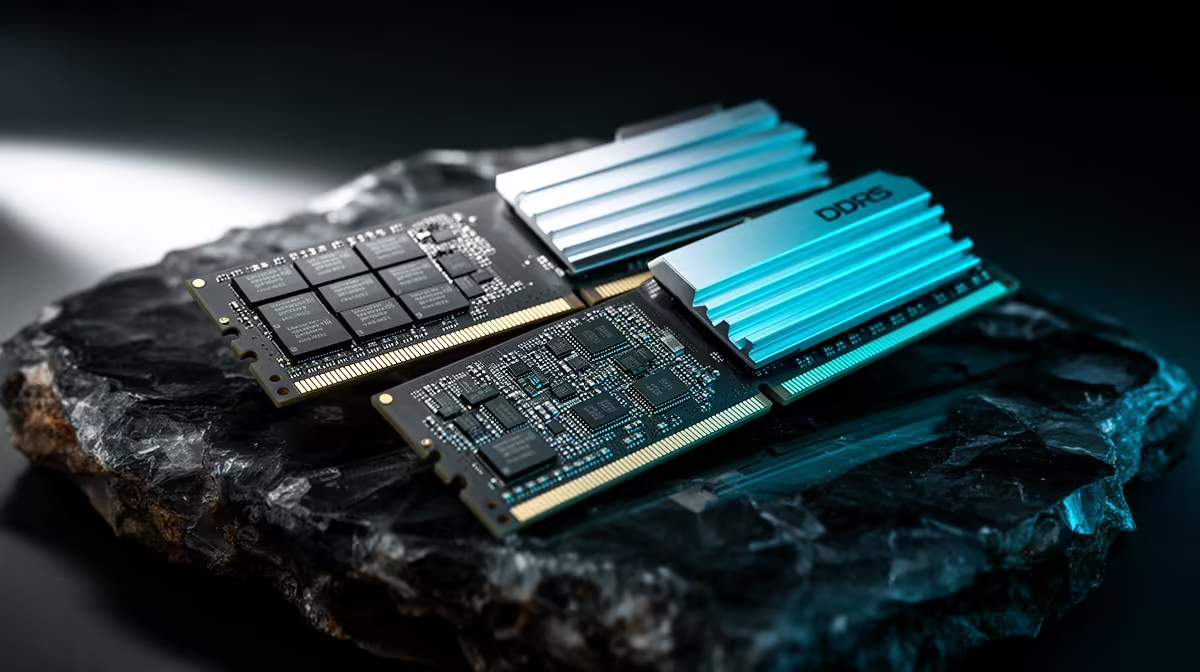
The useful 2027 memory forecast is a slope, not a cliff. New capacity can ease pressure as it reaches production, while AI and server demand may absorb much of the increase. South African prices also have to pass through currency and replacement stock before buyers feel the change.
Quick Answer
RAM prices may ease through 2027 as supply improves, but plan for a gradual change rather than a return to old prices in one quarter. Buy memory when it blocks a needed PC or a measured workload. Wait when the upgrade is optional, the current kit has headroom and you can track exact models into 2027.
What has to happen before prices ease
Manufacturers need to raise useful DRAM output for consumer modules. That can come from shifting existing lines, improving yields or bringing new capacity online. Each route takes time and competes with higher-value memory products.
New facilities do not create retail supply when construction starts. Equipment installation, process qualification, customer validation and volume ramp all sit between an announcement and a kit on the shelf. Delays at any stage can push relief further out.
Demand sets the other side. Data centres, AI infrastructure, PCs and devices all draw from the memory supply chain. If demand grows beside output, prices may stabilise without falling far.
Follow individual models across the DDR5 memory shelf and current RAM favourites. R1,599 bought KLEVV's named 8GB Bolt X module, rated at DDR4-3200, in July 2026. A DDR5 forecast still needs its own saved kit prices.
South Africa can follow with a lag
Retail stock already in the country carries the cost at which it entered the channel. Fresh global pricing may affect replacement shipments before older units. This can create a mixed shelf where similar products move at different times.
The Rand also matters. A global DRAM reduction can be reduced or erased locally by a weaker exchange rate. A stronger Rand can help the improvement reach buyers. Do not convert one international forecast directly into a South African percentage.
Freight, distributor terms and product mix shape the final result. Relief in basic modules may arrive before premium high-speed kits, or the reverse if old stock differs. Follow the capacity and speed you plan to buy.
This is why the price of an exact model is more useful than a broad memory index. Save the model number, module layout and July price. Compare it again at set dates.
Turn the forecast into a purchase rule
Start with urgency. A new build needs memory to boot and test. Buying the other components now while waiting a year for RAM leaves a useless collection of parts and shortens the time available to detect defects.
An existing PC with enough capacity can wait. Measure memory use during the heaviest game or work session. If there is still a comfortable buffer and paging remains low, a future kit can be optional.
Set a target rather than waiting for the word "cheap." Choose two compatible kits and a Rand figure that would make the upgrade worthwhile. Add a deadline tied to a game, course or work need.
Review the plan each quarter. If prices ease, buy at the target. If the workload grows first, decide whether months of better performance are worth more than the hoped-for saving.
Avoid false comparisons in 2027
A cheaper future listing may use fewer modules, slower timings or a different generation. Compare the same capacity and layout. A 32GB single module and a 2x16GB kit have different channel and upgrade implications.
DDR4 and DDR5 trends can diverge. DDR4 production cuts may keep older memory expensive while DDR5 gains volume. Buy the generation required by the motherboard.
Product names can persist across revisions. Keep the full model code and check specifications again. A replacement can use different memory chips or profiles while retaining similar branding.
Promotions create short dips that do not represent the whole market. A sale can still be a good time to buy. Judge it against your saved exact price, not a forecast chart.
Use milestones instead of predictions
Give the plan three checkpoints. The first is capacity: buy if normal work leaves less than a useful buffer. The second is price: buy if either saved kit reaches the target. The third is time: buy by the date the PC is needed even if the other conditions have not changed.
This method accepts that the forecast can be wrong. A factory delay may hold prices up. A demand slowdown or promotion may bring relief sooner. Your decision still ends at a sensible point.
Keep a small table with date, model, price and stock status. Do not replace the model with a cheaper single module or slower kit without noting the change. After several checks, the trend becomes clearer and the purchase remains comparable.
If a new CPU platform enters the plan, rebuild the shortlist. A DDR4 kit cannot follow to AM5, and a DDR5 speed chosen for one board may not suit another. The memory forecast should never lock the rest of the PC to an obsolete parts list.
Keep the saved price in Rand and include the module count. An overseas market index cannot tell you what a matched local kit will cost after currency and distribution. The record should describe something you could have bought on that date.
Keep invoices and original packaging from any 2026 memory purchase. If you add memory in 2027, the original model, module count and profile will help decide whether to extend the layout or replace it with one final-capacity kit.
Frequently Asked Questions
Will RAM prices drop in 2027?
They may ease as supply grows, though the change is expected to be gradual and can vary by memory type.
Could AI demand keep prices high?
Yes. Strong data-centre demand can absorb manufacturing investment and added capacity.
Will South African prices fall at the same time?
No guarantee. Currency, stock age and shipment timing can delay or reduce a global change.
Should I wait to build a PC?
Wait only when the PC is optional. A needed build should be priced as a complete working system today.
How should I track prices?
Save exact compatible model numbers and current Rand prices, then compare them on planned dates.
Track exact memory kits through 2027 and let your workload, target price and deadline decide when gradual relief is enough.