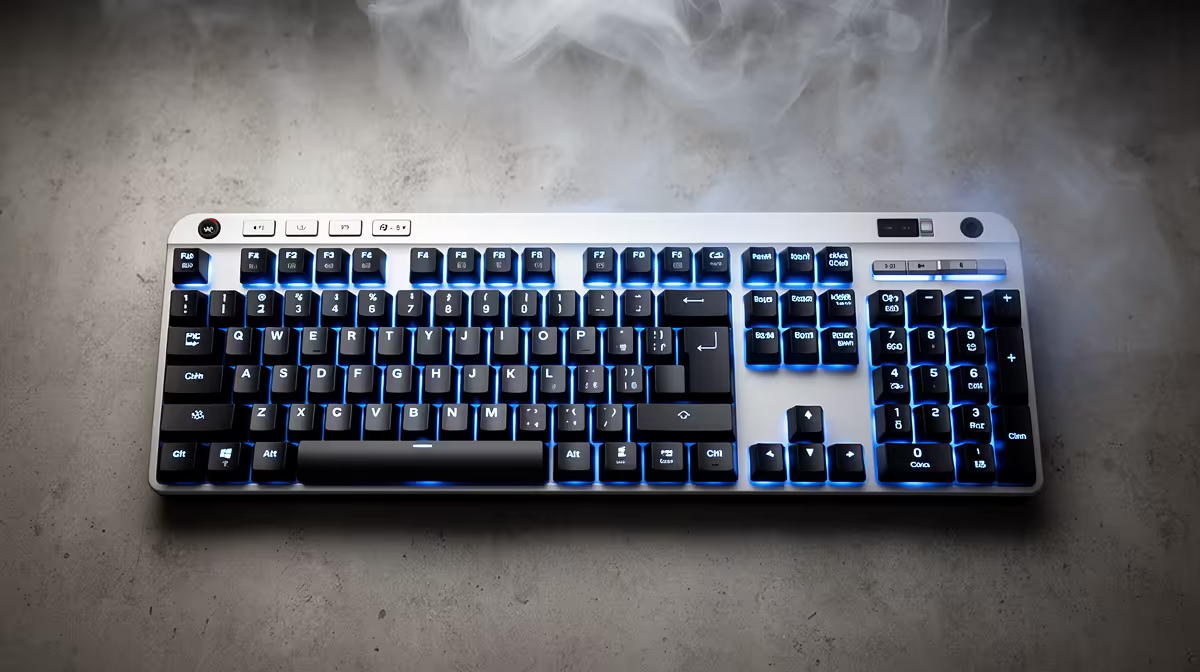
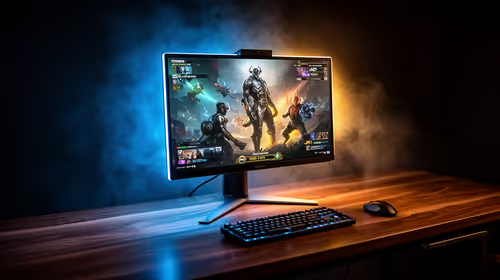
South African gamers and desk workers usually feel wireless keyboard response in the hands before they notice it in the spec sheet. A sensible wireless keyboard response shortlist starts with material condition, printer fit and repeatable calibration.
Quick Answer
For wireless keyboard response, start with filament diameter fit for that printer, dry storage and a small test print. Use 190-230 C nozzle testing for wireless keyboard response as a tuning range, then judge layer bond, surface finish and failed-print risk before committing a long job.
How To Read The Print For Wireless Keyboard Response
Check Wireless Keyboard Performance Polling Rate against compatibility before changing the rest of the print setup. With wireless keyboard response, rough walls, weak corners or popping sounds can point to moisture, while gaps between layers often suggest heat, speed or first-layer problems. Check filament diameter fit for wireless keyboard response and first-layer height before blaming the model. A short cube, bracket or vertical wall is enough to compare 190-230 C nozzle testing, cooling and surface finish on wireless keyboard response.
Buying Checks For Wireless Keyboard Response
South African makers should match wireless keyboard response to the printer, project size and storage routine. tight diameter tolerance helps wireless keyboard response with clean extrusion when the printer is calibrated, but it cannot fix a dirty bed or a dragging spool. If wireless keyboard response is printed often, 1KG spool planning can make sense; if you swap colours rarely, fewer open rolls may be safer.
Mistakes That Waste PLA
Avoid testing on a full-size model first with wireless keyboard response. For wireless keyboard response, change one print variable at a time and keep notes on the working profile. A good wireless keyboard response result is predictable: strong enough for the job, clean enough to show, and not dependent on luck.
small test file ready for wireless keyboard response. Run the wireless keyboard response test before a long print so material problems show up early.
FAQ
Can wireless keyboard response improve without losing surface quality?
Yes. Keep the wireless keyboard response spool dry, tune within the PLA temperature range and test on a small part first. If the finish softens on wireless keyboard response, reduce heat or inspect cooling.
Is tight diameter tolerance important for wireless keyboard response?
It helps wireless keyboard response when the printer is already calibrated. For wireless keyboard response, tighter tolerance supports steadier extrusion, but storage and nozzle condition still matter.
What should beginners check first for wireless keyboard response?
Start wireless keyboard response with material diameter, bed cleanliness and a simple calibration print. Those wireless keyboard response checks catch more problems than a large first model.