A capable workstation can stream to Twitch, provided its graphics encoder, memory, storage and internet connection suit the game and broadcast settings. Workstation branding alone proves very little. An SA buyer should size the machine around the game resolution, target frame rate, scene complexity and whether recording happens at the same time.
Give the stream a dedicated hardware path
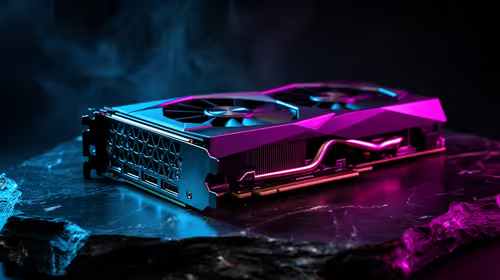
A Palit RTX 5060 8GB at R4,800 provides a verified modern graphics option for a sensible gaming and streaming build. The Intel Core Ultra 7 270K at R5,300 gives a higher-end CPU foundation when the workload also includes editing or heavier production tools. Those parts still require a compatible motherboard, sufficient memory, cooling, storage and power supply. For local recording, a WD Blue SN5000 2TB NVMe SSD at R1,684 offers useful working capacity.
Test the entire broadcast chain
Run the actual game, overlays, alerts, browser sources, microphone processing and recording preset together. Watch frame time, encoder load, temperatures and audio sync for at least one representative session. Upload stability matters as much as peak speed, so use Ethernet where practical and choose a bitrate the connection can sustain. Twitch account settings and current platform limits should be checked before locking the output format. Save separate gaming, live and local-recording profiles so one emergency quality change does not silently alter every later broadcast.
Building a stream-ready workstation? > Ask Evetech to balance the processor, graphics card, memory, SSD and power supply around your games and production software.