



Marvel Rivals launch in South Africa
Marvel Rivals launch needs a balanced parts plan, not a random basket. Map the CPU, GPU, RAM, SSD, cooling, and monitor target to the budget so SA builders know where to spend first.
Read moreXREAL Hub Steam Deck 120Hz: Checklist — setup steps; optimize display and power; reduce latency and input lag; firmware and compatibility tips; troubleshoot common issues. Get smooth 120Hz gaming with easy, tested tweaks 🎮⚡

Ever felt like the Steam Deck’s 7-inch screen just isn't doing justice to your favourite titles? Whether you are commuting through Sandton or avoiding the latest bout of load shedding, the dream is a massive, high-refresh-rate display that fits in your pocket. Achieving the XREAL Hub Steam Deck 120Hz setup is the ultimate way to transform your handheld into a portable cinema and gaming powerhouse. 🚀
The primary challenge for handheld gamers has always been the trade-off between charging and connectivity. The Steam Deck only has one USB-C port. This is where the XREAL Hub becomes essential. It allows you to charge your device while outputting a crystal-clear signal to your specialised AR glasses.
By using the hub, you unlock the ability to run compatible titles at a silky smooth 120Hz refresh rate. This isn't just about aesthetics... it is about reducing input lag and eye strain during long gaming sessions. When you browse the current range of AR glasses at Evetech, you will notice that the Air 2 series thrives when paired with this specific hub configuration.
To get your XREAL Hub Steam Deck 120Hz setup running perfectly, you need to ensure your firmware is up to date. First, connect your glasses to a PC or Mac to update the XREAL firmware. Once updated, hold the "brightness up" button on the glasses for several seconds until you hear a second beep. This toggles the 120Hz mode.
On the Steam Deck side, go to the Display settings in Gaming Mode. You should now see the option to set the refresh rate to 120Hz. If you are looking for high-performance AR glasses that support this feature natively, ensure you check the specifications for "Air 2" or "Air 2 Pro" models.
When using the XREAL Hub with your Steam Deck, always plug your PD charger into the Hub first before connecting the glasses. This ensures the Deck negotiates the correct power profile immediately, preventing any flickering or unexpected battery drain during high-intensity 120Hz sessions.
In South Africa, space and mobility are often at a premium. A high-quality monitor can cost thousands of Rands and takes up significant desk space. The XREAL Hub Steam Deck 120Hz setup provides a virtual 130-inch screen experience for a fraction of the cost of a high-end OLED TV. It is the perfect solution for gamers who want a private, immersive experience without being tethered to a wall. 🔧
The portability of this setup is unmatched. You can sit on a flight from Joburg to Cape Town and enjoy a theatre-like experience without bothering the person next to you. It is about taking control of your environment and your hardware. ✨
Ready to Level Up Your Handheld Experience? The XREAL Hub Steam Deck 120Hz combo is the peak of portable immersion for South African gamers. Browse our latest AR glasses deals and turn your Steam Deck into a 120Hz powerhouse today.
Yes. XREAL Hub enables 120Hz on Steam Deck using USB-C DP Alt Mode when the display and firmware support 120Hz.
Connect the XREAL Hub via USB-C, enable the 120Hz/DP mode in SteamOS display settings, update firmware, and adjust in-game frame caps.
Yes. 120Hz increases power draw. Use XREAL Hub power tweaks, reduce brightness, and optimize frame rate to extend battery life.
Often yes. Install the latest XREAL Hub firmware and Steam Deck system updates to ensure stable 120Hz support and lower latency.
You can lower latency by enabling native 120Hz, using low-latency mode, and enabling proper frame pacing on the XREAL Hub.
Most Steam Deck units support external 120Hz via USB-C DP Alt Mode. Verify OS version and XREAL Hub compatibility before buying.
Set SteamOS to 120Hz, cap in-game FPS to 120, enable performance mode, lower render scale, and update XREAL drivers.
Marvel Rivals launch needs a balanced parts plan, not a random basket. Map the CPU, GPU, RAM, SSD, cooling, and monitor target to the budget so SA builders know where to spend first.
Read more
Path of Exile 2 launch needs a balanced parts plan, not a random basket. Map the CPU, GPU, RAM, SSD, cooling, and monitor target to the budget so SA builders know where to spend first.
Read more
Black Myth Wukong launch needs a balanced parts plan, not a random basket. Map the CPU, GPU, RAM, SSD, cooling, and monitor target to the budget so SA builders know where to spend first.
Read more
Hollow Knight PC requirements should be mapped to resolution, settings and upgrade budget before choosing a tier. Verify current requirements, then balance GPU, CPU, RAM and SSD around SA pricing.
Read more
Hollow Knight build planning should focus on the target resolution, settings and total system balance. Treat launch wording as time-sensitive, then verify requirements before choosing SA PC parts.
Read more
Fallout 4 PC requirements should be mapped to resolution, settings and upgrade budget before choosing a tier. Verify current requirements, then balance GPU, CPU, RAM and SSD around SA pricing.
Read more
Best Value Laptops South Africa 2026 — Find top picks, local prices and buy tips to maximise performance per rand. Compare deals for students, creators and gamers. 🔎💸
Struggling with a weak Desktop PC Wi-Fi signal? 📶 Discover expert tips on positioning your tower and external antennas to eliminate lag and maximize your internet speeds for gaming and streaming. 🚀
Tired of loadshedding router restarts killing your Wi-Fi? ⚡ Discover why power cuts disrupt your connection and learn expert tips to get back online faster after the lights return. 🌐
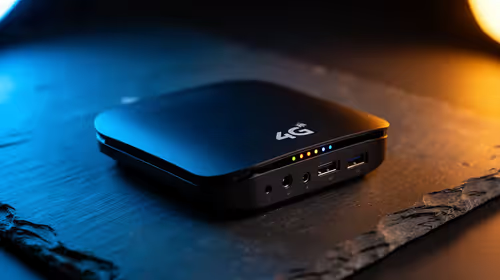
Master using a Nano SIM 4G router as your primary internet solution. Get stable speeds and seamless connectivity for gaming and streaming at home! 🌐🚀
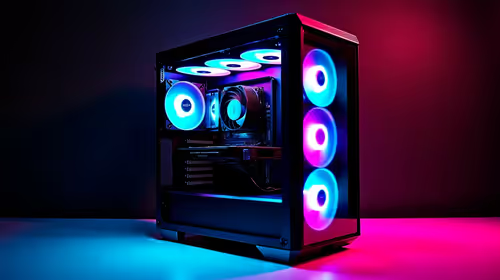
Gauteng r30 000 needs practical checks before you choose. Compare fit, workload, support, setup needs, timing, and delivery expectations without relying on live availability or fixed 2026 claims.

Gauteng r40 000 needs practical checks before you choose. Compare fit, workload, support, setup needs, timing, and delivery expectations without relying on live availability or fixed 2026 claims.

Gauteng r50 000 needs practical checks before you choose. Compare fit, workload, support, setup needs, timing, and delivery expectations without relying on live availability or fixed 2026 claims.
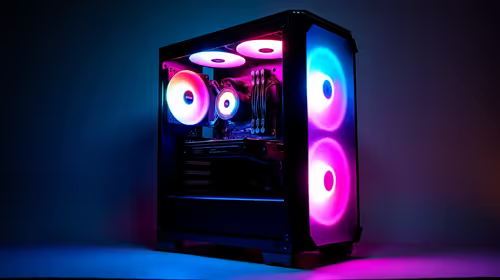
Gauteng r60 000 needs practical checks before you choose. Compare fit, workload, support, setup needs, timing, and delivery expectations without relying on live availability or fixed 2026 claims.
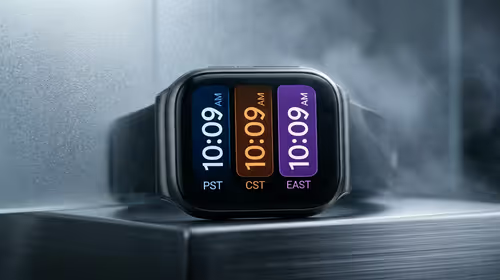
Three-tier smart watch plan for commuting should be shortlisted around the job it must do. South African buyers should compare fit, performance, compatibility, and upgrade room, warranty path, and upgrade room before treating any pick as best.

AR Glasses buying order for commuting students should be shortlisted around the job it must do. South African buyers should compare fit, performance, compatibility, and upgrade room, warranty path, and upgrade room before treating any pick as best.

Smart Watch buying order for commuting should be shortlisted around the job it must do. South African buyers should compare fit, performance, compatibility, and upgrade room, warranty path, and upgrade room before treating any pick as best.
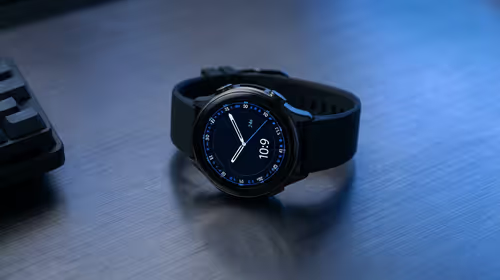
Smart Watch buying order for quiet PC builds needs a balanced parts plan, not a random basket. Map the CPU, GPU, RAM, SSD, cooling, and monitor target to the budget so SA builders know where to spend first.