Quick Answer
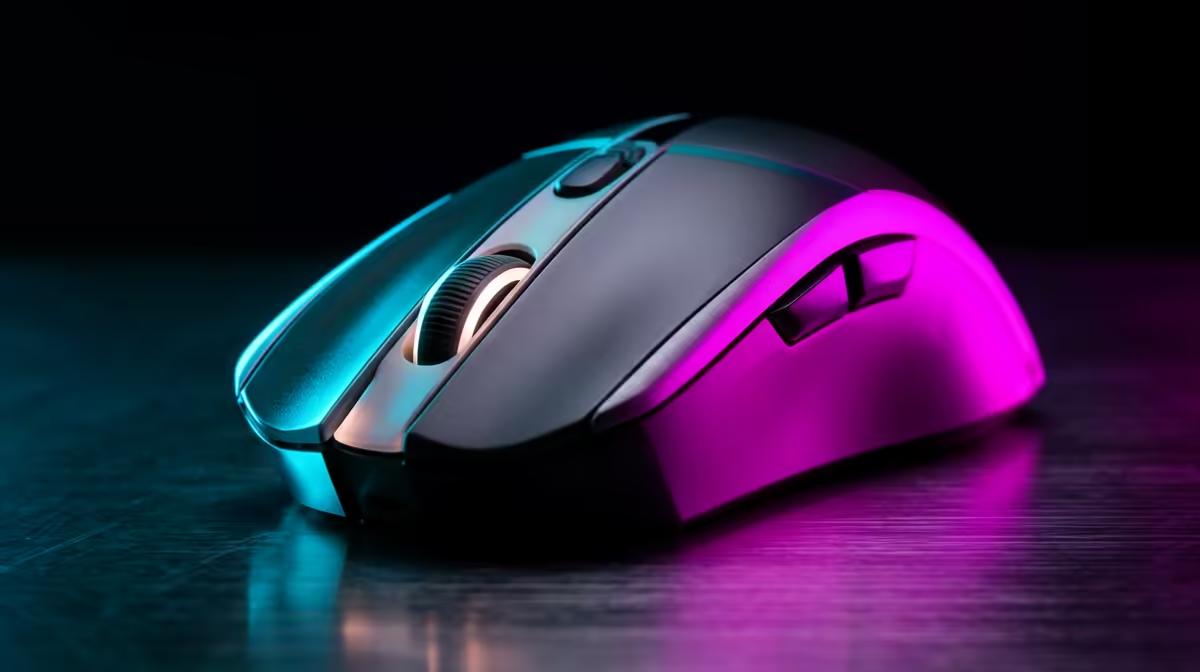
For a single mouse that handles work, study, and gaming in South Africa, spend R900 to R1,800. This range delivers sub-80 g weight, dual wireless (2.4 GHz for gaming, Bluetooth for everything else), a clean optical sensor, and battery life measured in hundreds rather than tens of hours.
Under R1,000: What You Get and What You Sacrifice 💰
The sub-R1,000 bracket contains genuine gaming-grade wireless mice. The Razer Orochi V2 sits in this range and delivers 18,000 DPI, dual wireless, 60-million-click switches, and AA-battery independence, making it an excellent choice for students and professionals who move between devices. At this price tier, compromises include limited ergonomic shaping (mostly ambidextrous), no dedicated charging dock, fewer side buttons, and minimal or no RGB. For buyers who game competitively and work from a laptop across multiple locations, these compromises are entirely acceptable. Build quality in this range is durable enough for daily bag transport without feeling fragile.
R1,000 to R2,000: The Full-Feature Tier 🎮
This is where dual-wireless mice gain right-handed ergonomic shaping, higher-precision sensors like the Pixart 3395 (rated to 26,000 DPI with optical switches), faster USB-C charging, and better PTFE stock mouse feet. If you game in ranked FPS queues, this tier gives you the tools to genuinely compete without hardware bottlenecks. For study and work use, the premium ergonomics reduce fatigue during long spreadsheet or research sessions. Weights typically range from 58 to 75 g, which is light enough for travel without the skeletal-light feel of sub-60 g ultralight designs. Budget around R1,200 to R1,800 for a mouse that genuinely excels across all three use cases.
R2,000 to R3,500: Enthusiast Tier Explained 📊
Above R2,000, mice start offering 4,000 Hz wireless polling (Razer HyperSpeed or equivalent), honeycomb ultralight shells at 45 to 55 g, premium wireless charging docks, and per-button force customisation. For professional esports players and content creators who use the mouse 8-plus hours per day, these features translate to real-world benefits. For the average SA gamer or student, spending above R2,000 on a mouse while still gaming on entry-level gear is a misaligned investment. Upgrade your monitor, headset, or chair first; a premium mouse is the last marginal improvement in the peripheral upgrade chain.
Buy During Evetech Sales Periods ⚡
Gaming peripheral prices in South Africa fluctuate during Black Friday, mid-year sales, and back-to-school periods (January to February). A mouse in the R1,500 bracket can drop to R1,000 to R1,200 during these windows. Set a price alert or check the Evetech website regularly in November and January if your current mouse is functional but due for an upgrade. Buying off-peak saves enough to cover a quality mousepad alongside the mouse.
FAQ
Is the Razer Orochi V2 the best lightweight option under R1,000 in SA?
It is one of the strongest options at that price point due to its dual wireless, AA battery design, and 18,000 DPI sensor. The main alternative consideration at similar pricing is any mouse with a Pixart 3370 or equivalent sensor, which is also top-tier for its class.
Should I buy a wired gaming mouse to save money and use it wirelessly later?
This does not work in practice: wired and wireless mice are separate products. A wired mouse cannot be converted to wireless. If a wireless mouse is your target, buy wireless from the start rather than planning an upgrade path.
Does a lightweight mouse wear out faster than a heavier one?
No. Lighter mice typically use the same switch and sensor hardware as heavier models. Weight reduction comes from shell thickness and material choices rather than component quality. A sub-60 g mouse from a reputable brand will outlast a heavy budget mouse in most cases.
Ready to pick the right wireless mouse for your ZAR budget?
Browse Evetech's full lightweight wireless gaming mouse range, from entry-level options to enthusiast-tier models, all available online with SA delivery.