Quick Answer
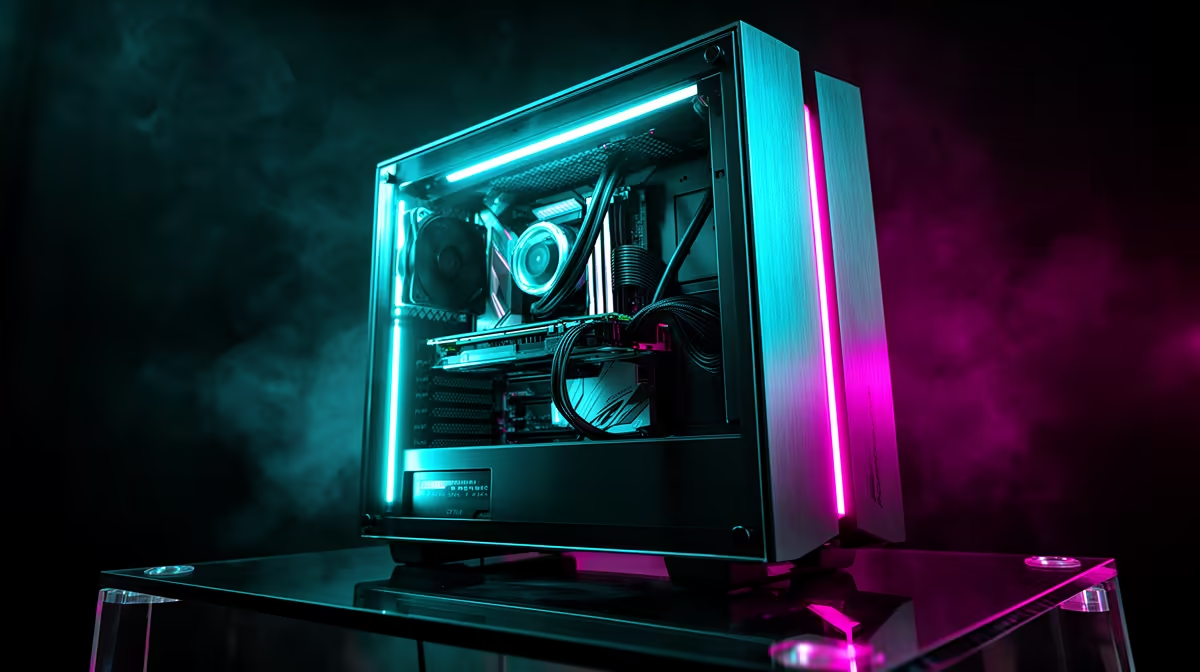
The premium features genuinely worth paying for in a gaming case are: 360mm radiator support (measurable cooling gain), a full PSU shroud (lasting cable management improvement), USB Type-C front I/O (real transfer speed benefit), and dust-filtered intakes (maintenance time saving). Features like ARGB lighting pre-installed in the case, tool-less PCIe covers, and hinged glass panels are quality-of-life upgrades worth the modest price premium. Optional mirrors and display stages are aesthetic-only and only worth it if a showcase build is the explicit goal.
Features With Measurable Performance Returns 💰
Two case features deliver quantifiable performance improvements. First, 360mm radiator support: cases that physically accommodate a 360mm AIO allow CPU temperatures on a Ryzen 9 9950X to run 8 to 12 degrees Celsius cooler than a 240mm unit at equivalent fan noise levels. Over a three to four year hardware cycle, this translates to better sustained boost clock consistency during heavy workloads. Second, mesh front intake design: a mesh-front case moves 30 to 50 percent more airflow than an equivalent glass-front design, reducing GPU temps by up to 8 degrees Celsius on RTX 5080 and 5090 builds. Paying R500 to R1,500 more for a case that includes proper mesh intake over one that does not is one of the best value decisions in a high-end build.
Features Worth the Premium for Convenience 🔧
A full-length PSU shroud with cable routing channels and Velcro anchor points is worth every rand of the R200 to R600 premium it adds over bare-budget cases. The alternative is visible cable clutter that affects every build photo and requires rework on every hardware upgrade. Dust filters that slide out and rinse clean on all intake vents reduce cleaning effort to a five-minute task every four to six weeks, versus disassembling the front panel on cases without removable filters.
Features That Are Aesthetic-Only But Justifiable ✨
Mirrored display stages, three-sided panorama glass, integrated ARGB lighting channels, and vertical GPU riser bracket inclusion do not improve thermals or performance. They serve the display build goal explicitly. If your system lives on a desk where visibility matters, or you are building for an esports setup photo or streaming background, these features justify the extra R1,000 to R2,000 they add. If the PC lives under a desk, these features offer zero value return. The honest framing is: decide whether your build is primarily functional or display-oriented, and spec accordingly.
Skip Pre-Installed Fans if You Have a Preference ⚡
Cases that include pre-installed fans bundle generic units that may not match your preferred ARGB ecosystem or noise profile. A case priced R500 lower without fans, plus three quality 140mm ARGB fans purchased separately for R800 to R1,200, often delivers better value and a more cohesive build than buying a case bundled with fans you will likely replace.
FAQ
Is paying R2,000 more for a panorama case worth it over a standard glass case?
Only if the display aesthetic is central to your build goal. Panorama cases do not cool better and often cool slightly worse due to restricted intake. The premium is purely visual. For a build that lives on a desk and is meant to impress, yes.
Do premium case materials affect thermals or just aesthetics?
Heavy-gauge steel reduces fan vibration noise at high RPM, which is a minor but real acoustic benefit. Aluminium panels on ultra-premium cases dissipate surface heat slightly faster but the difference is negligible compared to fan airflow.
What is the minimum spend for a case with all worthwhile features in SA?
Around R3,200 to R3,800 buys a case with 360mm radiator support, full PSU shroud, USB Type-C front I/O, dust-filtered intakes, and a side glass panel. Below that price point, compromises begin on one or more of these core features.
Want the best value from your case budget?
Browse Evetech's premium ATX gaming cases to find builds with every worthwhile feature at your ZAR price point.