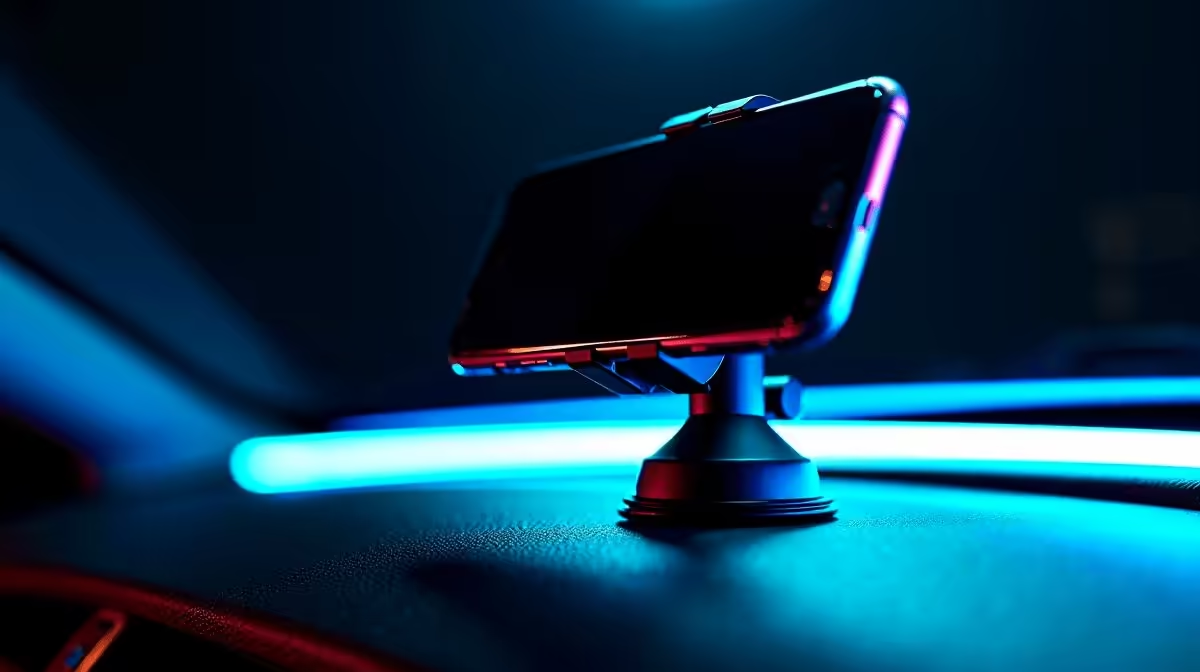
GPS navigation on a portrait-oriented phone is functional, but it shows you a narrow vertical slice of the road ahead. Rotate the same device to landscape and you gain horizontal road context, visible turn distances, and a broader intersection view that makes reading complex interchanges significantly easier. The question is whether a 360 rotatable phone mount is genuinely essential to get that benefit, or whether you can work around it.
Quick Answer
Yes, a 360-degree rotatable mount is worth it specifically for navigation. Landscape orientation gives a noticeably wider road view and earlier turn warnings. The mount pays for itself in reduced wrong turns on unfamiliar routes. Budget R150 to R350 for a quality vent or dash unit with a proper locking ball joint.
🗺️ What Landscape Navigation Actually Changes on SA Roads
Portrait GPS is the default for most drivers because that is how vent mounts are typically installed. The result is a tall, narrow map view. Landscape navigation stretches the view horizontally, showing adjacent lanes, nearby side streets, and approaching signage further ahead in the frame.
This matters most on freeway interchanges where multiple exits appear close together. On the N1 into Cape Town or the N3 near Joburg, a landscape view gives you an extra second or two of reading time before a split, which is exactly the margin that prevents a missed exit. SA roads with limited signage repetition after a junction make that wider preview more valuable than on well-signed highway systems.
The second benefit of landscape navigation is that the speed and distance readouts displayed by most apps appear more legibly at that ratio, without the text being compressed into a narrow column.
🔒 What Makes a Rotatable Mount Stay in Position While Driving
A rotation mechanism that holds under driving conditions is non-negotiable. Vibration from road surfaces, sudden braking, and bumps across speed humps all apply lateral force to the mount head. A friction-only ball joint rated for a small static load will drift over a 30-minute drive on rougher roads.
The most reliable navigation mounts use a locking collar that mechanically clamps the ball socket, separate from the grip friction. You set your landscape angle, tighten the collar, and the phone stays in that plane regardless of road texture. Mounts with a separate portrait and landscape click-stop are also effective for navigation because you are switching between exactly those two positions and a firm audible click confirms you are locked in.
Vent mounts are the most common navigation mount position in SA cars because dashboard proximity to windscreens in right-hand-drive vehicles can create glare issues with suction cups in summer. A well-made vent clip with a 360-degree rotating head is therefore the practical choice for most local drivers.
📍 Is the Rotation Essential or Just Convenient?
Convenient becomes essential once you have driven with a landscape view and go back to portrait. The convenience argument assumes you can tolerate the narrower frame indefinitely. Many drivers who switch report they cannot.
There is a practical counter-argument: if you only drive familiar routes and rarely navigate in real time, a fixed portrait mount is perfectly adequate and costs less. The rotation feature adds value proportional to how often you drive in unfamiliar territory or need to read complex road layouts quickly.
For drivers who visit multiple SA cities, travel for work, or regularly use a navigation app as a primary routing tool rather than a backup, the rotatable mount earns its place as a genuine must-have rather than an optional upgrade.
Frequently Asked Questions
Does landscape navigation drain battery faster than portrait?
The orientation itself does not affect battery draw. The screen brightness and the navigation app's GPS polling rate determine consumption. Both are identical regardless of which axis the screen faces. A mount that also charges your phone via USB or wireless eliminates any battery concern.
Will a 360-degree vent mount obstruct my car's air flow noticeably?
A mount head of standard size (roughly 6 cm to 8 cm in diameter) blocks one or two vent louvres but distributes airflow around the mount body. The thermal effect is minor. Positioning the mount on a central vent rather than a side vent minimises the impact on directed airflow to driver or passenger.
Can I switch back to portrait while the mount is installed without re-tightening?
On a ball-joint mount with a collar, yes: loosen the collar, rotate to portrait, re-tighten. On a click-stop pivot, the switch is one tap with no tools needed. The click-stop mechanism is faster for frequent portrait and landscape switching during a single trip.
What vehicle types work best with 360-degree vent phone mounts?
Standard horizontal louvre vents with individual slats are the most compatible. Some newer SA market vehicles have round or turbine-style vents that do not accept a standard vent clip. Check your vent type before purchasing a vent-clip mount. Dash or windscreen suction mounts are the alternative for incompatible vent designs.
Is a windscreen suction mount a legal navigation option in SA?
The National Road Traffic Act does not specifically prohibit windscreen suction mounts, but placement must not obstruct the driver's field of view. Mounting below the rearview mirror in the corner of the screen is the standard safe position used by most SA drivers and not typically flagged by traffic authorities.
Ready to navigate with a proper landscape view on every drive? Explore Evetech's phone mount range to find a 360-degree vent or dash mount built for SA roads.