Tired of your designs looking vibrant on your screen but dull and washed-out on your client's phone? For South African creatives, this is a common nightmare. Finding a truly best colour accurate monitor under R6000 for creatives can feel like searching for a unicorn. But what if we told you it’s not only possible but also one of the smartest investments you can make for your work? Let's dive in. 🎨
Why Colour Accuracy is Your Secret Weapon
Imagine spending hours perfecting a brand's signature "Karoo sunset" orange, only for the printed flyers to come back looking like a muddy brown. That's what happens when your monitor isn't colour accurate. For any creative professional—from graphic designers and photographers to video editors—what you see must be what you get.
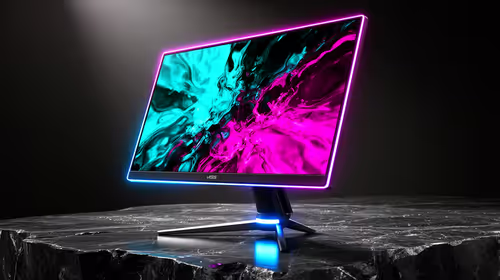
This is where terms like sRGB, Adobe RGB, and DCI-P3 come in. These are colour spaces, and a good creative monitor will cover a high percentage of them (ideally over 99% sRGB for web work). The goal is to find a display that minimises colour shift, ensuring your work translates perfectly across different devices and print media. This is why finding a reliable colour accurate monitor under R6000 is so crucial; it builds trust with your clients and saves you from costly reprints. If you're ready to start browsing, you can always check out some of the best PC monitor deals available right now.
Key Specs for the Best Monitor Under R6000
Navigating monitor specs can be confusing, but for creative work on a budget, you only need to focus on a few key things. Forget the marketing fluff; these are the features that genuinely matter.
Panel Type: IPS is King
For colour-critical tasks, an In-Plane Switching (IPS) panel is non-negotiable. IPS panels offer superior colour reproduction and wider viewing angles compared to their VA and TN counterparts. This means the colours on your screen won't shift and wash out when you look at them from a slight angle—a small detail that makes a huge difference during client presentations.
Resolution: The 1440p Sweet Spot
While we all dream of editing on a massive 5K display, the sweet spot for a best monitor for creatives under R6000 is typically QHD, or 2560x1440 resolution. This gives you significantly more screen real estate and sharpness than standard Full HD (1080p) without requiring a monster graphics card to run smoothly. While there are some excellent 4K monitors available, they often push past the R6000 budget if you also want great colour accuracy.
Connectivity & Ergonomics
Look for modern ports like HDMI 2.0 and DisplayPort 1.4. A good stand with height, tilt, and swivel adjustments is also a massive plus for long editing sessions. You can find options across our full range of PC monitors that tick these boxes.
Calibrate for Perfection 🔧
Even the best monitors benefit from calibration. Windows has a built-in Display Colour Calibration tool (just search for it in the Start Menu). For professional results, a hardware calibrator is ideal, but this free tool is a great starting point to ensure your colours are as true as possible.
What to Expect from a Budget Colour Accurate Monitor
Let's be realistic. A monitor under R6000 won't compete with a R40,000 professional grading display. However, the technology has improved so much that you can get a screen that is more than capable for professional design, photography, and freelance video work.
The main trade-off is often in refresh rates. While dedicated gaming monitors prioritise high refresh rates (144Hz and above) for smooth gameplay, creative monitors focus on colour precision. Expect a 60Hz or 75Hz refresh rate, which is perfectly fine for creative applications. You might also see different form factors, but for pure colour work, flat screens are generally preferred over curved monitors to avoid any potential distortion. And unless your work is exclusively mobile, you can skip the niche portable monitors for your main setup.
The final step is to ensure your workspace is optimised. Proper lighting and ergonomic placement are just as important as the panel itself. Investing in the right monitor accessories like calibration tools or a quality monitor arm can elevate your setup from good to great. ✨
Ready to See True Colours? Don't let a poor display hold your creativity hostage. Finding the best colour accurate monitor under R6000 is the smartest investment you can make in your work. Explore our best PC monitor deals and find the perfect canvas for your next masterpiece.