In the heat of a Street Fighter 6 match, every frame counts. You see the opening, you input the perfect combo… but the move never comes out. Sound familiar? For South African gamers, that split-second delay between your brain, your fingers, and the screen is the difference between a glorious victory and a frustrating loss. It’s not just your connection; your screen’s input lag could be the real culprit. Finding the best monitors for fighting games isn't a luxury... it's essential hardware.
Why Low Input Lag is Your Unfair Advantage
Before we dive into specs, let's clear something up. Input lag is the total time it takes for your button press to register as an action on-screen. It's the silent killer of combos and defensive reactions. Many people confuse this with response time, which is how quickly a pixel can change colour. While related, input lag is the metric that truly matters for competitive play.
Think of it this way: a high-lag monitor is like trying to block an overhead attack while wearing sunglasses... at night. You're always a step behind. A screen with minimal delay ensures that what you see is happening right now, giving you the precious milliseconds needed to react, punish, and win. This is why investing in one of the best monitors for fighting games from our range of PC monitors is a direct upgrade to your own skill.
Key Features for the Best Fighting Game Monitors
When you're hunting for a budget-friendly display with low input lag, a few key specifications should be at the top of your list. It's not about finding the most expensive screen, but the smartest one for the job.
Refresh Rate (Hz) & Response Time (ms)
While fighting games are typically locked at 60 frames per second (FPS), a higher refresh rate monitor (like 120Hz or 144Hz) still provides a significant advantage. It draws a new frame more frequently, which can reduce the time you have to wait for the next frame to appear, thus lowering perceived input lag and improving motion clarity. Pair this with a 1ms (GTG) response time, and you get crisp visuals with minimal ghosting or blurring during fast movements. You can browse all our gaming monitors to see these specs in action.
Enable Game Mode! ⚡
Almost every modern monitor has a 'Game Mode' or similar preset in its on-screen display (OSD) menu. This setting is crucial as it bypasses most of the monitor's internal image processing, which is a major source of input lag. Always make sure it's turned on before you start a match. It's the single easiest optimisation you can make!
Resolution and Size: 1080p is Still King
For competitive play, clarity and performance trump raw pixel count. A 24-inch, 1080p monitor is the long-standing tournament standard for a reason. It's the perfect size to see the entire screen without moving your head, and the 1080p resolution is easy for any modern console or PC to run at a flawless 60 FPS. While gorgeous 4K monitors are great for single-player epics, 1080p remains the undisputed champion for budget-conscious competitive gamers.
Finding Your Perfect Match in 2025 ✨
So, what should you actually buy? The goal is a monitor that combines a high refresh rate, a lightning-fast response time, and low native input lag without breaking the bank.
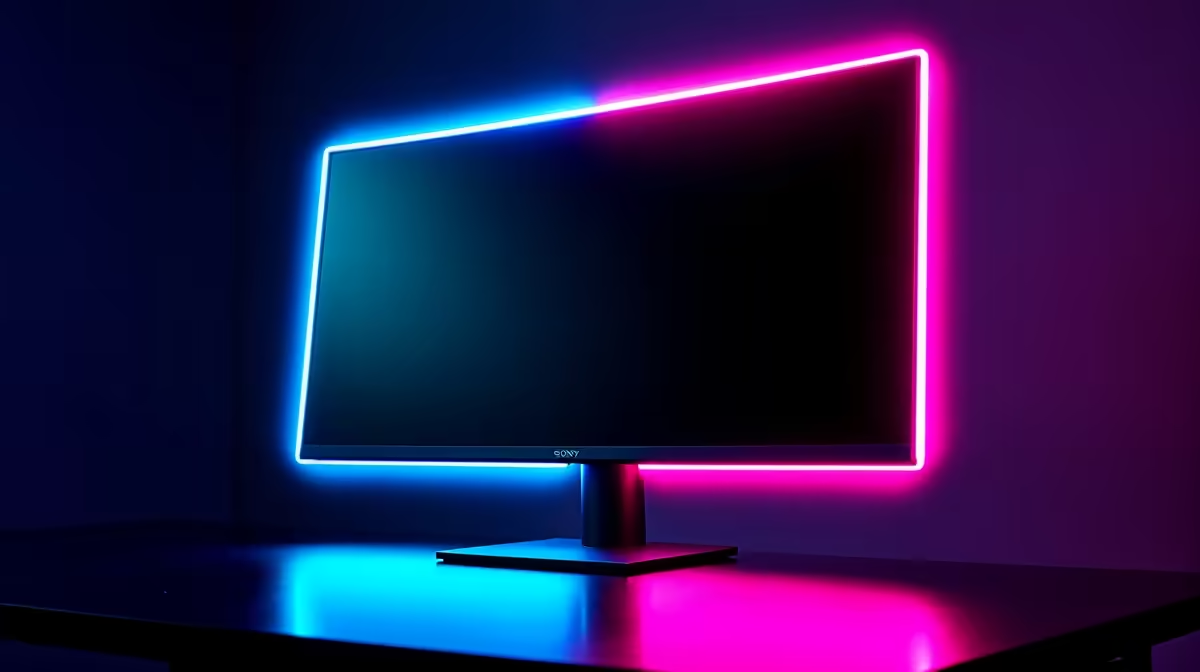
For most players, a 24" or 27" flat IPS panel with a 144Hz+ refresh rate is the sweet spot. It offers excellent viewing angles and colour accuracy without sacrificing speed. While some pro players of the past swore by ultra-fast TN panels, modern IPS technology has caught up, making it the superior choice for a fantastic all-round experience. Some players might enjoy the immersion of curved monitors, but for pure competitive edge, a flat panel is generally preferred.
And for the dedicated tournament grinder who travels to locals? A new generation of high-refresh-rate portable monitors means you can bring your own low-lag setup wherever you go, ensuring a consistent experience.
Optimising Your Setup for Victory 🔧
Your new monitor is just one piece of the puzzle. To get the absolute best performance, make sure you're using a DisplayPort cable for PC to unlock higher refresh rates. Also, consider your physical setup; a good VESA mount can position the screen at the perfect height and distance, reducing neck strain during long sessions. You can find everything you need, from cables to mounts, in our monitor accessories section.
Ultimately, finding the right monitor is about giving your skills the platform they deserve. Keep an eye on the best PC monitor deals in South Africa, and you'll be landing those just-frame inputs in no time.
Ready to Land Every Combo?
A lag-free display isn't just a piece of gear; it's a competitive edge. Stop dropping combos and start climbing the ranks. Explore our massive range of gaming monitors and find the perfect screen to unleash your true potential.