

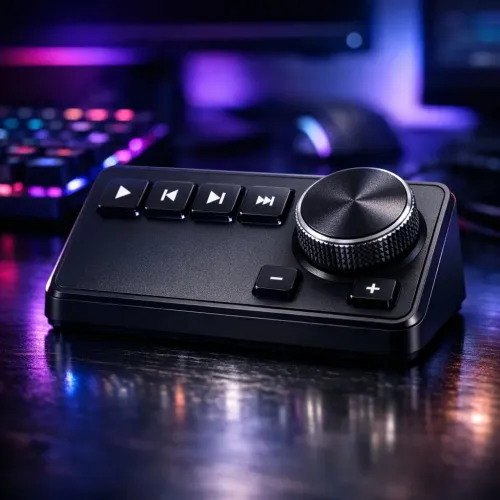
Dedicated Media Keys for Streamers: Improve Workflow Fast
Dedicated media keys give streamers one-touch control to mute, switch scenes, clip highlights, and adjust audio — cutting task time and boosting consistency 🎛️⚡
Read moreBudget tower CPU cooler buying checklist to compare noise, clearance, TDP, and airflow so you get the best value and fit for your PC build 🚀🛠️
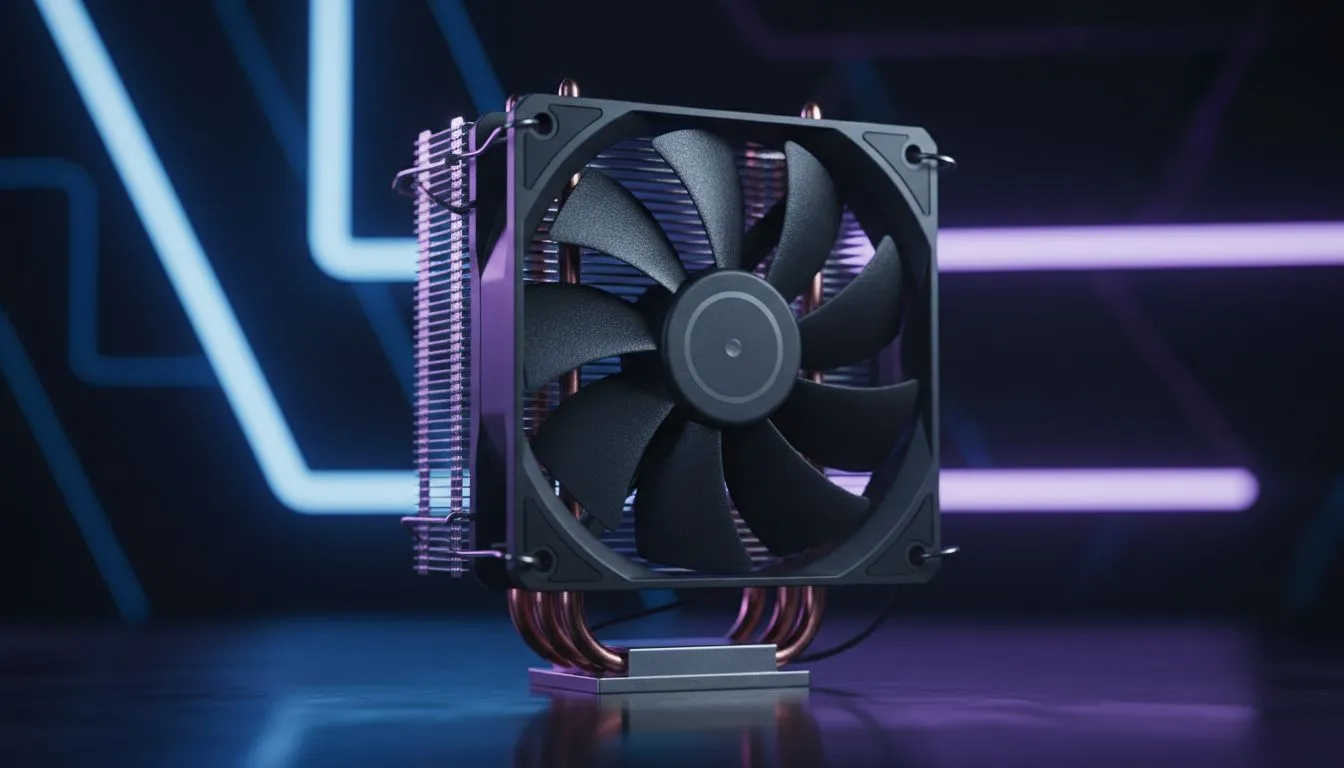
Is your PC sounding like it's about to take off during a heated Apex Legends match? That’s likely your stock CPU cooler screaming for help. For many South African gamers, upgrading to a budget tower CPU cooler is the single best bang-for-buck upgrade you can make. It’s not about flashy RGBs; it’s about unlocking performance, lowering noise, and extending your CPU's lifespan without breaking the bank. Let's dive into what really matters.
The cooler that comes in the box with your processor is designed to do one thing: be just good enough. It's a baseline solution meant to prevent your CPU from overheating under normal, non-gaming loads. The moment you fire up a demanding game or a heavy application, its limitations become obvious.
You'll notice higher temperatures, which can lead to thermal throttling—your CPU slowing itself down to avoid damage. This means lower frame rates and a less responsive system. Plus, the small fans on stock coolers have to spin incredibly fast to keep up, creating that signature jet engine whine. Upgrading your CPU cooler is a direct investment in quieter, more consistent performance.
Finding the right budget tower CPU cooler isn't about picking the biggest one. It’s about smart design and knowing where the value lies. Here’s what to look for.
This is the heart of the cooler. Copper heat pipes are filled with a liquid that vaporises when it absorbs heat from your CPU, travels up the pipe, cools, and condenses back into a liquid to repeat the cycle.
The heat pipes run up into a tower of thin aluminium fins. A fan pushes air through this "fin stack" to dissipate the heat. The density and design of these fins are crucial. A well-designed stack maximises surface area without overly restricting airflow. Most modern air coolers have this optimised for performance and quiet operation.
Always check the Thermal Design Power (TDP) rating of a cooler. It should be equal to or, ideally, higher than your CPU's TDP. For example, if your Ryzen 5 has a 65W TDP, a cooler rated for 150W gives you massive headroom for boosting and keeps things whisper-quiet, as the fan won't need to work as hard.
The fan is what you'll hear, so its quality is paramount. Larger fans can spin slower while moving the same amount of air as a smaller fan, resulting in much lower noise levels.
This is the final, crucial check. A big budget tower CPU cooler can sometimes overhang the RAM slots on your motherboard, especially if you have tall memory modules with large heat spreaders. Always check the cooler's specifications for its dimensions and clearance measurements.
Most product pages list socket compatibility (e.g., AM4, AM5, LGA1700). Make sure the cooler you choose explicitly supports your motherboard's socket. Brands like Deepcool are excellent at providing clear compatibility info, while value-focused options from EINAREX often pack a surprising punch for their price.
Ready to Chill Your CPU? A quiet, cool, and stable gaming rig is within reach. Ditching that noisy stock cooler for an affordable tower cooler is one of the smartest upgrades you can make. Browse our massive range of CPU Coolers and find the perfect fit for your build and budget.
Check CPU socket compatibility, cooler TDP rating, RAM and case clearance, fan noise, and mounting ease to ensure fit and performance.
TDP matters: match or exceed your CPU's TDP to avoid thermal throttling. Choose a cooler rated higher than your CPU for safety.
Often yes. A low-noise budget tower cooler with larger fins and better fans can run cooler and quieter under load.
Measure CPU cooler height against your case specs. Look for compact budget tower coolers designed for small-case clearance.
Most include universal brackets for common sockets, but verify mounting compatibility for your motherboard before buying.
Budget tower air coolers often offer better price-to-performance and reliability than low-end AIOs, especially for mid-range CPUs.
Prioritise solid heatpipe count, efficient fan design, sufficient clearance, and a proven mounting system for the best value.
Dedicated media keys give streamers one-touch control to mute, switch scenes, clip highlights, and adjust audio — cutting task time and boosting consistency 🎛️⚡
Read more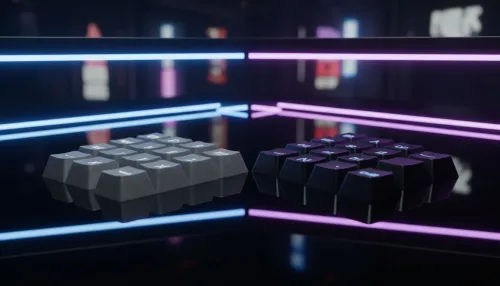
PBT vs ABS keycaps: Clear, local guide for South African gamers—compare feel, sound, durability and where to buy. Find the best material for your budget and playstyle 🎮🇿🇦
Read more
- Multi-Function Digital Dial: define benefits - Show gamer setups and macros - Offer buying and setup tips Multi-Function Digital Dial puts programmable control at your fingertips for faster actions and smoother streaming. 🎮⚙️
Read more
- Explain benefits; - Show the science; - Compare options; - Recommend picks. Magnetic wrist rest for gaming cuts wrist strain and boosts comfort during long sessions 🕹️✨
Read more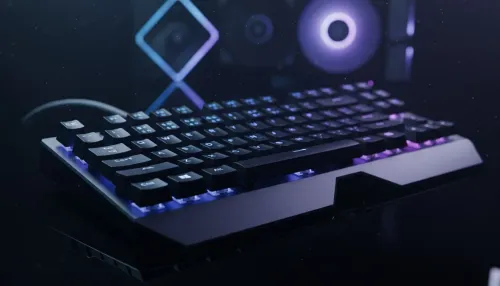
best gaming keyboard South Africa: Learn how to pick a low-latency mechanical keyboard, choose switches, layout and budget for competitive play 🎮⚡
Read more
Best wireless keyboard and mouse combo for small desks — curated, space-saving picks that boost comfort and productivity in tight setups. Find low-profile layouts, compact mice, and reliable range to fit your compact workstation. 🖱️⌨️
Read more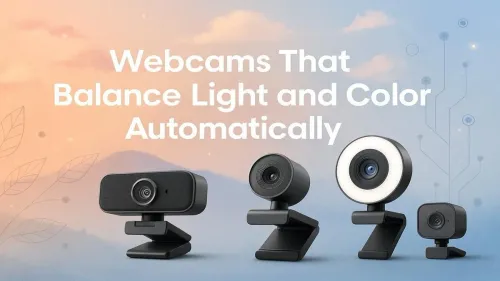
Discover webcams that automatically adjust light and color for crystal-clear video calls 🎥✨. Boost your streaming quality today!
Read more
Discover webcams that blend into your workflow 🎯 Capture moments while you work, stream, or create. Upgrade your setup with smart, multitasking tech!
Read more Dedicated media keys give streamers one-touch control to mute, switch scenes, clip highlights, and adjust audio — cutting task time and boosting consistency 🎛️⚡
Read more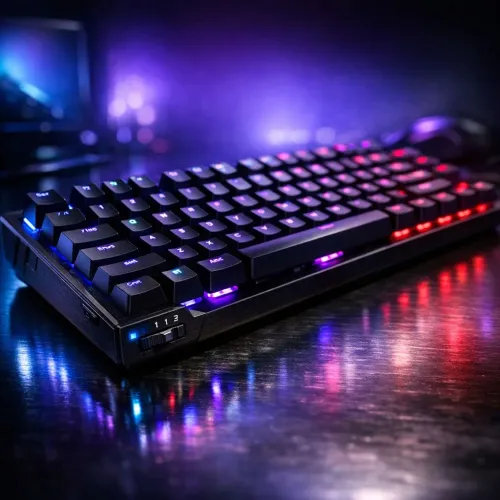
Checklist: 1) Map keyboard actuation depth to genres 2) Step-by-step adjust settings 3) Test and tune for performance 🎮⌨️ Learn keyboard actuation depth for FPS, MOBA, RTS, and RPG to improve response and accuracy.
Read more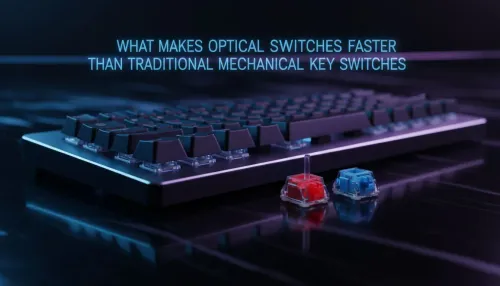
Optical switches deliver faster actuation and lower latency than traditional mechanical switches, using light-based triggers and minimal debounce to boost gaming and typing performance ⚡⌨️
Read more
Clean gaming keyboard quickly and safely in dusty or humid conditions with step-by-step tips, tool checklist, and maintenance routines to prevent corrosion and switch failure. 🧼💨
Read more