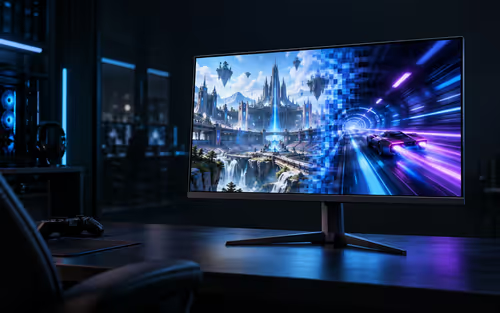
Every shadow is a wash of light, and you can’t tell an enemy from a loot box. You need a matte solution, but which path do you take: a dedicated matte screen protector or a monitor with a native matte display? Let's break it down.
Understanding the Native Matte Display
A native matte display comes with an anti-glare coating applied directly to the screen's surface at the factory. This isn't an add-on; it's an integral part of the monitor's design. The coating uses microscopic texturing to diffuse ambient light, scattering it instead of reflecting it directly back at your eyes.
The biggest advantage? It just works. There are no air bubbles, no peeling corners, and the anti-glare properties are perfectly optimised for the panel. Most modern PC monitors you'll find today, especially those designed for productivity and gaming, feature this kind of finish right out of the box. The only real downside is that it's a permanent choice.
The Case for a Matte Screen Protector
A matte screen protector is an aftermarket film you apply over your existing monitor screen. Think of it as a tactical upgrade for a glossy panel. It offers a similar light-diffusing effect to a native matte screen, giving you a powerful tool against reflections without needing to buy a whole new monitor. ✨
This option is fantastic for a few reasons:
- Flexibility: Don't like it? Just peel it off.
- Protection: It adds a physical layer that guards your original screen against scratches and scuffs.
- Cost-Effective: It's far cheaper than a new display, making it a great budget-friendly fix.
The main challenge is the application. Getting it on perfectly without trapping dust or air bubbles can be a real mission. Furthermore, lower-quality protectors can sometimes soften the image or add a slight grainy texture. Investing in quality monitor accessories is key here.
Matte Screen Protector vs Matte Display: The Showdown ⚔️
So, when the pixels settle, which one truly comes out on top? The answer depends on what you value most.
Visual Clarity & Colour Accuracy
For pure, uncompromised image quality, the native matte display almost always wins. Because the anti-glare layer is bonded at a microscopic level, it has a minimal impact on sharpness and colour vibrancy. This is crucial if you're working with high-resolution content on crisp 4K and 5K monitors where every pixel counts. A screen protector, being an extra layer of plastic, can slightly reduce sharpness.
Glare Reduction & Performance
Both options are effective at killing reflections. However, a factory-applied coating is engineered for that specific panel's size and curvature, often providing a more uniform and consistent anti-glare effect across the entire screen. This is a benefit whether you're using a massive primary display or one of the handy portable monitors for work and play on the go.
Pro Tip: The Bubble-Free Application 💡
To apply a screen protector without bubbles, clean the screen meticulously with a microfibre cloth in a dust-free room (a steamy bathroom works well!). Align the protector perfectly, then use a credit card wrapped in the cloth to slowly press it down from one end to the other, pushing air out as you go. Patience is everything!
The Long-Term Experience
A native matte display is a 'set and forget' solution. You buy it, you use it, and you never think about it again. Protectors, on the other hand, can get scratched or start to peel at the edges over time, eventually needing replacement. This is true for all types of screens, from standard flat panels to immersive curved monitors.
The Verdict: Which is Better for You?
The debate of matte screen protector vs matte display really comes down to your current situation.
- Buying a new monitor? Go for a native matte display, hands down. The integrated, hassle-free experience provides superior visual fidelity. With the vast range of gaming monitors available, finding a matte option is easy.
- Already own a glossy monitor you love? A high-quality matte screen protector is your hero. It's an affordable and effective way to combat glare and add scratch protection without replacing your entire setup.
Ultimately, both solutions get the job done. Your choice depends on whether you're making a fresh start or upgrading an existing screen. Before making a final decision, it's always a good idea to check out the latest monitor deals to see what fits your budget.
Ready to Banish Glare for Good? The matte display vs. screen protector debate depends on your setup and budget. For the ultimate visual experience without the fuss, a native matte screen is king. Explore our unbeatable monitor deals and find the perfect screen to dominate your game.