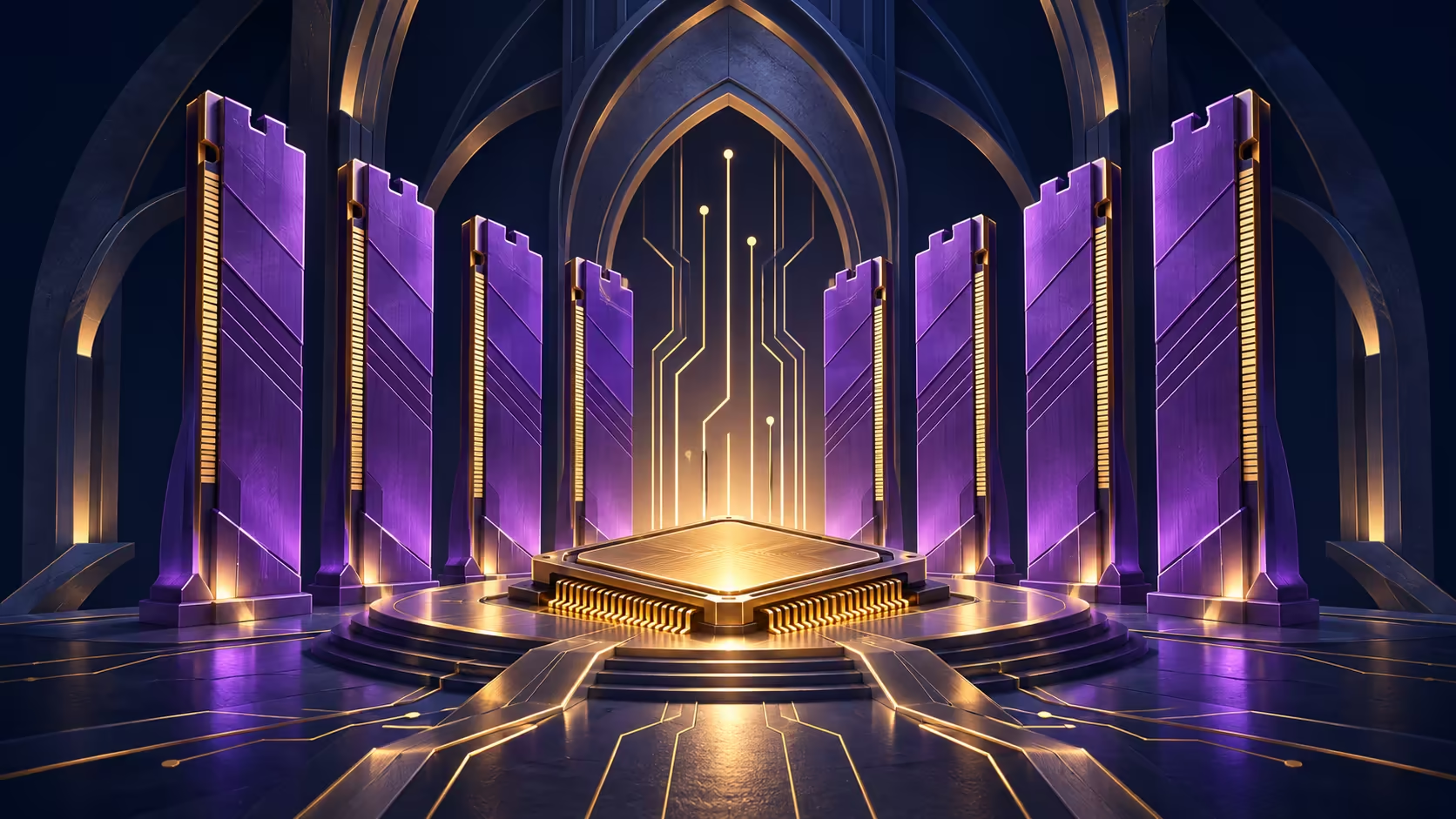
Sixteen memory slots make a dramatic photograph, but they do not make an ordinary upgrade. ASRock Rack DMRD16-2L+ is an early server-platform preview for upcoming Xeon 7 hardware, and its headline capacity belongs inside a whole-system plan.
Quick Answer
The DMRD16-2L+ preview combines sixteen memory slots with a specialised server platform and MCIO-based expansion. Its reported 4TB ceiling depends on the appropriate high-capacity memory configuration. A locally listed MSI A520M-A PRO at R1,249 is a separate consumer-board example: neither its CPU support nor its memory and expansion rules transfer to this server design.
🧩 Start with the workload, not the slot count
A large memory requirement should come from something measurable: the dataset that must remain resident, the number of virtual machines operating together, or an application that cannot complete within existing capacity. Buying for an impressive ceiling before establishing that need can leave most of the investment idle.
Write the workload down in plain terms. How much memory is required now, what grows during the next year, and which part must remain available during the busiest task? Those questions help distinguish a memory-capacity problem from a slow processor, storage bottleneck or poorly sized software configuration. More RAM does not automatically correct the other constraints.
The preview's specialised memory options are part of the platform, not ordinary desktop DDR5 with a larger label. A shopper should verify supported module types, supported populations and the approved CPU combination together. Sixteen physically similar slots do not mean that any sixteen modules will work or deliver the advertised maximum.
🔌 Expansion needs a separate compatibility check
This board's reported expansion arrangement uses MCIO connections rather than familiar full-length PCIe card slots. That changes the practical questions for anyone imagining a graphics workstation. A normal add-in card cannot be assumed to drop into the board simply because a compatible-looking case has enough rear openings.
Ask for the complete expansion layout, cabling requirements and supported assembly before counting possible GPUs or network adapters. Cable routing, power delivery and cooling have to work as one design. A theoretical lane total is not a tested workstation configuration, and a connector count does not identify the accessories needed to use those lanes.
The all motherboards catalogue shows why platform comparisons need the socket and intended use stated clearly. A consumer motherboard may provide a simpler route for a gaming or general desktop workload, even when a server board wins the capacity headline. Compare the machine you need to operate, rather than the most impressive specification you can find.
📏 Physical fit is only one part of a build
The reported EEB dimensions are roughly in the territory of large desktop boards. That does not establish universal case compatibility. Check mounting positions, access to connectors, cooler clearance and the airflow plan against the actual enclosure documentation. A large flat area behind the side panel proves very little on its own.
The same discipline applies to memory shopping. all memory (ram) is a useful local comparison point, but consumer listings are not evidence that a specialised server module is stocked or supported. Obtain the platform's compatibility information before treating a familiar DDR5 designation as a complete answer.
For an SA buyer, this is a preview to track if a real high-memory requirement is approaching. It is not a reason to stop a suitable consumer build today. No exact local board price or delivery milestone was established, and a future platform announcement should not become a promise about a finished system. Budget processor, memory, cooling, enclosure and expansion hardware together before deciding whether the capacity earns its complexity.
Frequently Asked Questions
What is the DMRD16-2L+ designed for?
The preview targets upcoming Xeon 7 Diamond Rapids server hardware, rather than a conventional consumer desktop upgrade.
Does every memory configuration reach 4TB?
No. The reported ceiling requires the appropriate specialised high-capacity modules and supported population.
Can ordinary graphics cards plug directly into normal slots?
The preview uses MCIO-based expansion rather than standard onboard PCIe card slots. Check the complete expansion assembly first.
Does a large case guarantee fit?
No. Dimensions, mounting, connector access, cooling and cabling all need checking against the case and system design.
Is the R1,249 motherboard the ASRock server board?
No. It is a separate MSI A520M-A PRO consumer-board example from the local catalogue.
Should a gamer wait for this platform?
Only if a defined workload needs its specialised capabilities. An early server preview alone is not a reason to delay an appropriate gaming build.
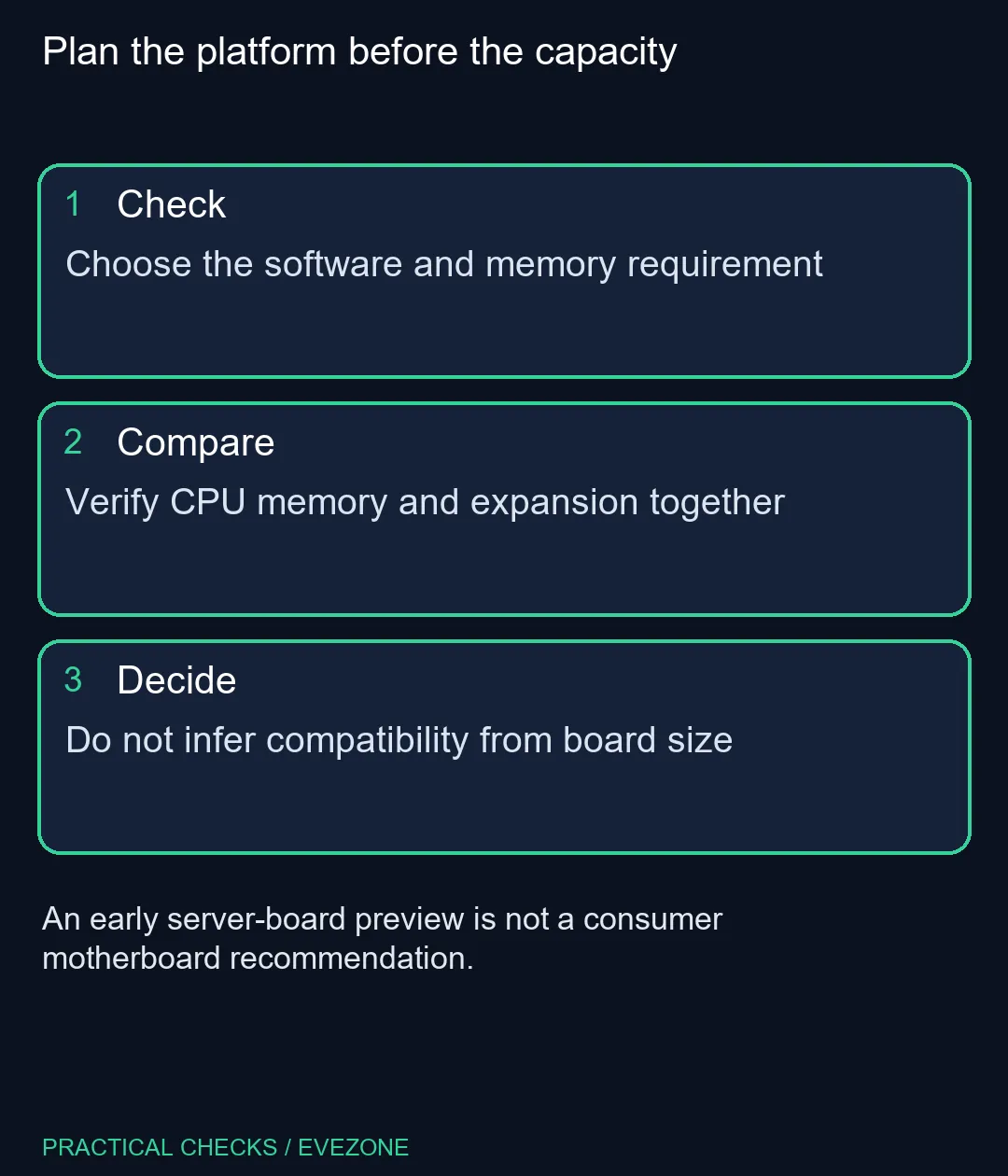
Plan the platform before the capacity
Choose the software and memory requirement.