



Is an audio interface worth it for casual photo editing in South Africa?
Casual photo editing does not automatically need an audio interface unless the same desk is also used for sound or mic work.
Read moreShould I spend more on the GPU or the CPU should be shortlisted around the job it must do. South African buyers should compare GPU tier, VRAM, cooling, and PSU headroom, warranty path, and upgrade room before treating any pick as best.
For esports, deciding whether to spend more on the GPU or the CPU depends on your resolution and the titles you play, since competitive games lean differently on each part. The balance is not the same as for AAA gaming.
For esports, prioritise the GPU if you play at higher resolutions or graphically heavier titles, but a strong CPU matters more for the high frame rates competitive games chase at lower resolutions. For fast esports titles at 1080p targeting very high frame rates, a strong CPU often deserves the larger share. Match spend to your games and resolution.
Many esports titles are CPU-bound at the low resolutions and very high frame rates competitive players target, so a strong gaming CPU like an X3D chip drives the high, consistent frame rates that matter. At 1080p chasing 240-plus frames, the CPU often limits performance before the GPU does. For pure competitive play at high refresh, weight spend toward the CPU.
If you play graphically heavier titles or game at 1440p or 4K, the GPU becomes the limiter and deserves the larger share of the budget. A weak GPU caps frame rate at higher resolutions regardless of the CPU. Balance the two so neither bottlenecks the other for your specific mix of esports and more demanding games at your chosen resolution.
Competitive titles at low resolution and high frame rates are often CPU-bound, so a strong CPU drives the frames. At higher resolutions or in heavier games, the GPU matters more.
Yes. At 1080p chasing high frames, the CPU often limits performance; at 1440p or 4K, the GPU becomes the bottleneck and deserves more of the budget.
An X3D chip's large cache drives high, consistent frame rates in CPU-bound competitive titles, making it a strong choice for high-refresh esports play.
For high-refresh esports at 1080p, weight spend toward a strong CPU; favour the GPU at 1440p or 4K or in heavier titles, balancing both.
Casual photo editing does not automatically need an audio interface unless the same desk is also used for sound or mic work.
Read more
Blender rendering in South Africa is one of the clearer cases where a 850W power supply may make sense, provided the creator PC is built around parts that need the headroom. The supplied build facts are Ryzen 5 5500 R1,100, ASUS Prime B850M-F WiFi R2,300, RM850e R1,900, with cooling from Gamemax Sigma R235 to Xigmatek Connect Ult.
Read more
A prebuilt gaming PC is only worth considering for home backups if it will also serve your gaming or daily PC needs. The backup angle should centre on dependable storage and power planning, while the listed graphics card prices, RX 7600 around R4,650, RTX 5060 around R4,800, and RTX 5070 around R13,100, show that the build cost can climb quickly.
Read more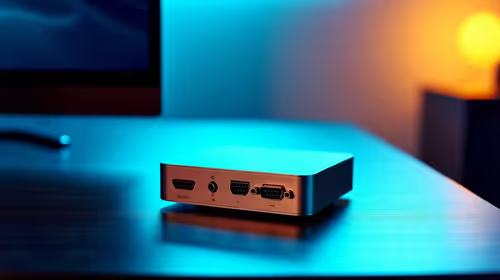
For online church services, a KVM switch is worthwhile if it makes the service setup easier to prepare and manage. Keep the buying decision tied to the stated accessories: GIZZU 4K HDMI 2.0 5m is R47, 8K DisplayPort 2m is R66, and UGREEN mDP-to-HDMI is R148.
Read more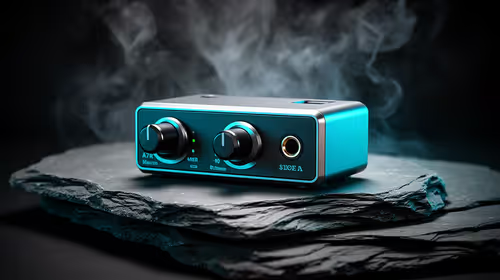
Beat-making does not need a complex dock unless the SA setup also runs a display and several desk devices. A USB-C to HDMI adapter can handle the screen side if the laptop supports it, with Promate EZHUB-7 at R270 and TransHub-Lite at R305 as low-cost comparisons.
Read more
Entry-level streaming in South Africa can be a worthwhile mini PC use if the device is meant for a simple, compact starter setup. Minisforum NAB6 Lite costs R4,150 in the input, while UM750L and AI-X1-255 sit around R4,600, so compare the lower price against how much streaming work the device must handle.
Read more
Chrome change search engine settings control ordinary address-bar searches. Check site shortcuts and managed-browser rules if the wrong provider keeps returning.
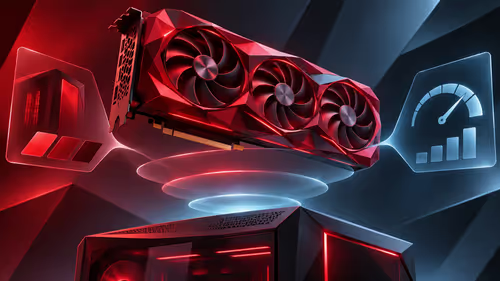
VASTARMOR RX 9070 XT red adds a matching red finish to the Super Alloy PRO family. Check its length, thickness and three power sockets before buying.

OLED edge rot is a panel-edge defect examined in new longevity research. Older TV results do not establish the failure rate of current gaming monitors.

Chrome translate not working often needs a page refresh or language-setting check. Test one foreign-language page before changing broader browser settings.
Chrome translate not working often needs a page refresh or language-setting check. Test one foreign-language page before changing broader browser settings.

Check when Chrome saves power, compare a repeatable task on battery and separate browser changes from battery health and Windows settings.

Find Chrome's caption control, check language and audio and bring back the floating bubble when captions disappear during playback.

Open the simplified Chrome reader, adjust type and spacing and check whether the page supports the view before changing your display setup.
Chrome change search engine settings control ordinary address-bar searches. Check site shortcuts and managed-browser rules if the wrong provider keeps returning.

Chrome task manager helps identify resource-heavy pages and extensions. Save your work, compare the busy task and close it before deciding you need more RAM.

Chrome reset settings restores browser defaults while keeping saved bookmarks and passwords. Record essential extensions and preferences before confirming the reset.

Chrome block pop ups settings can stop unwanted windows while allowing a trusted site that needs one. Keep the exception specific instead of allowing every site.