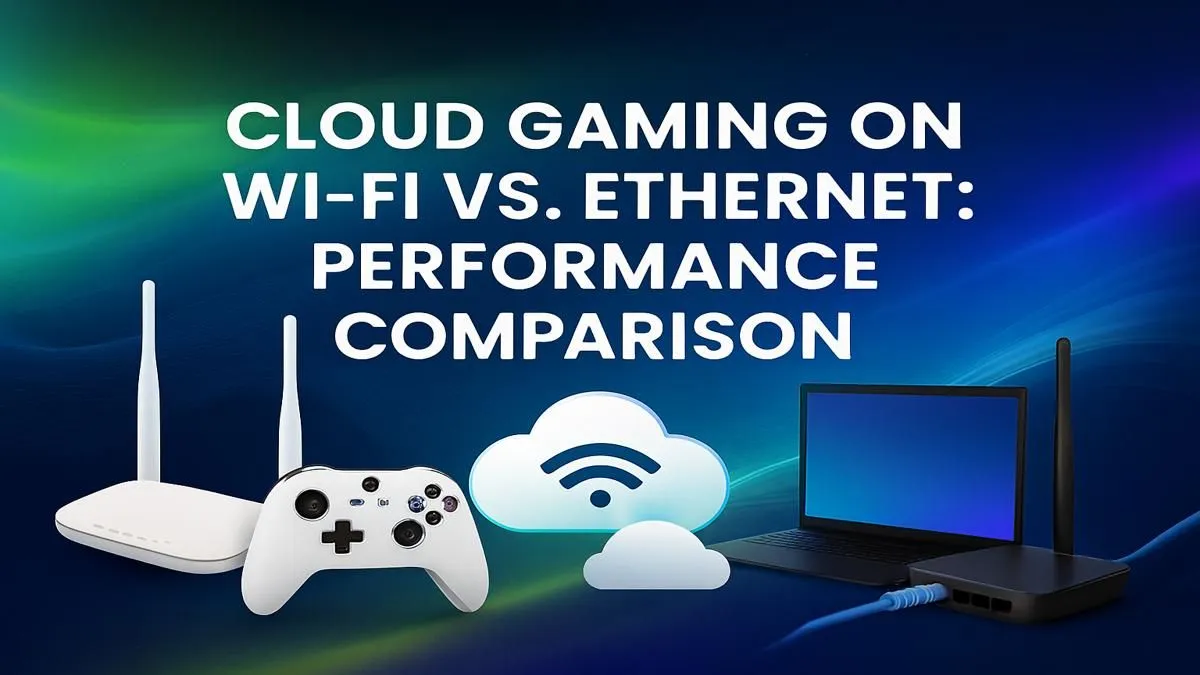
So, you’ve dived into the world of cloud gaming. Services like GeForce NOW and Xbox Cloud Gaming are finally a real option in South Africa, promising AAA titles on almost any device. But then it happens… a stutter in the middle of a boss fight, a blurry screen during a high-speed race. The culprit? Your home network. The big question for every South African gamer is clear: when it comes to cloud gaming, is Wi-Fi vs Ethernet the real final boss?
Why Your Connection is a Big Deal for Cloud Gaming
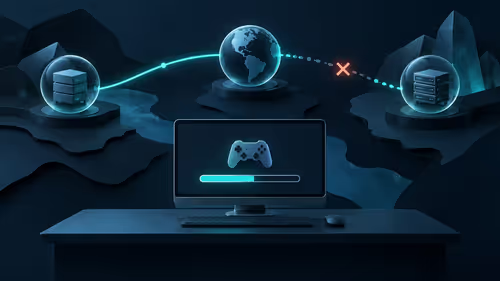
Before we settle the Wi-Fi vs Ethernet for cloud gaming debate, let's quickly break down what matters. Unlike downloading a game, cloud gaming is a constant, two-way conversation. You send a command, a powerful server somewhere else renders the frame, and streams it back to your screen... all in milliseconds.
Three things are critical:
- Latency (Ping): The time it takes for your command to reach the server and come back. Lower is better. High latency is that horrible feeling of input lag.
- Bandwidth (Speed): How much data can be sent at once. Cloud gaming needs a stable stream, typically 15-50 Mbps for a good 1080p/4K experience.
- Stability (Jitter): The consistency of your latency. An unstable connection with spikes (jitter) causes stuttering and packet loss, ruining the experience.
Ultimately, while cloud gaming is fantastic, nothing beats the reliability of local processing power. Having one of the best gaming PC deals means your performance isn't at the mercy of your internet connection.
The Case for Ethernet: The Unquestionable Champion 👑
If you ask any competitive gamer about the best connection for cloud gaming, they’ll give you a one-word answer: Ethernet. A physical cable connecting your device directly to your router is the undisputed king for a few simple reasons.
Unbeatable Stability and Speed
An Ethernet cable provides a direct, interference-free link. Your signal won't be affected by your neighbour's Wi-Fi, the microwave, or thick walls. This results in the lowest possible latency and the most consistent speeds your fibre line can deliver. For fast-paced shooters or fighting games where every millisecond counts, this is non-negotiable. It’s the difference between landing the headshot or watching a killcam of your own demise. For those serious about performance, pairing a wired connection with one of our high-performance PCs over R20k creates an unstoppable gaming setup.
When Wi-Fi Can Work: Convenience Meets Modern Tech ✨
Let's be realistic. Running a 20-metre LAN cable through the house isn't always practical. Does that mean you have to give up on a smooth cloud gaming experience? Not necessarily. Modern Wi-Fi has come a long way.
If you’re using Wi-Fi, you need to optimise it. Wi-Fi 6 (802.11ax) and Wi-Fi 6E offer significant improvements in speed, latency, and handling network congestion compared to older standards. They are specifically designed for demanding tasks like 4K streaming and gaming. Even with a great wireless setup, having a solid hardware foundation is key; many gamers find that powerful machines under R20k offer the perfect balance of price and performance for both local and cloud gaming.
Wi-Fi Optimisation Tip ⚡
Use a Wi-Fi analyser app on your phone to see which channels your neighbours' networks are using. Log into your router's settings and manually switch your 5GHz network to a less congested channel. This simple trick can dramatically reduce interference and improve stability for your cloud gaming sessions.
The Verdict: Cloud Gaming Wi-Fi vs Ethernet in SA
So, which one is better for you?
- For the Competitive Player: Ethernet. No contest. The stability and low latency are essential for winning.
- For the Casual Gamer: A well-optimised Wi-Fi 6 setup can be perfectly fine, especially for single-player or slower-paced games.
The choice between cloud gaming on Wi-Fi or Ethernet often comes down to your specific situation. But remember, the most powerful component is still the one doing the actual gaming. Whether you're streaming from the cloud or running games locally, a capable PC ensures you're always ready. Our pre-built PC deals take the guesswork out of building, getting you into the game faster. Even our range of budget-friendly gaming PCs can provide a more consistent experience than relying solely on the cloud.
Ready for Zero-Lag Gaming?
A stable connection is crucial, but for the ultimate, instant-response experience that isn't at the mercy of network hiccups, nothing beats the power of a dedicated gaming PC. Explore our massive range of PC deals and find the perfect machine to own your victory.