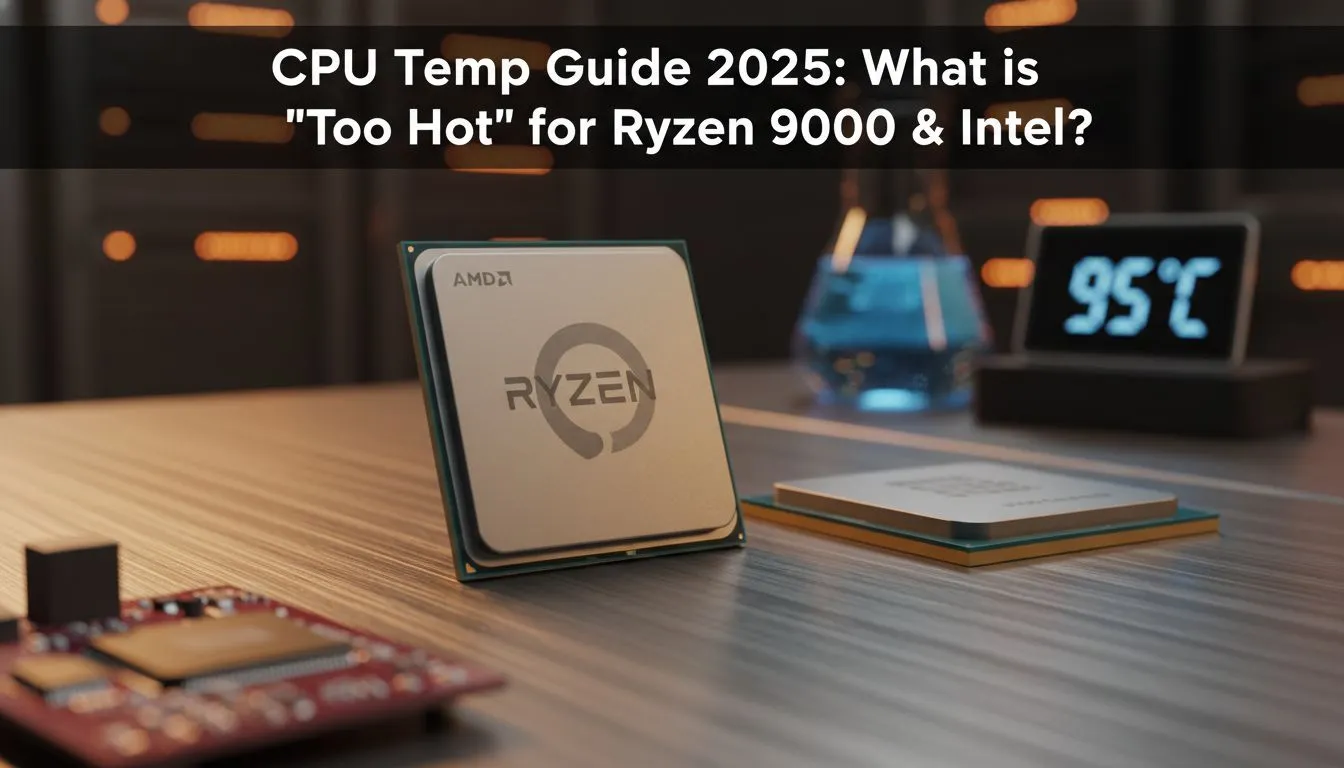
Running a high-end gaming rig in South Africa feels a bit like trying to keep an ice cream from melting in the Karoo sun, right? With the powerful new Ryzen 9000 and next-gen Intel CPUs on the horizon, the big question isn't just "how fast is it?" but "how hot does it get?". This CPU temp guide will cut through the technical jargon, telling you exactly how hot is too hot and how to keep your rig frosty. ❄️
Understanding Your CPU's Temperature Sweet Spot
Before we dive into what’s too hot, let's establish a baseline. Your CPU has two main temperature states: idle (when you're just browsing or on the desktop) and load (when you're gaming, rendering, or doing something intensive).
- Ideal Idle Temp: 30°C to 50°C
- Safe Gaming Temp: 60°C to 85°C
- Warning Zone: 85°C to 95°C
- Danger Zone (Throttling): 95°C+
Modern CPUs are designed to boost their performance until they hit a thermal limit, called TJMax (Maximum Junction Temperature), which is often around 95-100°C. Hitting this occasionally isn't a disaster, but constant high temperatures will cause the CPU to "throttle" – automatically slowing itself down to prevent damage. That's when you see frustrating stutters and frame drops. A reliable CPU cooler is your first line of defence.
How Hot Is Too Hot for Next-Gen CPUs?
This is where our CPU temp guide gets crucial for 2025 builds. Both AMD's Ryzen 9000 series and Intel's upcoming chips are pushing performance boundaries, which means they also generate more heat. The old rules still apply, but the hardware needed to maintain those safe temperatures is changing.
For these new powerhouses, seeing temperatures spike into the high 80s during an intense Helldivers 2 session is becoming the new normal. The key isn't to panic at 85°C, but to ensure your system can handle it without throttling. If your CPU is constantly pinned at 95°C or higher, your performance is suffering, and you need better cooling. For many, a beefy air cooler can do the job, but high-end chips often demand more.
Check Your Temps Like a Pro ⚡
Download a free tool like HWMonitor or Core Temp. Run it in the background while you play a demanding game for 15-20 minutes. Then, check the "Max" temperature reading for your CPU cores. This gives you a real-world picture of how hot your processor gets under load, not just an average.
Signs Your CPU is Overheating (And How to Fix It) 🔧
Not sure if your CPU is running too hot? Your PC will give you warning signs. Look out for:
- Sudden, unexplained frame drops or stuttering in games.
- Your PC randomly shutting down or restarting.
- The infamous Blue Screen of Death (BSOD).
- Case fans spinning at maximum speed constantly, making a racket.
If you spot these, don't stress. The fix is usually straightforward. Start by cleaning any dust from your case fans and heatsinks. If that doesn't help, it might be time to re-apply thermal paste or consider a cooling upgrade. For serious performance, a 360mm radiator Liquid Cooler (AIO) is the gold standard for taming the hottest chips.
Choosing the Right Cooler for Your Rig in South Africa
The South African climate adds a unique challenge. A cooler that performs well in a chilly European winter might struggle during a humid Durban summer. This makes choosing the right solution even more important.
For most mid-range builds, a high-quality air cooler is a cost-effective and reliable choice. However, if you're building a top-tier rig with a new Ryzen 9 or Core i9, investing in a liquid cooler is highly recommended. Top-tier brands like Corsair offer powerful liquid coolers that provide the superior thermal headroom needed to keep boost clocks high and temperatures low. Modern liquid coolers (AIOs) are also quieter and more efficient than ever, making them a smart investment for any serious PC gamer. 🚀
Ready to Keep Your Cool? Don't let thermal throttling rob you of performance. Whether you need a simple upgrade or a top-tier liquid cooler for your new beast, we've got the solution. Explore our massive range of CPU coolers and find the perfect hardware to keep your rig frosty and fast.