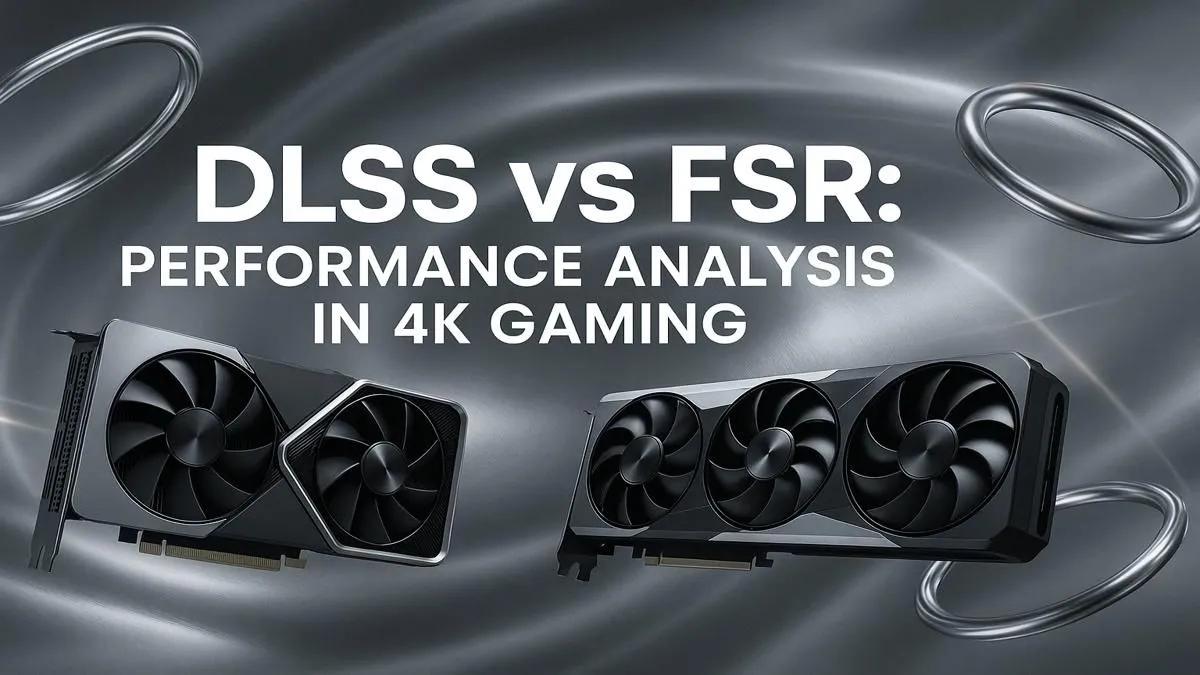
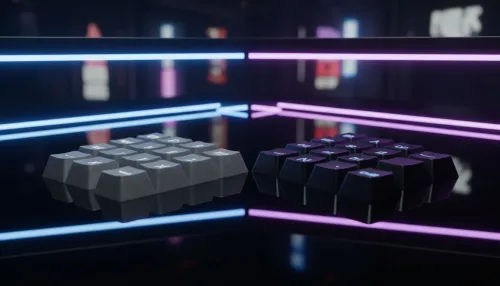
Got a shiny 4K monitor but your favourite games are chugging? Welcome to the great performance balancing act. Luckily, you have two powerful allies: NVIDIA’s DLSS and AMD’s FSR. These smart upscaling technologies promise higher frame rates without melting your GPU. But in the fierce DLSS vs FSR showdown, which one truly delivers the best 4K gaming experience for your rand? Let's dive in and find out. 🚀
Understanding the Upscaling Battlefield
Before we pit DLSS vs FSR against each other, what exactly is upscaling?
In simple terms, it’s a clever trick. Your graphics card renders the game at a lower resolution (like 1080p or 1440p), which is much easier and faster. Then, a sophisticated algorithm or AI model "upscales" that image to fit your 4K screen in real-time. The goal is to give you a picture that looks almost as good as native 4K, but with the buttery-smooth frame rates of a lower resolution. More FPS for free? Jirre, that’s a lekker deal.
Team Green: NVIDIA DLSS (Deep Learning Super Sampling)
NVIDIA's DLSS is the proprietary, AI-powered solution. It uses dedicated Tensor Cores found on NVIDIA's powerful RTX lineup to work its magic. By training its AI model on super-high-quality offline game renders, DLSS has become incredibly good at reconstructing a sharp and detailed image.
Key Strengths of DLSS:
- Image Quality: Generally considered the gold standard. In its 'Quality' mode, DLSS can sometimes look even sharper than native 4K due to its excellent anti-aliasing.
- AI Power: The use of machine learning and dedicated hardware often results in better handling of fine details and less visual noise.
- DLSS 3 Frame Generation: On RTX 40-series cards, this feature generates entirely new frames, providing a massive performance boost, though it can add a touch of input latency.
Pro Tip: Finding Your Sweet Spot 💡
Upscaling isn't an all-or-nothing switch. Both DLSS and FSR offer modes like 'Quality', 'Balanced', and 'Performance'. For 4K gaming, always start with 'Quality'. The visual difference is often minimal, but the FPS boost is significant. Only drop to 'Balanced' or 'Performance' if you absolutely need more frames for a competitive edge.
Team Red: AMD FSR (FidelityFX Super Resolution)
AMD took a different approach with FSR. Instead of being a closed, hardware-specific system, FSR is an open-source spatial upscaler. This is its superpower. It doesn’t require special AI cores, meaning it works on a huge range of GPUs, including AMD Radeon graphics cards, older NVIDIA cards, and even Intel’s new Arc GPUs.
Key Strengths of FSR:
- Open Compatibility: This is FSR's biggest win. If you have a gaming PC built in the last five years, chances are FSR will work for you.
- Massive Performance Gains: FSR delivers significant FPS boosts, making high-refresh-rate 4K gaming accessible to more people.
- Constant Improvement: With FSR 2 and now FSR 3, AMD has dramatically closed the image quality gap with DLSS, using temporal data (information from previous frames) to create a much more stable and detailed image. ✨
The 4K Showdown: DLSS vs FSR Head-to-Head
So, when the pixels start flying in a demanding 4K game, which upscaler wins?
- Image Quality Winner: DLSS. While FSR has made huge strides, DLSS 2 and 3 generally maintain a slight edge in visual fidelity. Its AI reconstruction tends to produce a cleaner, more stable image with fewer artifacts, especially on fine details like fences or foliage.
- Compatibility Winner: FSR. It’s not even a contest. FSR’s open-source nature means it’s available to a much wider audience of gamers, regardless of what brand of GPU is in their rig.
- Performance Winner: It's a Draw. Both technologies provide excellent performance uplifts that can turn a stuttery 40 FPS into a smooth 70+ FPS. The exact numbers vary by game and hardware, but both deliver on their core promise of more frames.
The Verdict: Which Upscaler is for You?
The DLSS vs FSR debate doesn't have a single, easy winner. The best choice depends entirely on your situation.
If you own an NVIDIA RTX 20, 30, or 40-series card and prioritise the absolute best image quality possible, DLSS is your champion.
If you're running an AMD card, an older NVIDIA card, or simply value open standards and want a fantastic performance boost that works almost anywhere, FSR is your hero.
Ultimately, both are incredible technologies that make high-resolution gaming more achievable for everyone. The best way to decide is to see which card fits your budget and performance goals by checking out the best graphics card deals available right here in South Africa.
Ready to Supercharge Your FPS?
The DLSS vs FSR debate proves the best upscaler depends on your hardware. Whether you're chasing ultimate visual fidelity with Team Green or embracing open compatibility with Team Red, the power to achieve smooth 4K gaming is within reach. Find your next GPU in our graphics card deals and start winning.