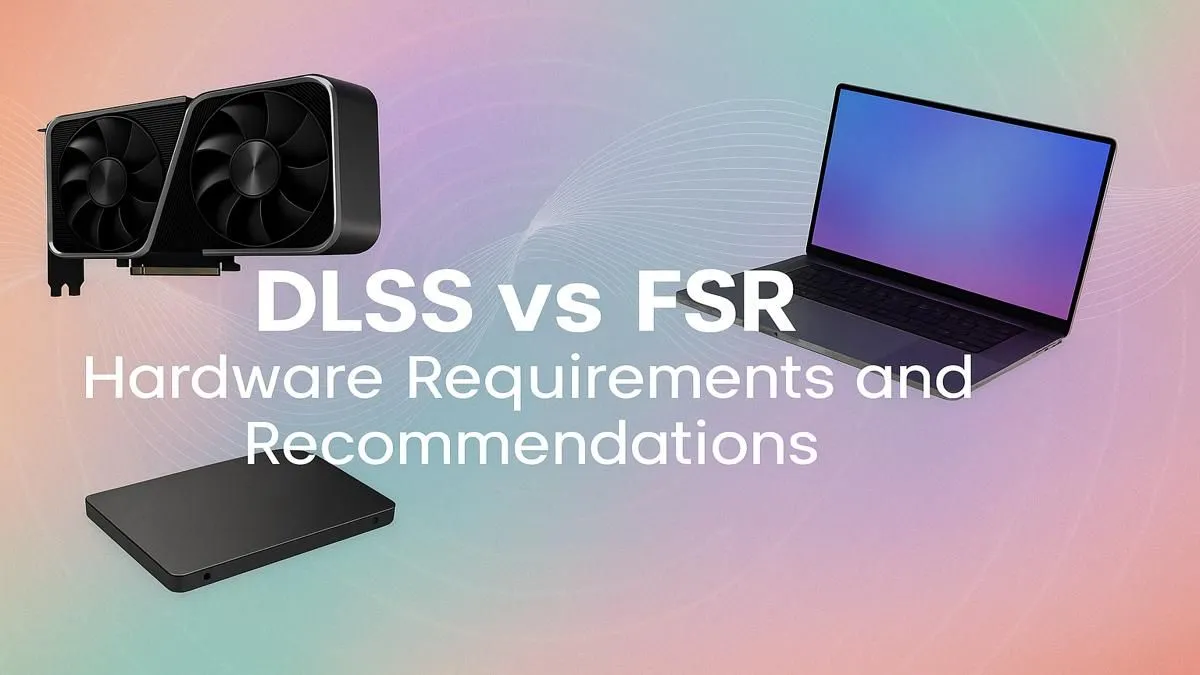
Staring at your frame rate counter, wishing for just a few more FPS? We've all been there. Upscaling tech like NVIDIA's DLSS and AMD's FSR promises that extra performance boost, but it's a confusing space. The biggest question for South African gamers isn't just which is better, but a more practical one: which one can my PC actually run? Let's break down the DLSS vs FSR hardware requirements so you can make the right choice for your rig.
Understanding the Core Difference: AI vs Open-Source
Before diving into the hardware, it's crucial to know why the requirements differ. Think of it like this:
- NVIDIA DLSS (Deep Learning Super Sampling) is the exclusive club. It uses dedicated AI hardware called Tensor Cores, found only on NVIDIA's RTX graphics cards, to intelligently reconstruct an image from a lower resolution. This AI-driven approach often results in impressive image quality.
- AMD FSR (FidelityFX Super Resolution) is the open-invitation party. 🎉 It's an open-source spatial upscaler, meaning it doesn't rely on specialised AI hardware. It cleverly sharpens and upscales the image using advanced algorithms, making it compatible with a massive range of GPUs from different brands and generations.
NVIDIA DLSS Hardware Requirements: The Green Team's Ticket
To use DLSS, the rule is simple and strict: you need an NVIDIA GeForce RTX graphics card. There are no exceptions.
This is because the technology is fundamentally tied to the Tensor Core hardware built into the silicon of these specific cards. If you don't have an RTX card, you can't run DLSS.
- DLSS 2 (Super Resolution): Requires any NVIDIA GeForce RTX 20, 30, or 40 Series GPU.
- DLSS 3 (Super Resolution + Frame Generation): This is the latest version, and its standout feature, Frame Generation, is exclusive to the newest NVIDIA GeForce RTX 40 Series cards.
So, if top-tier AI upscaling is your priority, your shopping list starts and ends with Team Green's RTX lineup.
Check The Game First! ⚡
Before you buy a new GPU for a specific game, always check that game's settings or official website. Support for DLSS and FSR varies from title to title. A game might support one but not the other, or even older versions of the tech. A quick Google search can save you a lot of ZAR and disappointment.
AMD FSR Hardware Requirements: The People's Champion
Here's where things get a lot more flexible. Because FSR is open-source and doesn't need special AI cores, its hardware requirements are incredibly broad.
FSR is designed to work on a huge variety of cards, including:
- AMD GPUs: Pretty much any modern AMD Radeon graphics card from the RX 500 series onwards will see great results.
- NVIDIA GPUs: Yes, you can run FSR on NVIDIA cards! This includes modern RTX cards and even older GTX cards like the popular 10-series and 16-series.
- Intel GPUs: FSR also runs on Intel's new Arc graphics cards.
This wide compatibility makes FSR a fantastic option for gamers on a tighter budget or for those looking to breathe new life into a slightly older gaming PC. 🚀
So, Which GPU Do You Need?
The choice between DLSS and FSR hardware requirements boils down to your budget and goals.
If you're building a new high-end PC and want the most advanced image reconstruction technology available, investing in an RTX card for DLSS is a powerful move. The image quality is often considered best-in-class.
However, if you value flexibility, are upgrading an older system, or want to ensure you have an upscaling option that works on virtually any gaming PC, then choosing a card that can leverage FSR is a smart, budget-friendly decision. Luckily, that includes almost every relevant GPU on the market today, making it easy to find an option when browsing the best graphics card deals.
Ultimately, both technologies aim to give you smoother, faster gameplay. Knowing which one your hardware can support is the first step to unlocking that performance.
Ready to Boost Your FPS?
The DLSS vs FSR choice depends entirely on your hardware. Whether you're building a new rig from scratch or just upgrading, finding the right GPU is the key to unlocking smoother frame rates. Design your ultimate gaming PC with our builder and pair the perfect components for your budget.