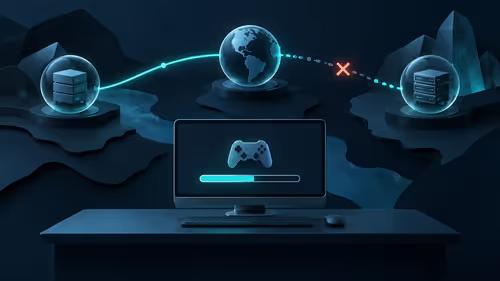
You’ve got the skills. You’ve got the reflexes. You’re in the final circle in Apex, lining up the perfect shot… and then it happens. The dreaded lag spike. Your character stutters, the enemy vanishes, and a moment later you’re staring at the squad eliminated screen. In South Africa, where every millisecond of ping counts, the Ethernet vs WiFi for gaming debate isn’t just academic—it’s the difference between a glorious win and a frustrating loss.
Why Ethernet is the Gold Standard for Gaming
When it comes to raw, unfiltered performance, a wired Ethernet connection is still the undisputed champion. Think of it as a private highway for your data, directly from your router to your PC or console. There are three key reasons why competitive players in SA swear by the cable.
Unbeatable Speed & Rock-Solid Stability
An Ethernet cable delivers the maximum speed your fibre or ADSL line can handle, with virtually zero data loss. WiFi, on the other hand, is a shared space. Signals can be weakened by walls, distance, or even your neighbour’s microwave. For gaming, this stability is crucial. It means no random disconnects during a ranked match or a critical boss fight. ⚡
The Ping Killer: Lower Latency
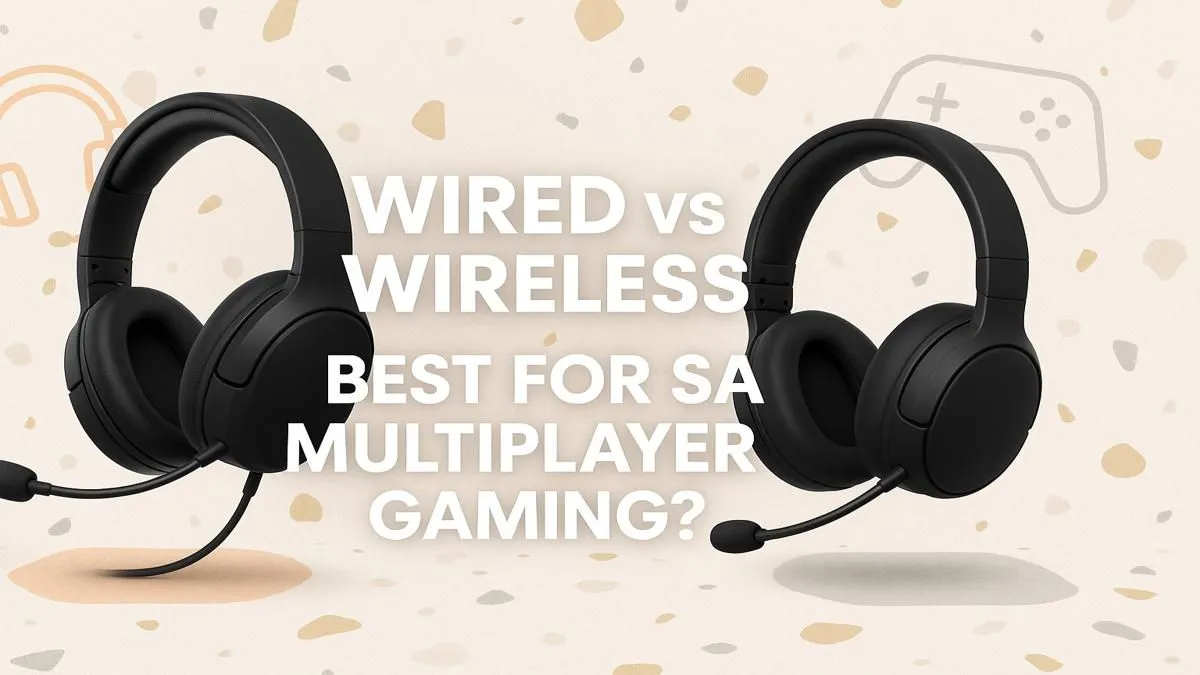
Latency, or ping, is the time it takes for your command to reach the game server and for the result to come back. In the Ethernet vs WiFi for gaming showdown, Ethernet wins on latency every single time. A lower, more stable ping means your actions are registered faster, giving you a tangible competitive edge. This is why many pros insist on the reliability of a wired setup, right down to their audio gear, preferring a high-quality wired headset for zero audio lag.
Has WiFi Caught Up in the Gaming Arena?
Let’s be honest, nobody loves running cables across the living room. Modern WiFi, especially with standards like WiFi 6 and 6E, has made incredible strides. So, has wireless finally closed the gap for gaming?
The answer is… it depends. For many, the convenience is undeniable. If you’re gaming on a laptop, a Steam Deck, or a console that isn't right next to the router, WiFi is your only option. It’s perfect for kicking back on the couch for a session on your console, and with a great pair of PlayStation headsets or dedicated Xbox headsets, you can have a completely untethered experience. For single-player adventures or casual co-op games with friends, a strong WiFi signal is often more than enough. The freedom of a cable-free setup is a huge plus, mirroring the appeal of a top-tier wireless headset for maximum movement. ✨
WiFi Optimisation Pro Tip 🔧
For the best possible wireless gaming experience, make sure your router is placed in a central, elevated location. Connect your gaming device to the 5GHz band instead of the 2.4GHz band, as it's faster and less prone to interference from other household devices. This simple tweak can significantly improve your WiFi stability.
The Final Verdict: What's Best for South African Gamers?
So, when it comes to Ethernet vs WiFi for gaming in South Africa, which should you choose?
- For the Competitive Player: If you play fast-paced, competitive titles like Valorant, CS:GO, or Warzone, the answer is clear: use Ethernet. The lower ping and unmatched stability are non-negotiable for climbing the ranks.
- For the Casual Gamer: If your library is filled with story-driven RPGs, strategy games, or you mostly play on a console for fun, a good WiFi 6 setup will serve you perfectly well. The convenience often outweighs the minimal performance difference.
Ultimately, the best choice is the one that fits your playstyle and home setup. You don't have to choose just one! Use Ethernet for your main gaming rig and enjoy the convenience of WiFi for your other devices. And while you're optimising your connection, don't forget that audio is just as important for immersion and competitive awareness; it's always a good time to check out the best gaming headset deals to complete your setup.
Your internet connection is the foundation of your online gaming experience, but it's just one part of the ecosystem. A quality router, a decent ISP, and high-performance peripherals all work together to give you the smoothest gameplay possible. Ensuring your audio is as clear and lag-free as your connection can make all the difference, so exploring the full range of headphones and headsets is a smart move for any serious player. 🚀
Ready to Perfect Your Setup?
A stable connection is your first step to victory, but a full suite of responsive gear is what makes a champion. From mice to keyboards and everything in between, get the edge you need. Explore our massive range of gaming peripherals and build your ultimate battle station today.