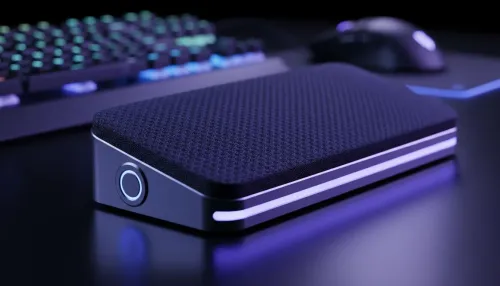
Staring at a loading screen while your mates are already dropping into Caldera? It’s a classic frustration for South African gamers. We’ve all been there. But does shelling out for a top-tier solid-state drive (SSD) actually fix it? The question on everyone’s mind is simple: do fast SSDs boost gaming performance where it counts, or is it just marketing hype? Let’s dive in and separate fact from fiction. 🚀
How Fast SSDs Tackle Gaming's Biggest Bottleneck
The single biggest upgrade you can make from an old-school hard disk drive (HDD) is an SSD. Think of it like this: an HDD is like finding a specific book in a massive library by hand. An SSD is like having a digital catalogue that points you to the exact shelf, row, and book in an instant.
For gaming, this means your PC can find and load game assets… maps, textures, character models, and sounds… exponentially faster. The primary, undeniable benefit is the dramatic reduction in loading times. Games like Starfield or Baldur's Gate 3 with their vast worlds see a night-and-day difference. This is the most direct way a fast SSD provides a boost for gaming. You spend more time playing and less time waiting.
The Real Impact on FPS: Myth vs. Reality
Here's where we need to be clear: an SSD will not magically increase your maximum frames-per-second (FPS). That job belongs almost entirely to your graphics card (GPU) and processor (CPU). So, if you're hoping to go from 60 FPS to 100 FPS with an SSD alone, you’ll be disappointed.
However, the story doesn't end there. A faster SSD, particularly a modern NVMe drive, can significantly improve frame consistency. It helps eliminate stuttering and texture pop-in, especially in open-world games where the system is constantly loading new assets as you move. By feeding data to your GPU and RAM without delay, a top-tier Gen4 drive like the Klevv CRAS C925G ensures a smoother, more immersive experience. ✨
Check Your M.2 Slot! 🔧
Before buying a speedy NVMe SSD, check your motherboard's manual or product page. You need to confirm you have a free M.2 slot and whether it supports PCIe Gen3, Gen4, or the latest Gen5 speeds. Plugging a Gen4 drive into a Gen3 slot will work, but it will run at the slower Gen3 speed.
Choosing Your Speed: From SATA to Blazing-Fast NVMe
Not all SSDs are created equal. For years, SATA SSDs were the gold standard, and they still offer a fantastic performance lift over any HDD. They are a reliable and cost-effective choice.
But the real magic now lies with NVMe (Non-Volatile Memory Express) M.2 SSDs. These drives plug directly into the motherboard, bypassing slower data cables to achieve mind-blowing read and write speeds. For gamers looking to future-proof their rigs for technologies like Microsoft's DirectStorage, an NVMe drive is the only way to go. Exploring the full Klevv South Africa lineup reveals options built specifically for this kind of high-speed demand.
The Verdict: Is an SSD Upgrade Worth Your ZAR?
So, do fast SSDs boost gaming performance enough to justify the cost? Absolutely.
- For Load Times: It's the single most effective upgrade you can make. It's not a small improvement; it's a colossal one.
- For Smoothness: It won't raise your FPS ceiling, but it will make your gameplay feel more stable and responsive by reducing hitches and stutter.
If you’re still running your games from a mechanical hard drive, moving to even a basic SSD will feel revolutionary. If you're a serious enthusiast, upgrading from an older SATA drive to a new NVMe model will give you that extra competitive edge and prepare your PC for the future of gaming. Check out our full range of SSDs to find the perfect fit for your budget and your rig.
Ready to Obliterate Those Loading Screens?
An SSD is one of the most satisfying upgrades you can make to a gaming PC. Find the perfect drive to match your motherboard and budget. Explore our massive range of PC components and get your rig running at lightning speed.