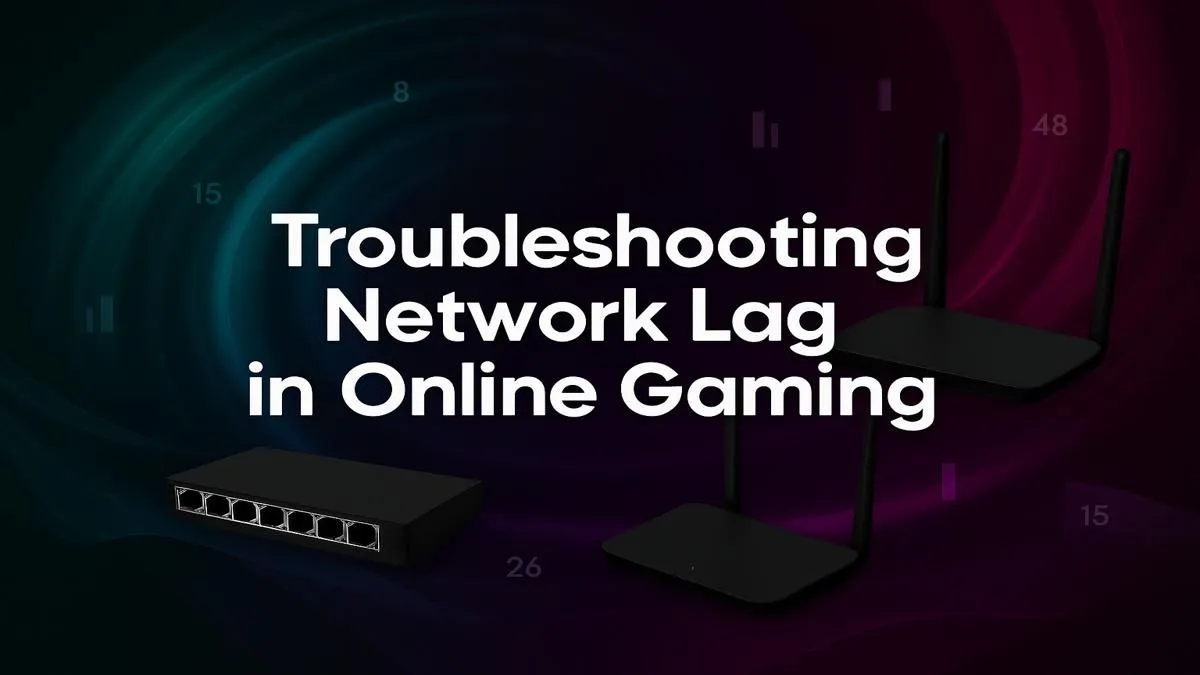
You’ve got the drop on them… your crosshair is perfectly aligned for the headshot. Then your screen stutters for a split second. By the time it unfreezes, you’re staring at the killcam. Sound familiar? For South African gamers, battling lag can feel like a boss fight in itself. Whether it's high ping or choppy frames, that delay can ruin a perfect match. But don't rage-quit just yet. This guide will show you exactly how to fix lag in online games. 🚀
First, Know Your Enemy: Ping vs. FPS
Before you can fix the problem, you need to know what you’re fighting. Gaming lag comes in two main flavours:
- Network Lag (High Ping): This is the delay between your PC and the game server. It’s measured in milliseconds (ms). A high ping means your actions take longer to register, causing that awful "shooting where they were" feeling. This is an internet issue.
- Hardware Lag (Low FPS): This is when your PC can't draw frames fast enough, resulting in a choppy, stuttering image. It’s measured in Frames Per Second (FPS). Low FPS makes aiming difficult and the game feel unresponsive. This is a PC performance issue.
Understanding which one is affecting you is the first step to a real online gaming lag fix.
How to Fix Network Lag & Slash Your Ping
If your ping is spiking over 100ms, your internet connection is the culprit. Here are a few proven ways to get it under control.
Go Wired: The Ethernet Advantage 🔧
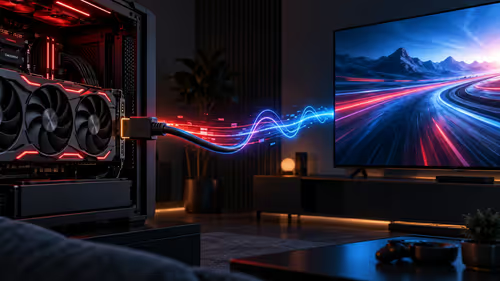
Wi-Fi is convenient, but it’s susceptible to interference from walls, other devices, and even your neighbour's microwave. An Ethernet cable provides a stable, direct connection to your router, drastically reducing ping and eliminating packet loss. It’s the single most effective way to improve your connection for competitive play.
Choose Your Arena: Local Servers are Key
Distance matters. Always choose South African servers (usually Johannesburg or Cape Town) when available. Playing on European or US servers guarantees a high ping of 150ms or more. A stable, low-ping connection is non-negotiable when you're trying to clutch a round on a top-tier Counter-Strike 2 gaming PC.
Tame Your Bandwidth Hogs
Is someone in your house streaming 4K Netflix while you’re trying to play? Are you downloading a massive game update in the background? These activities consume your bandwidth and can cause severe lag spikes. Pause all downloads, close streaming apps, and shut down any unnecessary cloud-syncing services before you jump into a match.
Pro Router Tweak ⚡
Many modern routers have a setting called Quality of Service (QoS). Log in to your router's admin panel and look for it. QoS allows you to prioritise traffic for specific devices or applications. By setting your gaming PC or console as a high-priority device, you tell your router to always give it the fastest connection, even when other people are using the network.
How to Fix Hardware Lag & Boost Your FPS
If your ping is low but the game still feels like a slideshow, your PC is struggling to keep up. Here’s how to boost your FPS and get that buttery-smooth gameplay you crave.
Tweak Your In-Game Settings
This is your first port of call. Lowering demanding graphics settings can provide a massive FPS boost. Start by turning down or disabling:
- Shadow Quality
- Anti-Aliasing
- Ambient Occlusion
- Volumetric Effects
Dropping these settings can make a huge difference in fast-paced shooters like Overwatch 2 or when you're scanning the horizon in a tense battle royale like PUBG.
Update Your Graphics Drivers ✨
NVIDIA, AMD, and Intel regularly release driver updates that include performance optimisations for the latest games. Keeping your graphics drivers up to date is a free and easy way to squeeze more performance out of your hardware. Use GeForce Experience or AMD Software: Adrenalin Edition to check for updates automatically.
The Ultimate Fix: Is It Time for an Upgrade?
Sometimes, no amount of tweaking can help an old system run new games well. If you've tried everything and still get frame drops in the chaotic streets of Los Santos on a GTA V-ready PC, or your PC struggles to render the massive map in Call of Duty: Warzone 2.0, your hardware might be the bottleneck.
Even games that seem simple, like building worlds on a Minecraft gaming PC with heavy mods, can be demanding. For visually stunning titles like exploring Night City on a Cyberpunk 2077 PC or landing that victory royale on a powerful Fortnite gaming PC, a modern GPU is essential. For simulation titles that tax your processor, like flying over detailed landscapes on a Microsoft Flight Simulator PC, a powerful CPU is just as critical.
Ready to End Lag for Good? Sometimes, software tweaks aren't enough. A purpose-built gaming rig is the ultimate way to fix lag in online games. Explore Evetech's massive range of high-performance gaming PCs and experience the smooth, responsive gameplay you deserve.