In the high-stakes world of Counter-Strike 2, a millisecond is the difference between a headshot and a trip back to the spectator screen. Local players often struggle with latency issues... but your hardware settings shouldn't be the bottleneck. Finding the right NVIDIA Reflex CS2: On or Boost? setting is crucial for your performance. Let’s dive into how to eliminate input lag and keep your crosshair crisp. ⚡
Understanding NVIDIA Reflex in CS2
NVIDIA Reflex is a technology designed to reduce system latency... the delay between clicking your mouse and seeing the muzzle flash on screen. In a game like CS2, where peekers' advantage and reaction times dictate the winner, lowering this lag is non-negotiable. By synchronising the CPU and GPU, Reflex removes the render queue... ensuring your frames are delivered as fast as your hardware allows.
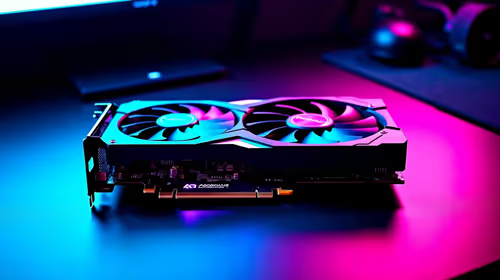
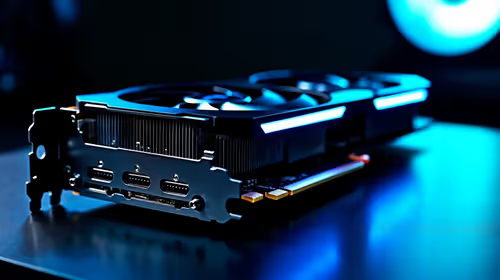
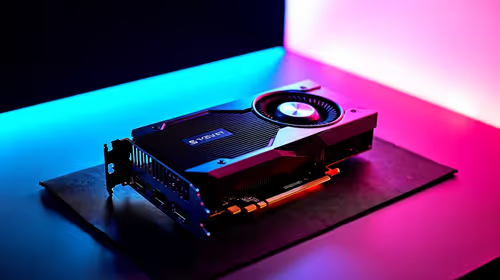
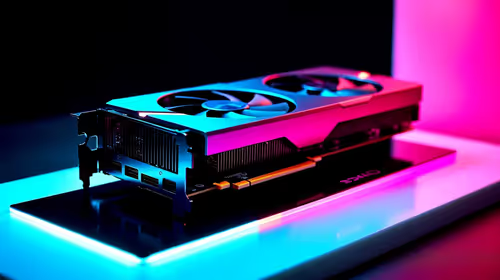
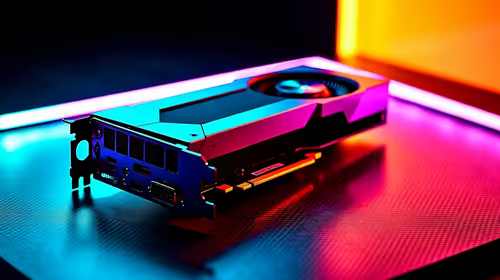
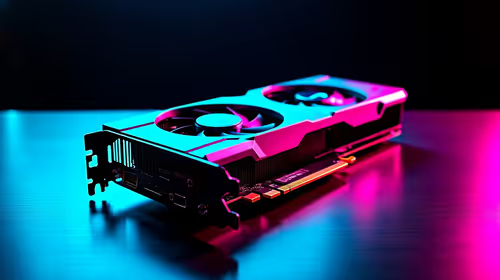
If you are looking to upgrade your rig to support these features, our range of NVIDIA graphics cards offers the latest tech to keep you competitive.
On vs Boost: Which Setting Wins?
The debate over NVIDIA Reflex CS2: On or Boost? usually comes down to your specific hardware.
- On: This enables the core Reflex technology, reducing system latency without significantly increasing power consumption. It is the standard choice for most modern builds.
- Boost: This setting does everything "On" does, but it also keeps the GPU clock speeds high... even when the game is CPU-bound. This is particularly useful for players using high-refresh monitors who want to ensure the GPU is always ready to push the next frame.
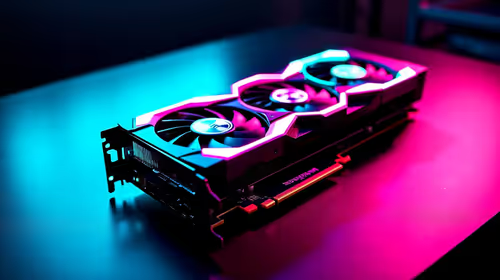
For those using premium MSI GPUs, the "Boost" setting can help maintain stability during intense fire fights where frame times might otherwise fluctuate.
Reflex Pro Tip ⚡
If you enable NVIDIA Reflex in-game, you should disable 'Ultra Low Latency Mode' in your NVIDIA Control Panel. Reflex is a more advanced, game-integrated version of that technology. Using both can occasionally cause frame pacing issues... stick to the in-game setting for the smoothest experience.
Hardware Requirements for Lower Latency
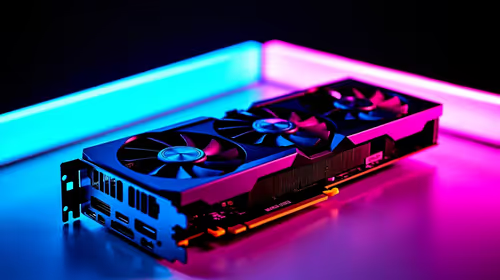
While NVIDIA is the leader in low-latency tech, the market is full of options. Competitive gamers often look at AMD Radeon graphics cards for their Anti-Lag features, which serve a similar purpose. Even the newer Intel Arc graphics cards are making strides in driver optimisations for eSports titles.
It is worth noting that while workstation graphics cards are designed for rendering and CAD, they can run CS2... though they lack the specific gaming drivers that make Reflex so effective. 🔧
Optimising Your Setup for South African Servers
Living in South Africa means battling higher pings to international servers, so reducing local system latency is even more vital. Ensure your Windows Power Plan is set to "High Performance" and your monitor is running at its maximum refresh rate. Combining these tweaks with the correct NVIDIA Reflex CS2: On or Boost? choice will make your gameplay feel significantly more responsive. 🚀
Ready to Find Your Perfect Match? Reducing input lag is the first step to climbing the ranks in CS2. For the best frame rates and lowest latency in South Africa, check out our latest deals. Explore our massive range of NVIDIA graphics cards and find the perfect machine to conquer your world.