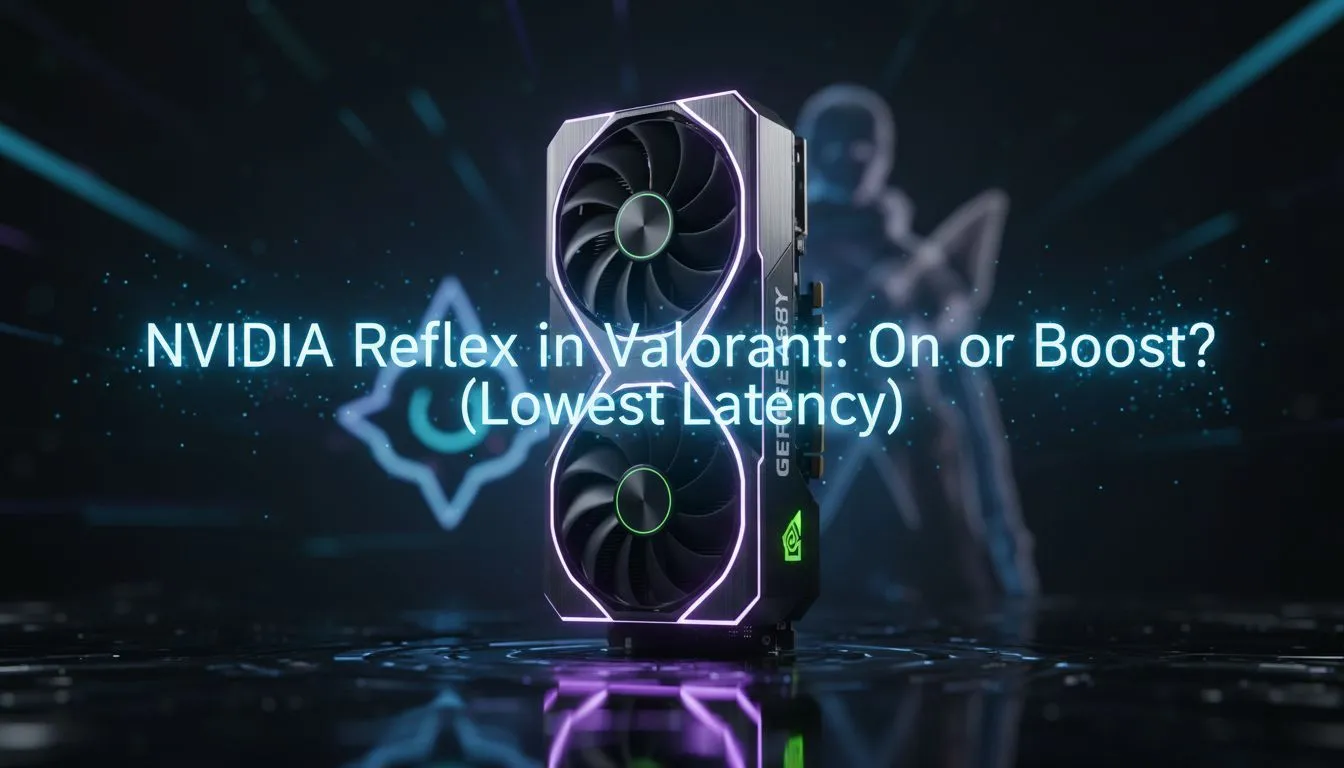
Understanding NVIDIA Reflex Valorant: On or Boost for Lowest Latency
In the high-stakes world of Valorant, a few milliseconds decide if you land that headshot or end up spectating. South African gamers often focus on ping... but system latency is just as vital. If you want the competitive edge, you've likely asked: NVIDIA Reflex Valorant: On or Boost for Lowest Latency? Let's break down which setting actually helps you climb the ranks. ⚡
How NVIDIA Reflex Minimises Input Lag
NVIDIA Reflex is a suite of technologies designed to optimise and measure system latency. In a fast-paced shooter like Valorant, the time between clicking your mouse and seeing the muzzle flash on screen is everything. For those using budget gaming PCs, enabling this feature can feel like a significant hardware upgrade without spending a cent.
The technology works by dynamic communication between the CPU and GPU. It ensures the CPU doesn't start processing frames too early... which prevents a "bottleneck" where frames sit in a queue. By keeping the pipeline lean, your inputs feel instantaneous.
Choosing Between "On" and "On + Boost"
When you head into the Valorant video settings, you'll see three options for NVIDIA Reflex: Off, On, and On + Boost. For most mid-tier gaming setups, selecting "On" is the standard recommendation. It reduces the render queue and keeps latency low while maintaining standard power efficiency.
However, the "Boost" option adds another layer of performance. It forces the GPU to maintain higher clock speeds, even when the game is CPU-bound. This is particularly useful in Valorant, which is famously light on the GPU but heavy on the processor. By keeping your graphics card "awake" and ready to render, you shave off those final micro-seconds of delay. 🚀
Latency Pro Tip ⚡
If you are playing on a laptop or a PC with aggressive power-saving features, always use 'On + Boost'. This prevents the GPU from entering a low-power state during quiet moments in a round, ensuring you have maximum responsiveness the moment an enemy peeks a corner.
Does Your Hardware Impact the Choice?
While the software does the heavy lifting, your hardware determines the ceiling of your performance. If you are browsing exclusive gaming offers, look for systems that pair low-latency displays with Reflex-compatible GPUs.
For players using high-end battle stations, the difference between On and Boost might be less noticeable... but at the pro level, every advantage counts. If your GPU is already running at high utilisation, "Boost" might not provide a massive jump, but it certainly won't hurt your frame times.
Optimising Your Setup for Radiant Ranks
To truly benefit from NVIDIA Reflex Valorant: On or Boost for Lowest Latency tweaks, ensure your Windows power plan is set to "High Performance" and your drivers are up to date. Many of our ready-to-ship systems come pre-optimised, but a quick check in the NVIDIA Control Panel can ensure "Ultra Low Latency Mode" is also configured correctly. ✨
Ultimately, "On + Boost" is the preferred choice for competitive players who don't mind a slight increase in power consumption for the absolute lowest possible latency.
Ready to Find Your Perfect Match?
The battle for the lowest latency starts with the right hardware. For maximum power, choice, and value in South Africa, Evetech's range of NVIDIA-powered rigs is hard to beat. Explore our massive range of gaming PC specials and find the perfect machine to conquer your world.