Why Every Millisecond Matters in the Summoner’s Rift
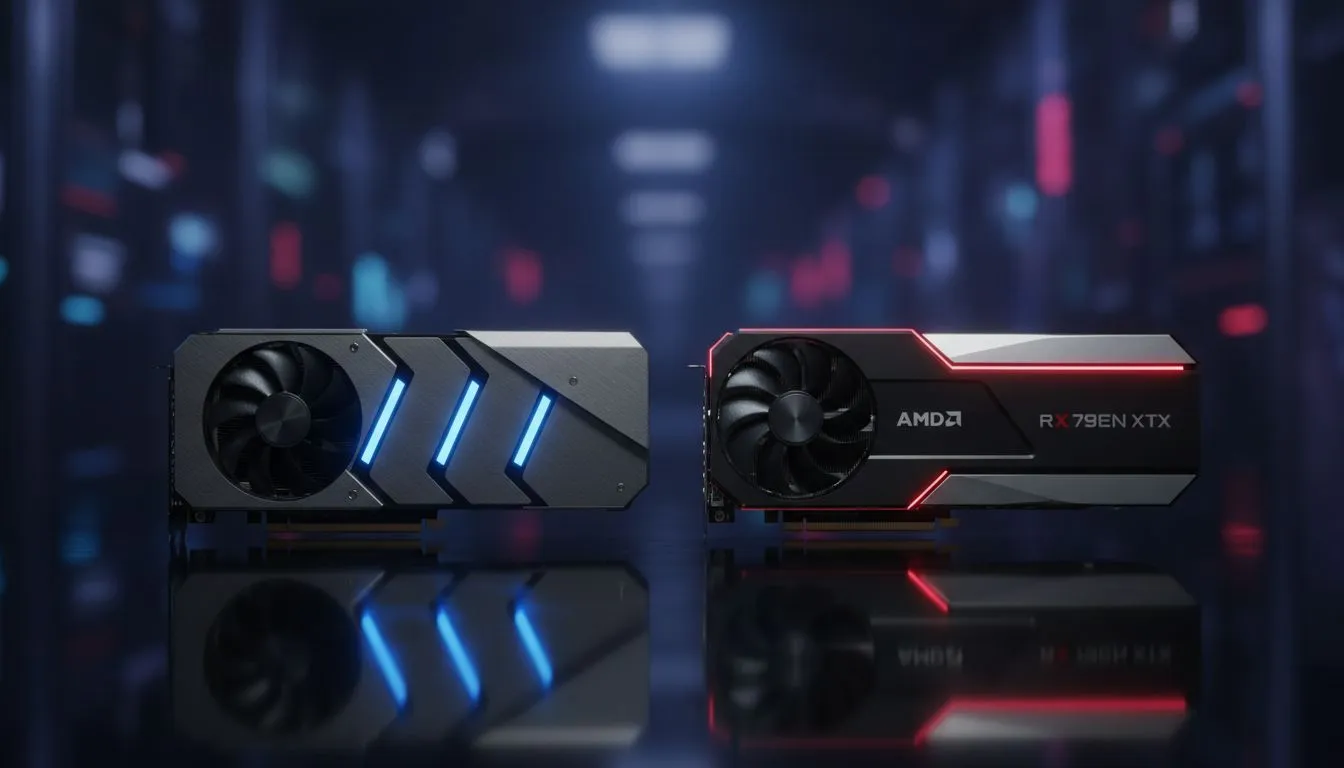
Imagine you are mid-lane, about to land a game-winning Flash-Ult combo. Your fingers press the keys, but there is a microscopic delay... a stutter that costs you the match. In South Africa, where we already battle higher pings to international servers, local system latency is the one thing we can actually control. This NVIDIA Reflex vs AMD Anti-Lag - LoL Latency Test breaks down which technology truly gives you the competitive edge.
NVIDIA Reflex: The Gold Standard for Response Times
NVIDIA Reflex is not just a software toggle... it is a complete pipeline optimisation. By synchronising the CPU and GPU, it eliminates the GPU render queue, which means your mouse clicks reach the screen faster. When testing with the latest graphics cards, we noticed that Reflex significantly reduces the "click-to-photon" delay. This is vital for champions like Yasuo or Irelia, where precise timing is everything.
If you are looking for specific hardware to leverage this, MSI graphics cards often feature cooling solutions that keep clock speeds stable, ensuring Reflex works at its peak efficiency without thermal throttling. During our LoL latency test, the Reflex-enabled system felt noticeably more "connected" to the player's movements.
Optimising League for Low Latency ⚡
Beyond just GPU settings, ensure you enable 'Prefer High Performance' in your Windows Power Plan and disable 'Full-screen Optimisations' in the LeagueClient.exe properties. This small tweak can shave off a few extra milliseconds of input lag, making your skill shots feel significantly more responsive during high-intensity teamfights.
AMD Anti-Lag: The Radeon Counter-Attack
AMD has its own solution to the latency problem. While Reflex integrates deeply with the game engine, AMD Anti-Lag focuses on controlling the pace of the CPU to ensure it does not get too far ahead of the GPU. In our testing with various AMD Radeon graphics cards, we found that Anti-Lag provides a great boost for older titles and competitive games that are not yet "Reflex-native."
For League of Legends, the latency reduction is tangible. While it might not reach the ultra-low levels of Reflex in every scenario, it offers a massive improvement over having the feature turned off. It is a must-use for any Radeon owner looking to climb the South African ranked ladder.
The Third Contender and Professional Stability
The market is no longer just a two-horse race. Even newer entries like Intel Arc graphics cards are beginning to introduce their own latency reduction techniques. While still maturing, their performance in LoL is surprisingly stable for a first-generation product.
For those who use their rigs for more than just gaming... perhaps for rendering or AI development... choosing workstation graphics cards might seem like an odd choice for League. However, the driver stability provided by these professional-grade cards ensures that your system latency remains consistent, even if you are running background tasks while queuing for a match. 🚀
Final Verdict: Which One Wins?
In our NVIDIA Reflex vs AMD Anti-Lag - LoL Latency Test, NVIDIA Reflex takes a slight lead due to its deeper integration within the League of Legends engine. However, the best technology is the one that matches your current hardware. Whether you are rocking a green or red team GPU, enabling these features is the easiest way to improve your performance without spending a single extra Rand on your internet connection. ✨
Ready to Find Your Perfect Match?
The battle between NVIDIA and AMD is fierce, but for the best frame rates and lowest latency in South Africa, the right GPU makes all the difference. Explore our massive range of graphics cards and find the perfect machine to conquer your world.