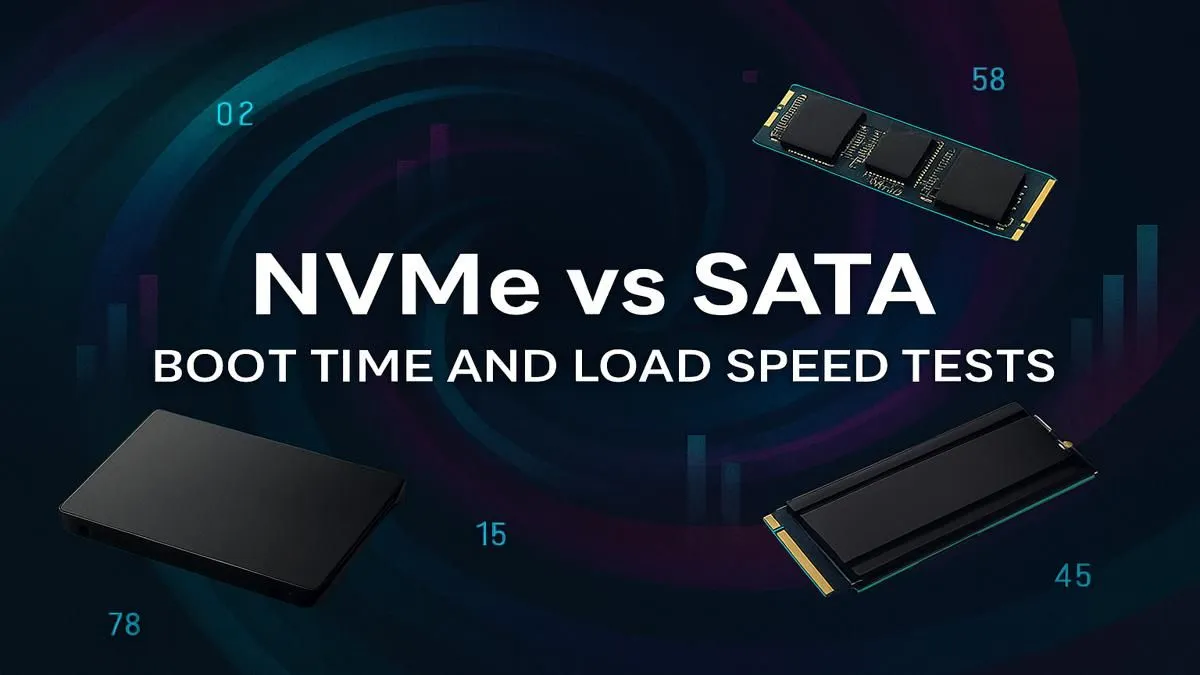
Staring at a loading screen again? We've all been there. That agonizing wait can kill the vibe before you even drop into the game. The big question for any PC builder in South Africa is: NVMe or SATA SSD? While both crush old-school hard drives, our NVMe vs SATA speed test reveals which drive truly boots and loads faster, getting you into the action without delay. Let's settle the debate. 🚀
Understanding the Core Tech: NVMe vs SATA
Before we dive into the speed test, let's quickly break down the difference. Think of it like roads. A SATA SSD is like a clean, paved city street—fast and reliable, but with a speed limit. It connects to your motherboard via a cable and tops out at around 600 MB/s.
An NVMe (Non-Volatile Memory Express) SSD, on the other hand, is a multi-lane Autobahn. It plugs directly into your motherboard's M.2 slot, using the high-speed PCIe bus to communicate with your CPU. This direct lane allows for mind-blowing speeds, from 3,500 MB/s on older Gen3 models to over 12,000 MB/s on the latest Gen5 drives. The difference in raw potential is massive, but how does it translate to real-world use? You can explore the full range on our main SSDs component page.
The Real-World Speed Test: Boot Times & Game Loads
This is where the rubber meets the road. In an NVMe vs SATA speed test, the numbers on the box don't always tell the whole story.
System Boot-Up Times
Let's be honest, any SSD will make your PC boot dramatically faster than an old mechanical hard drive. When comparing SATA vs NVMe for boot times, the difference is noticeable but not life-changing. A good SATA SSD might boot Windows in 15 seconds, while a top-tier NVMe could do it in 10-12 seconds. It's faster, for sure, but those few seconds might not be your top priority.
Game Loading Speeds ⚡
This is where NVMe drives start to pull ahead. Loading into a massive open world like Cyberpunk 2077's Night City or fast-travelling across the map in Elden Ring involves reading huge amounts of data. An NVMe SSD can shave several seconds off every loading screen. It might not seem like much, but over a long gaming session, this adds up to a much smoother, more immersive experience. For gamers who despise loading screens, the faster loading from an NVMe is a clear win.
Check Your Motherboard First! 🔧
Before you splash out on a blazing-fast NVMe, check your motherboard's manual. Look for an 'M.2 slot' and confirm which PCIe generation it supports (e.g., Gen3, Gen4, or Gen5) to ensure you get the speeds you're paying for.
Making the Choice: Which SSD Suits Your Build?
So, which drive should you get? The answer depends entirely on your needs and budget.
A SATA SSD is a fantastic choice if:
- You're upgrading an older PC that lacks an M.2 slot.
- Your budget is tight, and you want the best bang-for-your-buck performance boost over a hard drive.
- You need extra storage for your game library, and raw speed for those specific games isn't critical.
For many builders, a reliable 2.5-inch drive is the perfect, cost-effective solution. You can find a wide variety of 2.5-inch SATA SSDs that offer excellent performance for everyday gaming and tasks.
An NVMe SSD is the clear winner if:
- You are building a new, high-performance gaming rig.
- You frequently play the latest AAA titles with large worlds and textures.
- You also use your PC for content creation, like video editing or 3D rendering, where file transfer speed is crucial.
The price gap has shrunk significantly, and finding great value is easier than ever. When you're looking for the pinnacle of storage performance, browsing the best SSD deals in South Africa often reveals that a top-tier NVMe is well within reach.
The Verdict: NVMe Speed Is the New Standard
While a SATA SSD remains a solid and affordable upgrade, the conclusion from any modern NVMe vs SATA speed test is clear. For new builds and serious gamers, the superior boot and load times of an NVMe drive make it the new standard. The enhanced responsiveness and reduced waiting times create a tangibly better user experience, making it a worthwhile investment for any performance-focused rig in South Africa.