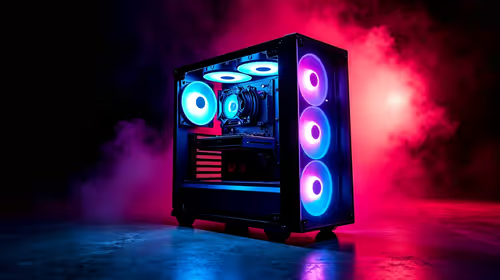
Stuck on a lap time at Kyalami? You've perfected your line, nailed the braking points, but that last tenth of a second remains elusive. The culprit might not be your skill... it could be your rig. Achieving peak sim racing PC performance isn't just about raw power; it's about a balanced system that translates every micro-adjustment into on-track speed. Forget the stutter that costs you the apex; let's build a machine that keeps up with your ambition. 🚀
Optimising Your Sim Racing PC Performance
In the world of virtual motorsport, your PC's performance is as critical as your car's setup. A sudden frame drop or input lag is the digital equivalent of a tyre losing grip—it breaks your concentration and can send you spinning into a wall. Consistent, high frame rates (FPS) aren't just for pretty visuals; they provide smoother feedback, reduce motion blur, and allow your brain to process information faster, helping you react instantly to what the car is doing. A system struggling to deliver a stable 90+ FPS, especially in a heated online race, is actively working against you. To truly compete, you need a PC built for the unique demands of modern racing simulators, and exploring a dedicated sim racing setup is the perfect place to start your journey.
The Core Components for a Flawless Frame Rate
Building a PC for sim racing requires a slightly different focus compared to a general gaming PC. While a powerful graphics card is important, the CPU often plays a more significant role.
CPU: The Brain of the Operation
Simulators like Assetto Corsa Competizione and iRacing are heavy on physics calculations. Your CPU is responsible for processing everything from tyre flex and suspension geometry to complex aerodynamic models for every car on the track. For this reason, strong single-core performance is king. A CPU that can crunch these numbers without delay ensures the force feedback you feel is an accurate, real-time representation of the virtual car's behaviour.
GPU: Your Window to the Track
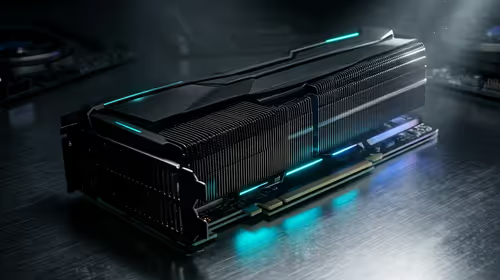
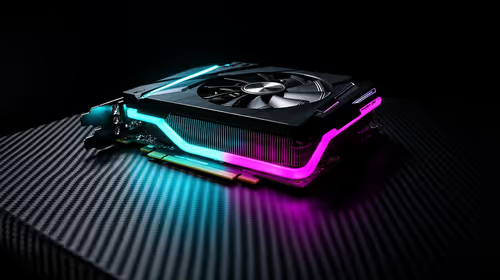
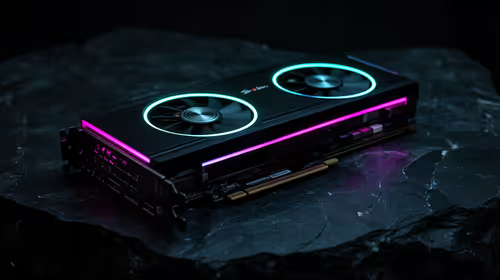
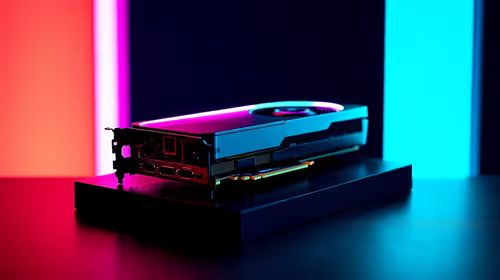
Your Graphics Processing Unit (GPU) handles the visual load. This becomes especially demanding with triple-monitor setups or high-resolution VR headsets. The goal here isn't just hitting a peak FPS, but maintaining a high, stable frame rate without dips. A powerful GPU ensures you can keep crucial visual settings high—like car detail and track textures—without sacrificing the buttery-smooth performance needed to spot your braking markers lap after lap.
Free Lap Time Found! ⚡
In your simulator's graphics settings, try lowering details that don't impact your driving. Turn down crowd density, shadows on distant objects, and post-processing effects like bloom. These settings are GPU-intensive but offer little competitive advantage. Re-allocating that performance to maintain a higher, more stable frame rate can give you a more responsive and predictable driving experience, which is far more valuable.
Beyond the Tower: Gear That Makes You Faster
Incredible sim racing PC performance is only half the story. Your PC is the engine, but your wheel, pedals, and seat are the chassis and controls. Without high-quality peripherals, all that processing power can go to waste. A powerful PC ensures that the intricate data from the simulation is processed instantly, but you need the right gear to translate that data into physical feedback. 🔧
A direct-drive wheelbase, for example, can communicate subtle changes in grip and road texture with incredible fidelity. This requires a PC that can feed it information without any perceptible lag. Pairing a top-tier PC with responsive gear like the latest Thrustmaster components ensures that what you feel through the wheel is a perfect 1:1 reflection of the virtual world. Likewise, a rigid cockpit is essential for consistency. If your desk is wobbling or your chair is flexing under heavy braking, you're losing precision. A solid foundation from dedicated Playseat chairs eliminates this variable, allowing you to build muscle memory and apply precise inputs, lap after consistent lap. ✨
Ready to Build Your Winning Rig?
A balanced system is the key to unlocking your true potential on the track. Stop fighting your hardware and start chasing podiums. Use our Custom PC Builder to configure the ultimate sim racing machine and leave the competition in your dust.