Bus width is easy to compare because it looks like a single, decisive number. Yet a memory interface is only one part of the path between GPU and memory. A 128-bit workstation graphics interface can be appropriate in one complete design, while a wider interface on another card does not automatically make that card suitable for a professional project.
Quick Answer
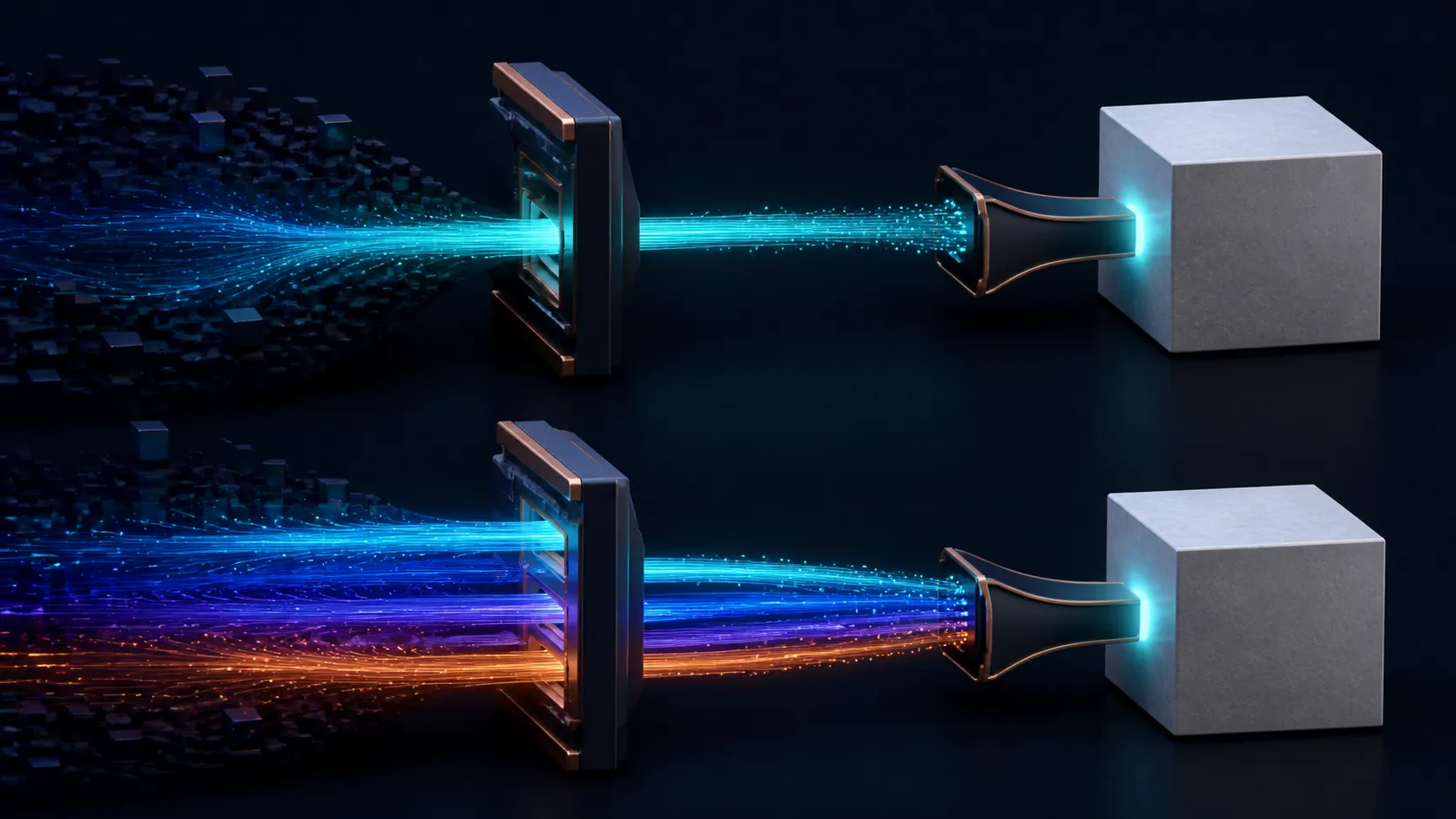
The A1000's 128-bit memory interface works with 8GB GDDR6 to deliver 192GB/sec, showing why bus width must be judged with memory type and effective bandwidth.
Bus width matters only as part of the complete memory system and tested card. The R12,099 A1000 uses a 128-bit path to 8GB GDDR6. Its other comparison points are an Ampere GPU and 2304 CUDA cores. A wider interface does not automatically create a better workstation choice.
🧭 Understand the role of interface width
The bit figure describes the width of the connection used in the memory subsystem. It does not state graphics-memory capacity, and it is not a standalone benchmark. Different GPU designs can use their memory resources differently, so comparing 128 bits with a wider number requires complete card data.
A bandwidth calculation also needs memory speed, so obtain that value from current technical documentation. Until then, compare the complete 128-bit design through an actual workload instead of producing a speculative number.
🧭 Keep width and capacity separate
The A1000 carries 8GB of GDDR6. That capacity answers how much graphics data can be held, while the 128-bit figure describes the interface. A project can encounter a capacity limit even when interface width is not its main issue.
Look for both figures while exploring Evetech's professional GPU component range. Reject any comparison that quotes only bus width and ignores project memory demand, architecture or application support.
🧭 Use a workload instead of a width contest
Select a heavy project and identify a repeatable operation. Keep application version, settings and output constant. Record whether the project fits, whether the operation completes correctly and how long it takes. That result evaluates the complete memory system in context.
The PNY RTX A1000 is priced at R12,099. Its 128-bit path is accompanied by Ampere architecture and 2304 CUDA cores, so any test should preserve that complete identity rather than attributing the outcome to bus width alone.
🧭 Ask what the workstation must become
A buyer planning larger models, higher-resolution media or local AI features should include those future files in the test pack. The AI PC collection is useful when the requirement extends beyond one card, although each tool's compatibility still needs investigation.
Wider is not a purchasing goal by itself. The sensible target is a GPU that completes required work, fits the platform and leaves budget for other measured constraints. Interface width remains useful as a specification, but the workload gives it meaning.
Compare interfaces without assuming bandwidth
Create a card table that lists bus width, memory type, capacity, architecture and the result of one fixed project. Leave any unknown technical value blank until it can be obtained from current documentation. A blank cell is preferable to a calculation built on an assumed memory speed.
Use the measured project result to compare the complete designs, then discuss interface width as one explanatory factor rather than the verdict. This keeps the table useful even when two GPUs organise their memory differently.
If a wider-interface candidate wins, confirm that it also clears software support, capacity and platform checks. The width may be part of the design advantage, but the full card earned the result.
A wider interface on an unnamed card cannot establish a faster professional result by itself. The A1000's known subsystem feeds an Ampere processor containing 2,304 CUDA, 18 RT and 72 Tensor cores, while the complete board stays within 50W. Compare measured application behaviour only after placing interface width in that larger system, because architecture, memory rate and workload access patterns all influence what the bus actually carries.
The 192GB/sec figure is the more complete result of that subsystem.
Frequently Asked Questions
Does a 128-bit interface matter for workstation use?
Yes, as one element of the memory subsystem. It should not be used alone to predict application performance or suitability.
Which interface does the RTX A1000 use?
The card has a 128-bit memory interface serving 8GB GDDR6. Those two values describe width and capacity separately.
Is a wider bus automatically better?
No. Architecture, memory configuration, software behaviour and the whole card design affect practical results, so width alone cannot rank candidates.
What does the PNY RTX A1000 cost?
The PNY RTX A1000 is R12,099. That amount is the exact price reference for this 128-bit workstation option.
Ready to compare complete memory systems instead of isolated bit figures?
Review Evetech's workstation graphics cards with a fixed project and a written capacity requirement beside you.