Power Up, Mzansi: Choosing Your Next Charging Cable Wisely
Ever grabbed a charging cable, plugged it in, and watched your phone crawl to 100%? In South Africa, where every minute of power counts, slow charging is pure frustration. Understanding the difference between a USB-C to USB-C and a USB-A to USB-C cable, especially for 20W charging, isn't just tech talk; it's about reclaiming your time and ensuring your devices are always ready when you are. Let's untangle the watts from the woes and find your perfect charging companion.
The Rise of USB-C to USB-C for Modern Power Delivery ⚡
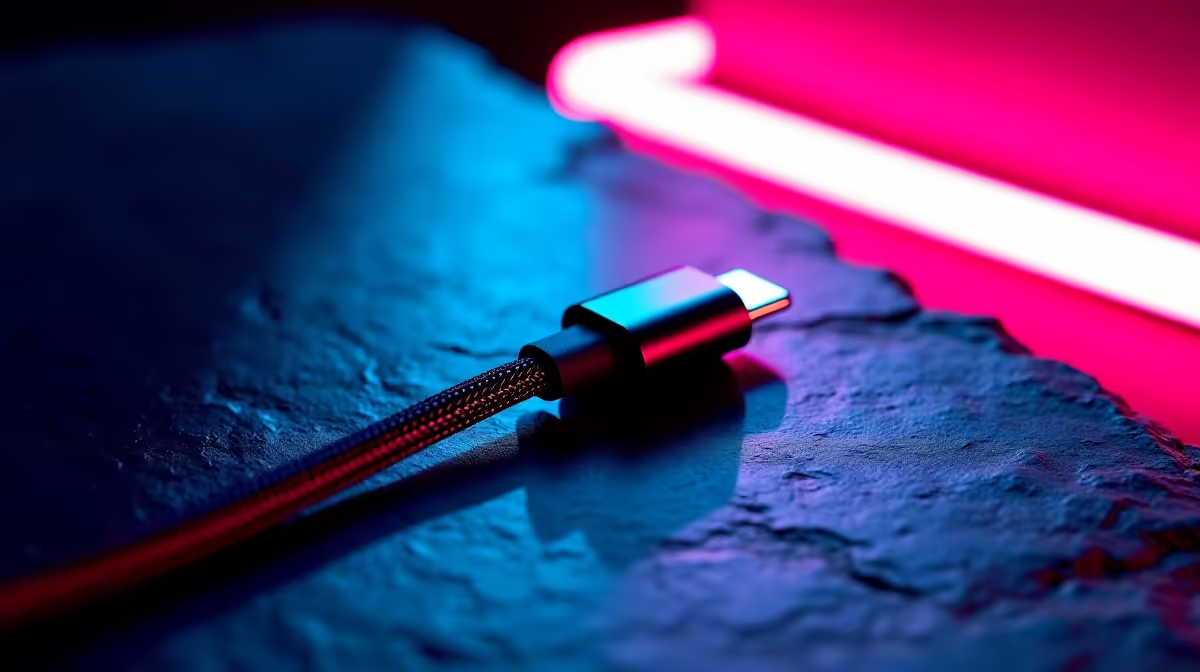
When we talk about modern, efficient power delivery, the USB-C to USB-C cable, especially for 20W charging, is often the hero. These cables are designed to handle higher power outputs, making them ideal for fast-charging smartphones, tablets, and even some smaller laptops. The magic here lies in the USB Power Delivery (PD) standard. A USB-C port on both ends of the cable, combined with a compatible charger and device, allows for intelligent negotiation of power levels. This means your device gets exactly the power it needs, up to 20W, for a rapid top-up.
Imagine you're prepping for a weekend away, load shedding looms, and your phone's on 15%. A quality USB-C to USB-C cable, capable of 20W charging, can get you back to 50% or more in under 30 minutes (depending on your device's battery size and charging protocol). This direct connection provides a more streamlined and often faster charging experience compared to its older sibling. For those always on the go, pairing such a cable with a robust power bank is a game-changer. You can find a fantastic selection of these essential travel companions by exploring our range of Promate power banks, known for their reliability.
Understanding the USB-A to USB-C Connection
While USB-C to USB-C might be the new kid on the block, the USB-A to USB-C cable, capable of 20W charging, still holds a vital place in our tech ecosystem. Most older wall adapters, car chargers, and even many power banks still feature a traditional USB-A port. If you’re not ready to upgrade all your power bricks, or you rely on existing infrastructure, a good quality USB-A to USB-C cable is indispensable.
However, there's a crucial distinction. While this cable can deliver 20W, it typically relies on specific proprietary fast-charging standards like Qualcomm Quick Charge (QC) rather than USB Power Delivery. This means compatibility is key. Your device and charger must both support the same fast-charging protocol for you to actually achieve that 20W speed. Otherwise, you might be stuck with slower, standard USB charging speeds. It's often a more budget-friendly option initially, especially when looking for affordable power bank options under R500 to pair with it.
Cable Care 101 🔧
Always store your charging cables neatly. Coiling them gently rather than sharply bending them near the connectors can significantly extend their lifespan. A small investment in a cable organiser can save you from buying replacements too often!
What to Look for in Any 20W Power Cable
Regardless of the connector type, a few universal principles apply when choosing any 20W power cable:
- Wattage Rating: Always check that the cable explicitly states its wattage capacity. For 20W charging, ensure it's rated for at least that much, or higher for future-proofing.
- Build Quality: Look for durable materials, reinforced stress points near the connectors, and a reputable brand. Cheap cables can be a fire hazard and often fail quickly.
- Length: Consider your needs. A longer cable (1.5m to 2m) offers flexibility, but can sometimes introduce minor power loss, though negligible for 20W. Shorter cables are great for power banks or desk setups.
- Certification: For USB-C to USB-C cables, look for USB-IF certification. This ensures it meets industry standards for safety and performance.
Choosing the right cable impacts not just your charging speed, but also the longevity of your devices and your peace of mind. For a comprehensive look at all your portable power solutions, including various cables and chargers, check out our full selection of power banks.
Making the Right Choice for Your Setup ✨
So, which 20W charging solution is best for you?
- Go USB-C to USB-C if: You have newer devices (phones, tablets) that support USB Power Delivery and a compatible USB-C wall charger or power bank. This combination generally offers the most reliable and efficient fast charging experience. It's the future-proof choice.
- Stick with USB-A to USB-C if: You have older chargers with USB-A ports, or your devices specifically support fast-charging protocols like Quick Charge via USB-A. It's a versatile choice for bridging older tech with newer devices.
Many tech-savvy South Africans opt for a mix of both types to cover all their bases. Perhaps a USB-C to USB-C for their primary phone and a USB-A to USB-C for their older tablet or backup power bank. Whether you're looking for a quick top-up during load shedding or keeping your gadgets powered on a road trip, having the right 20W charging cable is key. And if you're serious about staying powered, consider pairing your chosen cable with one of our excellent mid-range power banks up to R1200, offering a great balance of capacity and features.
Ready to Keep Your Devices Charged? Don't let slow charging hold you back. The right 20W charging cable, paired with a reliable power bank, means you're always ready for whatever Mzansi throws your way. Explore Evetech's massive range of power banks and charging solutions and find your perfect power match today!