A 3D rendering workstation is not worthwhile for home backups alone. Backup needs dependable storage, independent copies, secure access and tested restoration. Professional graphics, large memory capacity and sustained rendering cooling add cost without improving a household recovery plan.
Inventory the household data before choosing the backup host
List photos, videos, documents, phone exports, application data and any work files. Note where each item currently lives, how quickly it grows and how soon it must be recovered. Separate active computer storage from local backup, off-device protection and any approved cloud service.
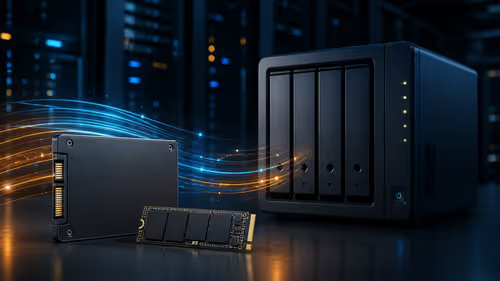
The Minisforum NAB6 Lite with an Intel Core i5-12600H, 8GB memory and 512GB storage at R4,150 is a verified compact-PC reference. The Seagate Expansion 4TB at R2,057 is a verified external-drive reference. Neither product creates a complete backup policy or requires workstation graphics.
Confirm live operating system, ports, storage compatibility and warranty. Automate routine jobs, encrypt sensitive material and isolate one copy where practical. Test restoration of a full folder with several file types and keep an independent copy away from the main computer.
Buy workstation hardware only for a separate measured 3D workload. A modest supported computer plus well-managed storage is smarter for household recovery.
Store a written recovery map beside the household backup devices and account details.
Building a home recovery plan? > Compare Evetech desktops and storage by ports, capacity and support.