


550W PSU Planning for RTX 5080 Super Builds in SA
550W for RTX 5080 Super needs a full-build check, not a simple yes. Review GPU guidance, CPU draw, transient load, connectors, PSU quality, and upgrade plans before deciding.
Read moreA 4K TV works as a gaming monitor when desk space allows the extra distance, since the larger panel needs more room and input lag can run higher than a true monitor. Evetech advises checking the TV's game mode lag figure before swapping one in for competitive play.
A 4K TV can work as a gaming monitor when you give it enough viewing distance and choose a model with responsive game features. It is a poor blind swap for a desk monitor. Text handling, input lag, ports and screen size all need checking.
Use a 4K TV for a deep desk, sim rig or combined couch-and-PC setup. Enable Game Mode and confirm 4K refresh rate, VRR and chroma support on the exact HDMI input. For close competitive play and hours of text, a purpose-built monitor is the safer shape and setup.
Compare screen specifications in the PC monitor range, then use current monitor best sellers to see what dedicated desk displays offer at a similar size and refresh class.
A 42- or 48-inch TV can dominate a normal desk. Sitting too close makes you scan corners with your head and exposes low-resolution game assets. Mark the screen width on the wall and measure from your eyes to the proposed surface.
Mounting can recover space, but check VESA dimensions, wall strength and cable clearance. A deep stand may pull the screen closer than expected.
TV picture processing can add delay for noise reduction, motion smoothing and image enhancement. Game Mode bypasses much of that work. Check measured input lag at the resolution and refresh rate you intend to use.
Confirm that VRR, HDR and local dimming still behave well in Game Mode. Some models change picture quality or disable controls. Name similarity across TV sizes does not guarantee the same panel.
PC text benefits from full 4:4:4 chroma because colour information is preserved for every pixel. A TV input labelled for PC use may enable this mode. Without it, coloured text edges can look smeared even though games and films appear fine.
Set the computer to the panel's native 3840 x 2160 resolution, choose comfortable scaling and disable overscan. Check whether desktop icons reach the screen edges without cropping.
High-refresh 4K requires enough HDMI bandwidth from the TV, GPU and cable. Verify which inputs support 120Hz, variable refresh and the desired colour depth. A television may reserve its best port for eARC audio, so plan sound connections too.
Auto dimming and static-logo protection can affect desktop use on OLED televisions. LCD models bring their own local-dimming and viewing-angle behaviour. Test a browser, dark game and fast match before deciding the screen can replace a monitor.
No. Confirm native panel refresh and the supported input mode on the exact model.
Chroma subsampling, overscan or non-native resolution can soften text. Use PC mode and verify 4:4:4 output.
It is usually the lowest-latency mode, though you should check its HDR, VRR and local-dimming behaviour.
Measure your viewing distance, verify Game Mode latency and confirm 4:4:4 plus high-refresh HDMI support before using a TV at the desk.
No. Confirm native panel refresh and the supported input mode on the exact model.
Chroma subsampling, overscan or non-native resolution can soften text. Use PC mode and verify 4:4:4 output.
It is usually the lowest-latency mode, though you should check its HDR, VRR and local-dimming behaviour. {{PRODUCTS: { facets: { query: "4K gaming monitor" }, limit: 12, title: "Compare Dedicated 4K Gaming Monitors", style: "4" } }}
550W for RTX 5080 Super needs a full-build check, not a simple yes. Review GPU guidance, CPU draw, transient load, connectors, PSU quality, and upgrade plans before deciding.
Read more
8000Hz polling is overrated for most SA gamers because gains can be tiny next to battery drain and monitor limits. Mbombela players should weigh mouse feel, game support, and system stability before chasing the number.
Read more
Magnetic switches are taking over SA gaming keyboards because actuation can be tuned. For Sandton gamers, rapid trigger, reset control, and profile depth can help, but layout, key feel, and software quality still matter.
Read more
Polokwane oled monitor value questions need cautious SA context because pricing can move with availability, exchange rates, specs, and warranty support. Treat the trend as a planning signal, not a fixed price promise.
Read more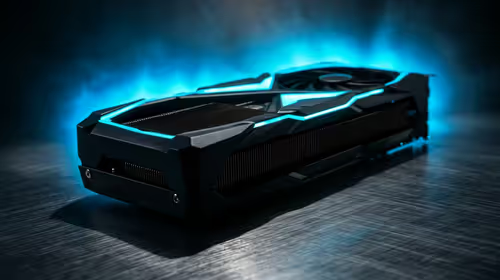
Arc B580 budget builds for Midrand gamers can shift with exchange rates, supply, specs, and model tier. Treat the title as a buying prompt, then compare SA warranty, timing, and build priorities.
Read more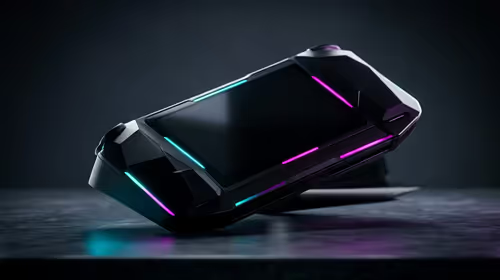
ROG Ally X may beat the LCD Steam Deck for SA gamers who value stronger handheld performance, more memory, and Windows flexibility. Compare battery life, controls, game libraries, and Polokwane support needs before deciding.
Read more
Minisforum's M2 Pro pairs Core Ultra X7, Arc B390 graphics and 32GB onboard memory in 1.8 litres. SA buyers should weigh its fixed memory and $1,439 launch offer against local mini PCs.

Lenovo says Legion Go failures linked to BIOS N3CN42WW are not user error. Affected SA owners should stop retrying the update, preserve proof and open a support case.

Smart monitors can add apps and convenience, but they also add privacy settings and unwanted-software risk. SA buyers should audit the operating system before paying for extras.

A fake 113GB GTA VI ISO reportedly used empty padding around a small malware payload. SA gamers should delete unofficial builds, keep Windows security active and wait for official channels.
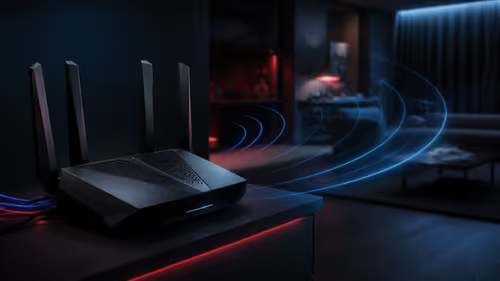
ASUS calls the ROG GT-BN98 the first Wi-Fi 8 gaming router. SA buyers should fix coverage and client limits before paying for a future wireless standard.
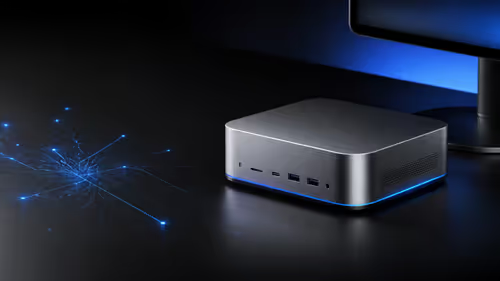
Apple's M6 Mac mini adds faster AI, graphics and networking in the same compact format. SA buyers should wait for a rand listing before comparing value.
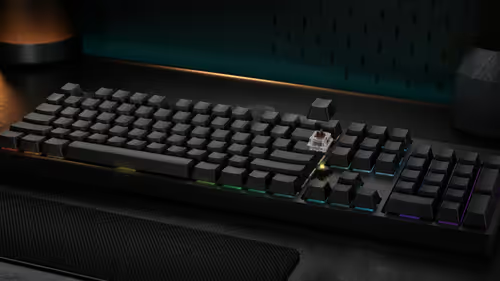
The Vulcan II XP adds hot-swappable switches, sound damping and gaming controls to a full-size wired board. SA buyers should compare feel before features.

Microsoft says Windows on Arm now has over 7,000 verified apps and games. SA buyers should still check each driver, game and work tool before switching.

Xbox Insiders can test disc-to-digital from 31 August 2026. Supported Xbox One and Series X discs gain a digital entitlement, but older discs, regions and title coverage still need exact checks.

ViewSonic's XG2738 pairs QHD QD-OLED with 240Hz and automatic panel care. SA buyers should compare warranty, brightness, ports and burn-in protection against today's R9,999-plus OLED shelf.

NVIDIA's final Windows 10 Game Ready driver is due in October 2026. SA gamers can keep using their GPU, but new game optimisations move on while critical security fixes continue quarterly.

JBL's new Quantum 520, 520X and 120 headsets cover wireless, Xbox-certified and wired use. SA buyers should compare connection, comfort and microphone needs before paying for a new badge.