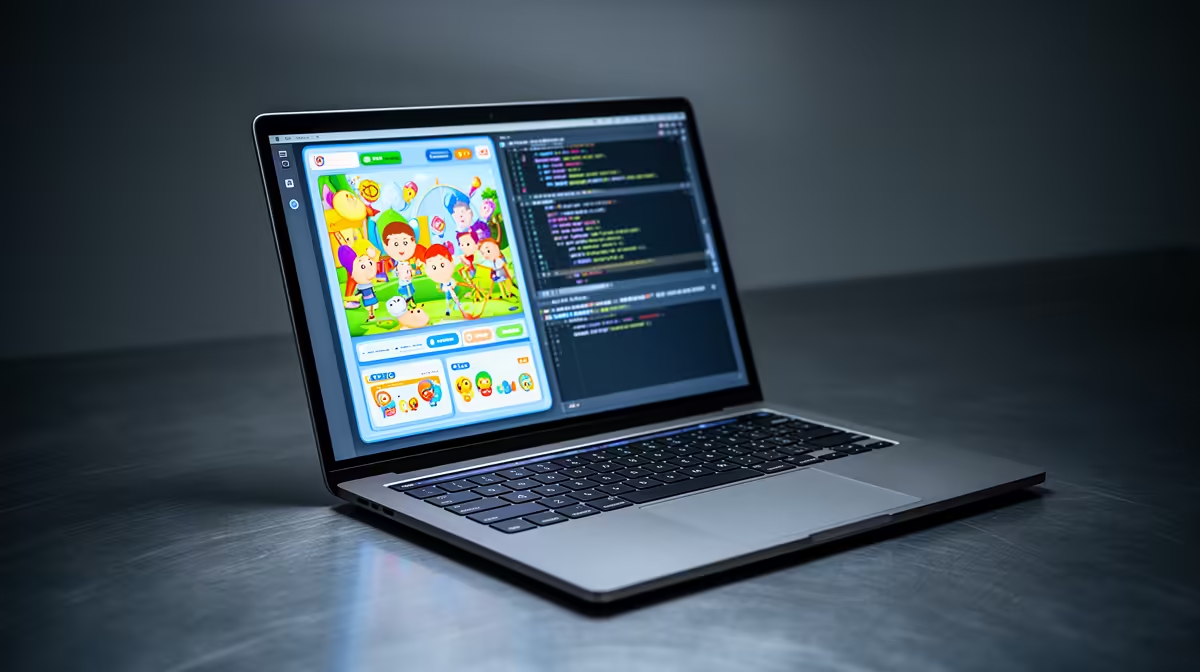
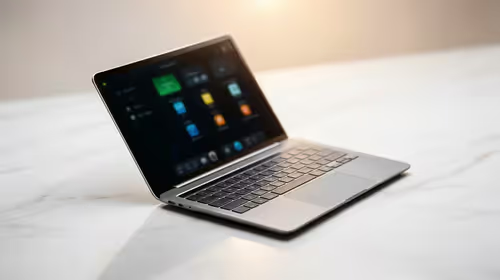
ASUS ExpertBook P1503 i5 at R9,858 suits a first-year student who needs a serious lecture, assignment, browser, and email machine without paying for a higher-tier i7 laptop. In 2026, 8GB can still work for notes, research tabs, PDFs, video calls, and online portals, but it becomes tight once too many apps stay open. A RAM kit only matters if the laptop path allows an upgrade, so the cleaner buying move is to start with the right laptop class.
Start With A Practical Student Baseline
The ASUS ExpertBook P1503 i5 at R9,858 is the sensible entry point because the listed spec is an i5, which is enough for everyday campus work without drifting into gaming or creator pricing. It is the safer answer for a student who mostly writes, studies, submits assignments, and keeps a few browser tabs open.
The Lenovo IdeaPad Slim 3 i7 at R13,400 is the stronger choice when the student expects heavier multitasking from day one. Its i7 spec gives more headroom for research tabs, spreadsheets, browser-based design tools, and long sessions where restarting apps every hour becomes annoying.
Student Desk Reality In SA
For a res desk, digs room, or family study corner, the laptop needs to handle class notes in the morning and admin at night. The ASUS Vivobook S14 OLED at R10,719 brings an OLED spec into the mix, which is useful when the same screen is used for reading, streaming, and late-night study. The ASUS Vivobook X1504VA i7 at R13,999 makes sense if the buyer wants the i7 route but prefers a Vivobook-style daily machine.
The Lenovo LOQ RTX3050 at R9,500 is the outlier because RTX3050 points it toward gaming and graphics needs, not just lectures. The ASUS ExpertBook P5405 at R12,700 sits better for a focused work-first student who wants an ExpertBook option above the R9,858 baseline.
Ready to choose the right laptop?
Use ASUS ExpertBook P1503 i5 at R9,858 as the student desk benchmark, then check whether its listed spec matches the space, workload, and upgrade path.